
Theopolis Logo

Writing

Explore our collection of theological essays, biblical studies, and reflections on faith and culture.

See all
giammarco-zeh-ljawhtg-unsplash
Biblical Horizons

OPEN BOOK: Views and Reviews

Isaac E. Mozeson, The Word: The Dictionary that Reveals the Hebrew Sources of English (Northvale, NJ: Jacob Aaronson Inc., 1995), 310 pp. Reviewed by James B. Jordan. Once there was only one language in the world, the language God spoke to Adam. At the Tower of Babel, there came to…

by James B. JordanJune 28, 1996
tim-wildsmith-j6jv-mkdzqs-unsplash
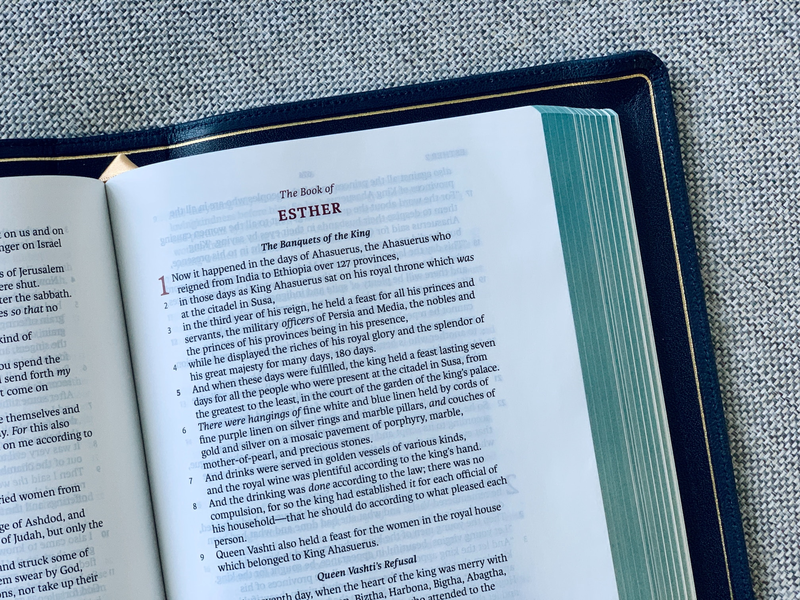
Esther

Esther: Historical & Chronological Comments (IV)

2. The Setting of the Book of Esther A. Xerxes (continued from previous issue) Ezra 6:14 says that the Jews finished building "according to the command of the God of Israel and the decree of Cyrus and Darius and Artaxerxes king of Persia." The problem with this verse is that…

by James B. JordanJune 28, 1996

ales-krivec-4mibe6zg5r0-unsplash
Acts

Jesus and Amalek

This essay goes with our previous study of the Amalek pattern back in Biblical Horizons No. 2. Since many do not have this essay, entitled "The Battle of Gog and Magog," let me cite the relevant paragraphs: Note in Genesis 12-15 that Abram moves into the land after escaping Pharaoh…

by James B. JordanJune 28, 1996

aaron-burden-1ebsmyrau-s-unsplash
Proverbs

The Strange Woman

Proverbs 7:6-23 is one of several passages early in the Proverbs in which Solomon warns his son about the wiles and dangers of the "strange woman." It is certainly quite proper to take these as straightforward warnings against sexual sins, and these are certainly warnings that need to be impressed…

by Peter LeithartJune 27, 1996
jan-kahanek-g3o5ztrk2e4-unsplash
Biblical Studies

Some Observations

1. In Luke 4:20 we read that after Jesus finished reading from Isaiah, "the eyes of all in the synagogue were fixed upon Him." This is usually taken in a psychological sense: They were amazed at Jesus somehow. I suggest that, as always, a merely psychological reading is a modern…

by James B. JordanMay 28, 1996
tim-wildsmith-j6jv-mkdzqs-unsplash
Esther

Esther: Historical & Chronological Comments (III)

2. The Setting of the Book of Esther Up to now we have assumed what we must prove, that the king in Esther is Darius the Great. While Biblical chronologists have usually taken this position, commentators on the book of Esther have often taken others as the king. One view,…

by James B. JordanMay 28, 1996

Showing page 265 of 309

See all
See all
History

Money, Magic, and Signs

David Hawkes reviews a book on Literature and Economics in the Age of Milton in the April 2 TLS , and has this to say about the early modern suspicion of attempting to “do things with words”: “The influx into Renaissance Europe of precious metals from America, and the consequent…

April 19, 2004
History

On Books

David McKitterick ‘s Print, Manuscript and the Search for Order, 1450-1830 describes the move from manuscript to book as a gradual process rather than a sudden revolution. According to the reviewer in the TLS , McKitterick points out that books and manuscripts were not separated in library catalogues or apparently…

April 19, 2004
History

Goddesses in the Middle Ages

Robert Lerner reviews Barbara Newman ‘s God and the Goddesses: Vision, Poetry, and Belief in the Middle Ages in the March 19 issue if the TLS . Newman’s book analyzes the female deities and allegorical figures of medieval literature and belief, including Nature, Lady Love, Holy Wisdom, and Mary. As…

April 19, 2004

Luther on Justification

Robert Jenson has a brief but very challenging comment on Luther’s views on justification in the Fall 2003 issue of the Westminster Theological Journal (which, incidentally, under the editorship of Peter Enns is promising to be a lively forum of debate). Responding to Carl Trueman ‘s critique of the new…

April 19, 2004
Economics

Hayek

Francis Fukuyama reviews Bruce Caldwell ‘s new biography of Hayek in the Spring 2004 issue of The Wilson Quarterly . According to Caldwell, Hayek’s argument against a managed economy was basically an epistemological one: “There are limits to rationality, and what any individual knows tends to be local in nature.…

April 19, 2004
Media

McLuhan and Teilhard

Tom Wolfe has a fascinating sketch of the life and work of Marshall McLuhan in the Spring 2004 issue of The Wilson Quarterly . McLuhan converted to Catholicism during his studies, and Wolfe suggests that McLuhan’s greatest inspiration was a hidden one, Teilhard de Chardin . Wolfe writes, “Regardless of…

April 19, 2004

Showing page 2098 of 2212

Browse by Category

In Medias Res

Your weekly digest for all things Theopolis.

Donate

Theopolis is nearly 100% donor-supported. Consider joining us on our mission.