
Theopolis Logo

Writing

Explore our collection of theological essays, biblical studies, and reflections on faith and culture.

See all
giammarco-zeh-ljawhtg-unsplash
Biblical Horizons

OPEN BOOK: Views and Reviews

Isaac E. Mozeson, The Word: The Dictionary that Reveals the Hebrew Sources of English (Northvale, NJ: Jacob Aaronson Inc., 1995), 310 pp. Reviewed by James B. Jordan. Once there was only one language in the world, the language God spoke to Adam. At the Tower of Babel, there came to…

by James B. JordanJune 28, 1996
tim-wildsmith-j6jv-mkdzqs-unsplash
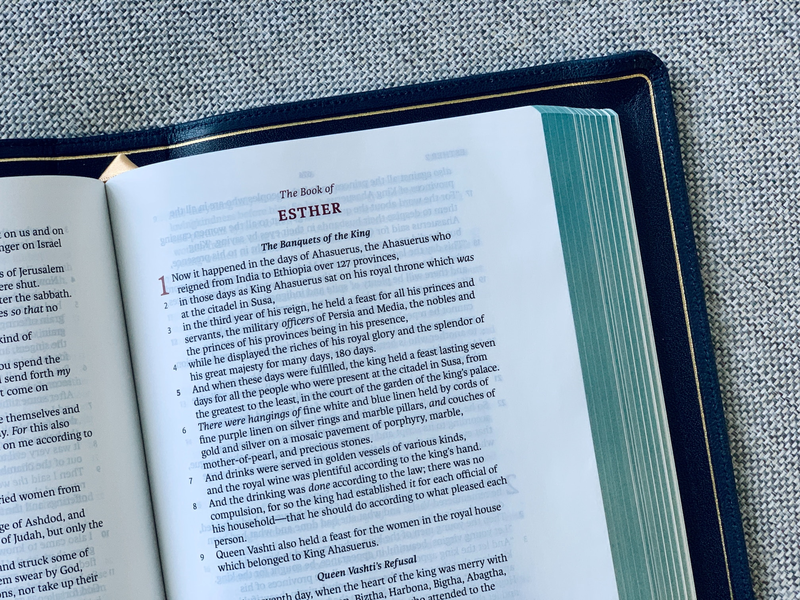
Esther

Esther: Historical & Chronological Comments (IV)

2. The Setting of the Book of Esther A. Xerxes (continued from previous issue) Ezra 6:14 says that the Jews finished building "according to the command of the God of Israel and the decree of Cyrus and Darius and Artaxerxes king of Persia." The problem with this verse is that…

by James B. JordanJune 28, 1996

ales-krivec-4mibe6zg5r0-unsplash
Acts

Jesus and Amalek

This essay goes with our previous study of the Amalek pattern back in Biblical Horizons No. 2. Since many do not have this essay, entitled "The Battle of Gog and Magog," let me cite the relevant paragraphs: Note in Genesis 12-15 that Abram moves into the land after escaping Pharaoh…

by James B. JordanJune 28, 1996

aaron-burden-1ebsmyrau-s-unsplash
Proverbs

The Strange Woman

Proverbs 7:6-23 is one of several passages early in the Proverbs in which Solomon warns his son about the wiles and dangers of the "strange woman." It is certainly quite proper to take these as straightforward warnings against sexual sins, and these are certainly warnings that need to be impressed…

by Peter LeithartJune 27, 1996
jan-kahanek-g3o5ztrk2e4-unsplash
Biblical Studies

Some Observations

1. In Luke 4:20 we read that after Jesus finished reading from Isaiah, "the eyes of all in the synagogue were fixed upon Him." This is usually taken in a psychological sense: They were amazed at Jesus somehow. I suggest that, as always, a merely psychological reading is a modern…

by James B. JordanMay 28, 1996
tim-wildsmith-j6jv-mkdzqs-unsplash
Esther

Esther: Historical & Chronological Comments (III)

2. The Setting of the Book of Esther Up to now we have assumed what we must prove, that the king in Esther is Darius the Great. While Biblical chronologists have usually taken this position, commentators on the book of Esther have often taken others as the king. One view,…

by James B. JordanMay 28, 1996

Showing page 265 of 309

See all
See all

David's Speech to Solomon

1 Chronicles 22:6–16 records David's hortatory speech to Solomon about building the temple. It is divided into two large sections, both marked by the phrase “my son” (22:7, 11). The first section repeats Yahweh's oracle to David explaining why he would not build the house and promising that David's son…

January 24, 2017

The Essential Mary

S ince the Son is incarnate, argues Aaron Riches in his Ecce Homo , “we must speak of unum esse simpliciter ,” yet Constantinople II determined that the Son is persona composita . Thus, in the words of Aquinas, “there is another being of this suppositum . . . insofar…

January 24, 2017

David's Restraint, Yahweh's Trap

W hen King Nahash of Ammon dies, David sends his condolences to his son Hanun (1 Chronicles 19). Nahash had shown love-and-loyalty ( hesed ) to David, so David returns hesed (v. 2). Hanun doesn't believe it, and the princes (apparently young advisors) stoke up his suspicions (v. 3). David…

January 23, 2017

Sherlock's Soap-Operization

N icholas Barber gets Sherlock just right. Benedict Cumberbatch has the intensity to kill the title role, and, puppyish though he is, Martin Freeman's Dr. Watson is a credible sidekick. The production is slick, the characters compelling, the rapport sharp and often witty. It's hugely entertaining. Then they go and…

January 20, 2017

Thomas and Pure Nature

S ummarizing a line of argument from Aquinas, Robert Spaemann ( Essays in Anthropology ) notes that Thomas acknowledges that “By nature animals are sufficiently equipped to attain their own end” (15). The question is: Are human beings? And if the end of human beings is union with God, how…

January 20, 2017

Christ the Lion

J esus is the Lion of Judah. This is no random metaphor, according to the medieval bestiary, the verse Physiologus attributed to the 11th-century writer Theobaldus. Lions have various habits, all of which point to Christ. For instance: “As the Lion dwells on the high mountain, so Christ the spiritual…

January 20, 2017

Showing page 214 of 2212

Browse by Category

In Medias Res

Your weekly digest for all things Theopolis.

Donate

Theopolis is nearly 100% donor-supported. Consider joining us on our mission.