Theopolis Logo

Writing

Explore our collection of theological essays, biblical studies, and reflections on faith and culture.

See all
screen-shot-2023-05-02-at-1-14-25-pm
Poetry

Seed-bearing Fruit

Ten-thousand ‘yeses’ and a single ‘no.’ From bough it dangles, beauty to the eyes, For belly, food, a fruit to make one wise. Too soon, they eat; they know; the leaves they sew, But, oh! the Love who asks, “Where did you go?” Confessions flow from under leaf’s disguise; A…

by Marc HaysAugust 16, 2023

screenshot-2023-08-15-at-8-22-28-am
Augustine

Eternal Life Chiasm in John's Gospel

In his masterful work, De Doctrina Christiana , Augustine of Hippo writes: I would have learned men to know that the authors of our Scriptures use all those forms of expression which grammarians call by the Greek name tropes, and use them more freely and in greater variety than people…

by Doug PonderAugust 15, 2023
screenshot-2023-08-08-at-11-13-28-am
Ruth

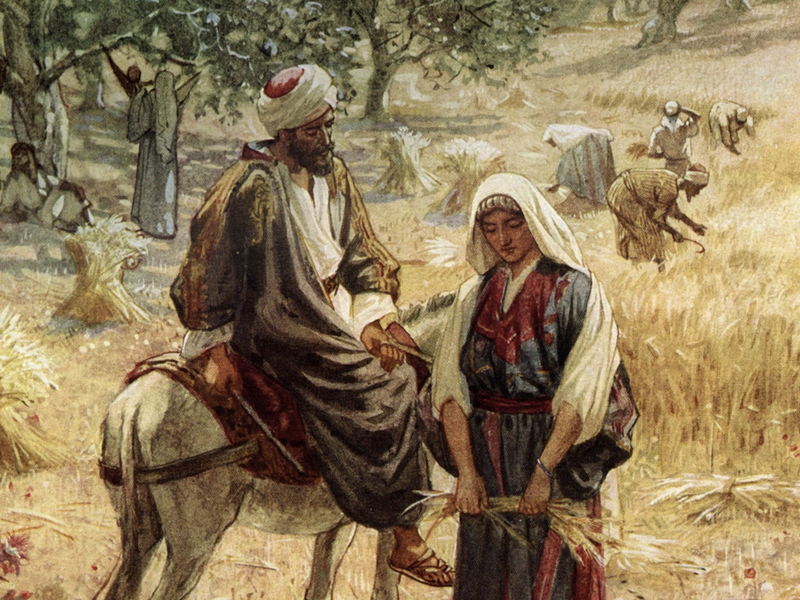
Lot, Ruth, and the Work of New Creation

“In accordance with the creation pattern, God sovereignly took hold of Adam and put him to sleep. Then God divided Adam by removing flesh and bone from his side, and restructured humanity into male and female. When Adam awoke, God distributed the woman to him. Adam gazed upon her and…

by Josh JensenAugust 8, 2023
rev-1-barbie-tp-0002-high-res-jpeg-647e152f50df6-2
Culture

The Barbie Movie

Greta Gerwig’s new film, Barbie, has been criticized, probably rightly, for having too many ideas and layers to properly bring in any for a landing. Gerwig herself thought the script was so “ wild and anarchic ” that she was surprised WB agreed to make it. Many see it as…

by Robin HarrisAugust 1, 2023
mariam-soliman-ht5xmeulydg-unsplash-2
Matthew

Why Does John the Baptizer Look Like a Camel?

“Now John wore a garment of camel’s hair and a leather belt around his waist, and his food was locusts and wild honey” (Matt. 3:4). Why is John the Baptizer clothed with camel’s hair? Why does he want to look like a camel? Or at least: what does he expect…

by Jeff MeyersJuly 26, 2023
darwin
Literature

Stinking, Rotten Ministers of the Gospel

In the second greatest story ever told, The Brothers Karamazov , Fyodor Dostoyevsky tells the story of a family plagued by the lasting legacy of sin’s destructive power and the all-surpassing truth that God is Light and in Him is no darkness. The young protagonist, Alyosha, is a monk committed…

by Garrett SoucyJuly 18, 2023

Showing page 29 of 309

See all
See all
screenshot-2024-07-04-at-8-35-35-am
Ephesians

Chiasm in Ephesians 2:8

In the Greek text of Ephesians 2:8, the statement “and this not of ourselves, it is the gift of God” is chiastically structured. A wooden translation is: “and this not out of ourselves, of God the gift,” with the EX HUMON (“out of ourselves”) chiastically matching the genitive THEOU (“of…

September 19, 2003
main-qimg-677803682e526eb3d3440054b59433fe-lq
Philosophy

Milbank on Derrida

Here’s a summary of part of Milbank’s critique of Derrida (from Theology and Social Theory , pp. 307-311). Derrida attacks Western metaphysics by focusing on the attempt to separate a “meaning” out from the “play of signs.” In most Western systems, this meaning is associated with an original meaning that…

September 18, 2003
nicki-eliza-schinow-mg3nb1l2kdm-unsplash
Philosophy

A Note Against Empiricism: Derrida

A note against empiricism: Derrida quotes Scheler (in his essay on Levinas, “Violence and Metaphysics”) to this effect: “I see not only the eye of an other, I see also that he looks at me.” That is, what is seen is not only a thing, a dead object, but also…

September 17, 2003
jeremy-thomas-e0ahdsenmdg-unsplash
Philosophy

Levinas on Absolute Other

Levinas claims that an absolute other must necessarily be invisible. If the other is visible, I can at least “capture” and “grasp” and “encompass” him in my gaze, which is the first moment in a sequence that could lead to capturing, grasping, and encompassing and dominating him in other ways.…

September 17, 2003
505017ldsdl
BooksCulture

Yeats on the Classical World

Yeats said that the classical world was fundamentally tragic, with the Oedipus myth as the founding myth — the man kills his father and marries his mother. Yeats would have been better off pointing to the myth of Zeus, for that truly is the founding myth of the Olympian order,…

September 17, 2003
valentino-mazzariello-ndm1hhicwhc-unsplash-2
Philosophy

Progress

In his history of the ancient concept of progress, E. R. Dodds says that one fundamental limitation on the idea of progress was imposed by the theory of Forms, both in Platonic and in the Aristotelian version. For Plato all progress consists in approximation to a pre-existing model; the model…

September 17, 2003

Showing page 2196 of 2212

Browse by Category

In Medias Res

Your weekly digest for all things Theopolis.

Donate

Theopolis is nearly 100% donor-supported. Consider joining us on our mission.