Theopolis Logo

Writing

Explore our collection of theological essays, biblical studies, and reflections on faith and culture.

See all
trnava-university-beeyeib-am8-unsplash
Biblical Chronology

Meredith G. Kline Strikes Back, Part 2

In our first essay we looked at Kline’s flawed exegesis of Genesis 2:5 as it relates to Day 3 of creation. Now we turn to Kline’s new argument against a chronological reading of Genesis 1, as found, again, in "Space and Time in the Genesis Cosmogony," Perspectives on Science and…

by James B. JordanMarch 29, 1997
30211-bathsheba-800w-tn
Hermeneutics

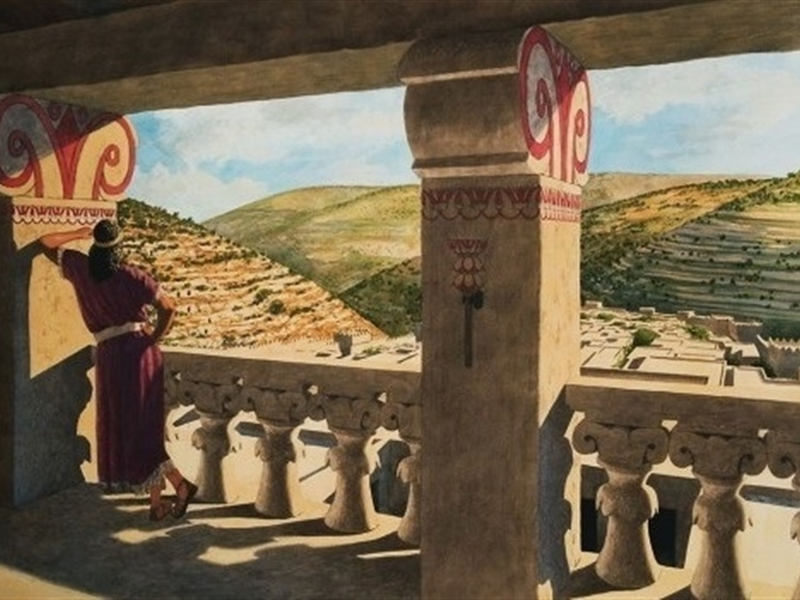
Bathsheba: The Real Story

One of the advantages of paying very close attention to the details in the Bible, especially chronological and genealogical details, is that they can shed light on situations that don’t seem to make much sense apart from them. One such situation is that of Bathsheba. It appears that Bathsheba willingly…

by James B. JordanMarch 28, 1997
jonathan-cooper-ygxq7hfdjzq-unsplash
Church Calendar

Is the Church Year Biblical? | A Parking Lot Parable

Once upon a time, Jeff Meyers and Tony Rollins–old friends who had not seen each other for a few years–met in the parking lot of a neighborhood church. They were dropping off their pre-school children at the church for Mother’s Day Out. They were such conscientious and helpful fathers. As…

by Jeff MeyersMarch 20, 1997
annie-spratt-upxf6to3fea-unsplash
Daniel

The Allegory of Susanna

Years ago, when I was at the briefly-existing Geneva Divinity School, I taught a course in the Apocrypha. One thing that struck me at that time is that two of the stories are almost certainly religious allegories (as well as moral tales): Judith and Susanna. Since "Susanna" means "Lily," this…

by James B. JordanFebruary 28, 1997
serafima-lazarenko-_ivuwprfczi-unsplash
Biblical Horizons

A Blossom of Yahweh’s Field

Peter’s essay inspires me to write up some similar thoughts about the flower of the field. Rightly does Peter associate the almond with Yahweh’s garden, because the Garden of Eden is symbolically positioned as parallel to the Holy Place of the Tabernacle and Temple. To wit: Since Aaron’s rod blossomed…

by James B. JordanFebruary 28, 1997
trnava-university-beeyeib-am8-unsplash
Biblical Chronology

Meredith G. Kline Strikes Back, Part 1

We have had occasion to discuss the views of Meredith G. Kline previously in these newsletters, and now it is time to do so again. Kline teaches at Gordon-Conwell Theological Seminary and also at the Westminster Theological Seminaries (Philadelphia and San Diego). He is the author of some interesting insights…

by James B. JordanFebruary 28, 1997

Showing page 259 of 309

See all
See all

Is Anonymity Still a Thing?

T he literary world is atwitter this week with the revelation of the real identity of Elena Ferrante, the pseudonym used by the author of the acclaimed Neopolitan Quartet. Italian journalist Claudio Gatti reported on his months-long investigation in the New York Review . Gatti’s conclusion, based on real estate…

October 7, 2016
Liberalism

Infantilism and Anti-Paternalism

J ohn Milbank and Adrian Pabst ( Politics of Virtue , 17) claim that “politics should revert to its ancient character as a ‘politics of the soul,’ concerned above all to nurture virtuous citizens, just as parents are concerned above all with the character of their children, precisely because they…

October 7, 2016

Disembedding

J ohn Milbank and Adrian Pabst ( Politics of Virtue , 47) observe that the liberal state claims to release “the economic and social spheres to be pre-politically themselves as natural, meaning true to human biological needs and inclinations.” In fact, however, it “politically produces this sphere of man as…

October 7, 2016

Scarcity

S carcity is one of the central premises of economic theory. John Milbank and Adrian Pabst see the premise of scarcity as one of a triad of pessimistic assumptions that found liberal order - the other two are “ontological violence and natural egoism” ( Politics of Virtue , 48). They…

October 7, 2016

Your Brain On Paper

M atthew Crawford ( The World Beyond Your Head ) observes that we can do simple mathematics in our heads. We can even multiply bigger numbers by breaking them down into smaller ones. At some point, though, most of us lost track: “If one has to multiply 356 by 911,…

October 7, 2016

God's Gift to God

1 Chronicles 17 is the Chronicler’s account of the Davidic covenant, Yahweh’s commitment to the Davidic dynasty. In his response to the Lord’s pledge, David summarizes the aims of the exodus (v. 21). Following the Hebrew word order, we can see a somewhat irregular chiasm: A. And what one nation…

October 6, 2016

Showing page 246 of 2212

Browse by Category

In Medias Res

Your weekly digest for all things Theopolis.

Donate

Theopolis is nearly 100% donor-supported. Consider joining us on our mission.