Theopolis Logo

Writing

Explore our collection of theological essays, biblical studies, and reflections on faith and culture.

See all
little-girl
Children

Honor God With Your Body

I am making a new rule in our house! We are actually kind of skimpy on the house rules. I try very hard to keep things simple: love God, love others, be joyful. It’s not complicated to avoid discipline here. But I have found myself repeating this new rule over…

by Lindsey TollefsonApril 9, 2015
giotto-noli-me-3
John

The Gardener and the Beloved, (Part 3)

Click HERE for Part 2 The voice of Jesus transforms and changes Mary when she hears him speak her name. This is her last “turning.” So also the woman in the Song of Songs longs to hear the voice of her beloved. Let me see your face, let me hear…

by Jeff MeyersApril 6, 2015
giotto-noli-me-2
John

The Gardener and the Beloved, (Part 2)

Click HERE for Part 1. The details of this story call the attentive reader back to the drama of Solomon’s Song of Songs. And the Song of Song’s alludes to, ties us into the story of Adam and Eve in the Garden and the promise of a coming Messiah that…

by Jeff MeyersApril 4, 2015
easter-term-2015-2
Theopolis News

Easter Term, 2015

“The course was a paradigm shift for me,” said Jonathan Sedlak, a Milwaukee electrical contractor who attended Theopolis’s course on Revelation. “I am left with a book that is far more practical than it has ever seemed before.” Jonathan Anderson of Louisville, Kentucky found the course “refreshing.” “I finished with…

by TheopolisApril 2, 2015
psalm-singing
Genesis

Worship as Response: Liturgical Logic, (Part 1)

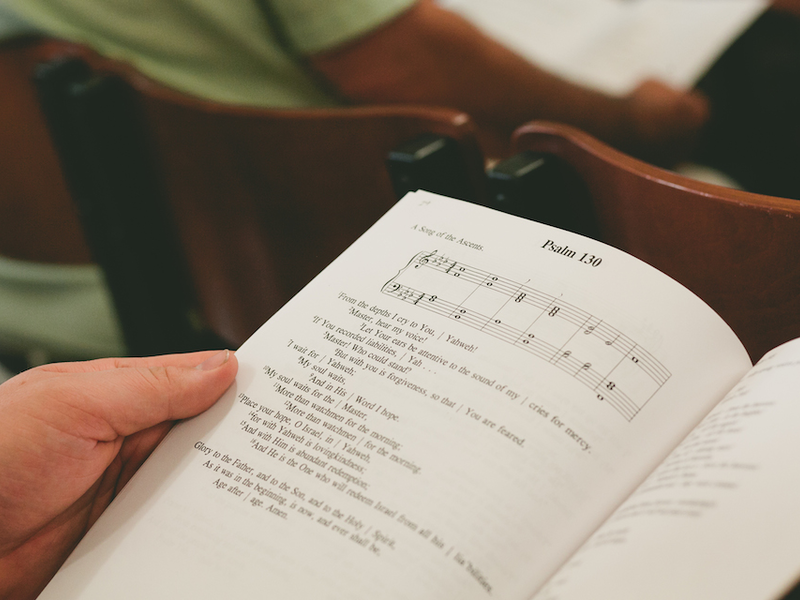
“It is only by participation in a rational, practice-based community that one becomes rational.” – Alasdair MacIntyre It may be perfectly clear to a chef why adding unsifted powdered sugar to a hot frosting is a bad idea. But for an amateur cook, this may be the kind of rule…

by Jonathan BarlowApril 2, 2015
giotto-noli-me
John

The Gardener and the Beloved, (Part 1)

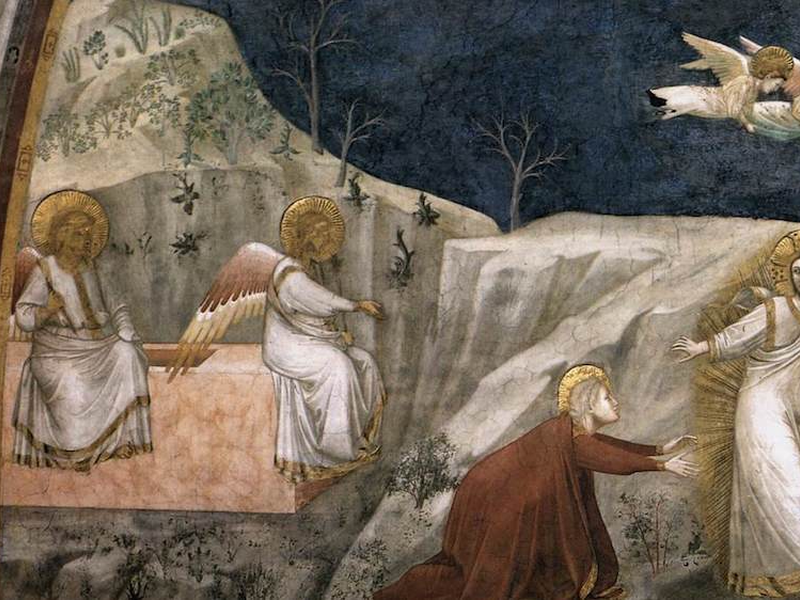
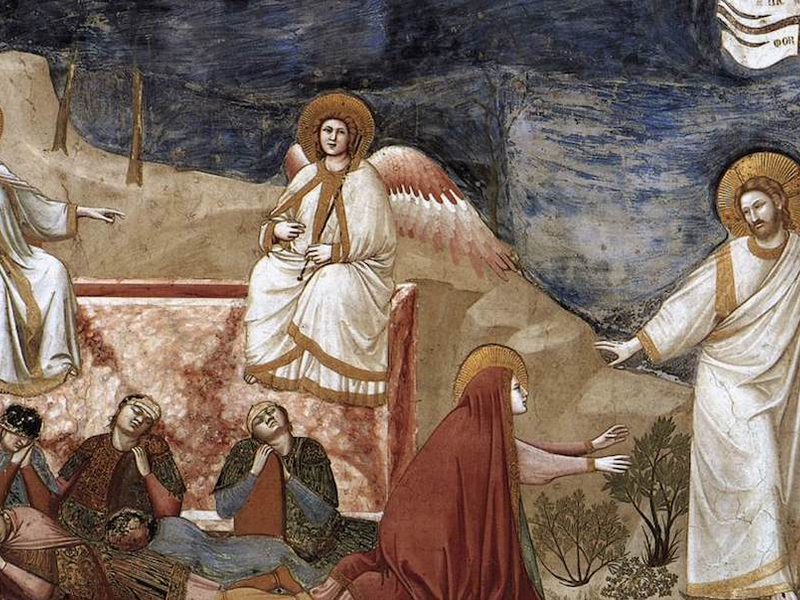
On a fresco in a chapel in Padua, Italy, there is a famous painting depicting the dramatic post-resurrection scene in John 20 with Mary and Jesus outside of the garden tomb. Giotto di Bondone painted it in the early 14th century. Jesus is striding from the tomb with a victor’s…

by Jeff MeyersApril 1, 2015

Showing page 156 of 309

See all
See all

Informative Nature

William Dembski's latest, Being As Communion , sets out a metaphysics of information, and argues for what he calls “informational realism.” Reality is information all the way down, but that information is real. It is reality. What is information? Dembski says it's “about realizing possibilities by ruling out others. Unless…

April 6, 2015

Only the beginning

John's account of the resurrection fulfills the promise of his prologue (John 20). Here is the Word made flesh, dead and buried, now risen as new Adam, the “gardener,” with Mary Magdalene, a type of the new Eve. The Word who spoke the worlds into being speaks also after death,…

April 5, 2015

First Resurrection, Second Resurrection

Elijah's life (1 Kings 17-19) tracks that of Moses. He confronts the Pharaoh-like King Ahab, then flees from the land, as Moses fled to Midian, where he is cared for by a widow. God provides miraculously for the prophet and his host, but then her child dies. In the Moses…

April 4, 2015
Fear

With Fear and Trembling

Paul Griffiths's Decreation has some harrowing passages about sin. Like this one: “What will be left of me when I am no longer a sinner? That is a question fundamental to trembling before hell's presence in the devastation [i.e., the fallen world]. Such trembling, however, like all well-formed Christian responses,…

April 3, 2015

God the Translator

A wondrous passage from Donne: “all mankind is of one author, and is one volume; when one man dies, one chapter is not torn out of the book, but translated into a better language; and every chapter must be so translated; God employs several translators; some pieces are translated by…

April 3, 2015

Why Diversions Don't Divert

Thomas considers acedia, “sloth,” as the opposite of delight. It is “sadness directed toward what ought to yield delight” (summary by Paul Griffiths, Decreation , 196). Paul Griffiths glosses: Acedia “is the mark of those sufficiently habituated to looking at nothing that when they look at something—and most especially at…

April 2, 2015

Showing page 444 of 2212

Browse by Category

In Medias Res

Your weekly digest for all things Theopolis.

Donate

Theopolis is nearly 100% donor-supported. Consider joining us on our mission.