Theopolis Logo

Writing

Explore our collection of theological essays, biblical studies, and reflections on faith and culture.

See all
aaron-burden-h8s0pf2rcqs-unsplash
Galatians

The Restoration of the Galatians

While controversies over the writings of Paul continue in various corners of the intellectual globe, the word of God given through Paul and his scribe and all of the church’s interpreters and translators over the last two millennia is still readily available to the lofty and the lowly. Paul, as…

by Grace LangnessMarch 25, 2013

kiwihug-l4gw27xzn1i-unsplash
Deuteronomy

Law and History: How to Read the Law of Moses (Part 2)

The second in a series of studies in Deuteronomy. Deuteronomy 22:30: A man shall not take his father’s wife, and shall not uncover his father’s wing (Hebrew: kanaf ). There are a number of unusual features in this law that mark it out from the previous context, indicating that it…

by Ralph Allan SmithMarch 20, 2013
200403-moss-pilate-tease_pncfq5
History

Victimhood and the Gospel

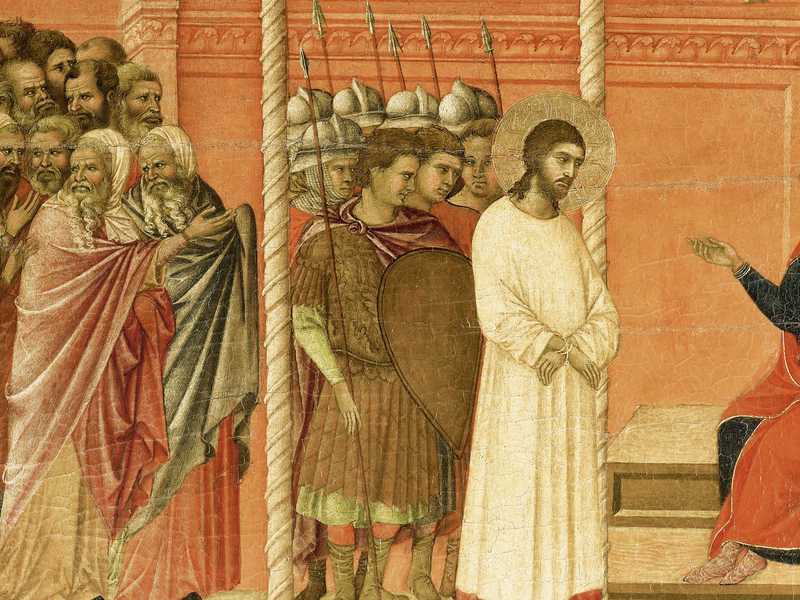
The texts of Christianity have been slowly at work, under the power of the Holy Spirit for 2000 years now. If we could be magically transported back into the world of two millennia ago, modern Americans would be shocked at the cruelty of that world. There was no concern for…

by Richard BledsoeMarch 18, 2013
aaron-burden-1ebsmyrau-s-unsplash
Luke

The Dysfunctional Family of the Gadarene Madman

The Story of the Gadarene Madman is told in all three synoptic Gospels (Matthew 8:28-34, Mark 5:1-20, Luke 8:26-37). Jesus ventures into a Gentile area when He passes over the Sea of Galilee. Upon disembarking from his boat, he is immediately met by a demon-possessed madman. Upon meeting Jesus, he…

by Richard BledsoeMarch 13, 2013
aaron-burden-1ebsmyrau-s-unsplash
Deuteronomy

Law and History: How to Read the Law of Moses

Part 1 of a multi-part series of studies on Deuteronomy 22:30-23:8. Eric Auerbach, in his classic work on Western literature, devotes his first chapter to contrasting Homer with the Bible. Of Homer, he writes of the “need of Homeric style to leave nothing which it mentions half in darkness and…

by Ralph Allan SmithMarch 12, 2013
markus-winkler-aid-xyrtlec-unsplash
Theopolis News

James Jordan in Korea, Japan

Trinity House Fellow James B. Jordan will be a speaker at an International Conference on Biblical Symbolism that will be held in Seoul on Monday, May 27 in 2013. He will address "The Importance of Biblical Symbolism and Symbolic Interpretation of the Bible." The conference will have three other speakers…

by Peter LeithartMarch 9, 2013

Showing page 197 of 309

See all
See all

Genesis 10 in Early Modernity

As Guy Stroumsa describes it ( A New Science ), comparative religion originates from a combined political and intellectual challenge to European thinkers. First, the wars of religion led some to question the primacy of Christianity and to search for some religious (or non-religious) substitute to serve as civil religion.…

July 11, 2014

The Bieber Effect

Vanessa Grigoriadis writes a lengthy profile of Justin Bieber at Vulture , analyzing along the way our “sadistic” fascination with watching young celebrities lurch their way toward adulthood. Bieber is the name of a legion: Most of today’s biggest pop stars “were teen stars, or at least made money off…

July 11, 2014

Dogmatic Descartes

Pierre Daniel Huet, seventeenth-century bishop of Soissons, was one of the most respected scholars of his time. A historian of religion and apologist, he was also one of the first critics of Descartes. As Thomas Lennon described it in The Plain Truth , one of Huet’s central criticism was that…

July 11, 2014

Where Sin Leads

John distinguishes between different degrees and sorts of sins (1 John 5): There is a sin that leads to death and another sin that does not lead to death. The substance of this distinction doesn’t concern me here, but rather the form. John’s distinction is not a pragmatic one. Sins…

July 11, 2014

Sacrifice for Sacrifice

Eye for eye, tooth for tooth, liturgy for liturgy. Isaiah warns those who forsake Yahweh by preparing sacrificial feasts for Fortune and Destiny (65:11). The judgment for this sacrificial infringement is itself sacrificial. Those who worship Destiny are “destined” (65:12; the Hebrew verb is from manah, also the root of…

July 10, 2014

The Music of the Text

Yahweh will take some of the clusters from Judah to make new wine (Isaiah 65:8-9). Those who seek Yahweh will inherit land (v. 10). But those who forsake him are in danger. Isaiah ends the section with a beautifully constructed set of four contrasting beatitudes and curses (65:13-14). Each verset…

July 10, 2014

Showing page 576 of 2212

Browse by Category

In Medias Res

Your weekly digest for all things Theopolis.

Donate

Theopolis is nearly 100% donor-supported. Consider joining us on our mission.