Theopolis Logo

Writing

Explore our collection of theological essays, biblical studies, and reflections on faith and culture.

See all
aaron-burden-qjdzyt_k8xg-unsplash
Biblical Horizons

Twelve Fundamental Avenues of Revelation, Part 2

Theophanic revelation is historically progressive, or eschatological, in character. First of all, in Genesis 1:2, the Spirit appeared inside the creation, sent by the Father. After the creation of man, the Spirit worked and works with humanity to bring us to maturity, from Daughter to Bride to fruitful Mother. He…

by James B. JordanFebruary 28, 1997

gang-coo-nt7tyrsofwk-unsplash
Biblical Studies

The Calf of the Purification Offering

On the eighth day of the rite of "filling the hand," Aaron began his service at the altar. His first offering was a "calf" (Heb. `egel ), which served as a purification offering for himself and (apparently) his household (Leviticus 9:2, 8). This is striking for a couple of reasons.…

by Peter LeithartFebruary 27, 1997
sergey-shmidt-koy6flccy5s-unsplash
Exodus

A Blossom of Yahweh’s Garden

One of the distinctive items of the high priest’s clothing was the "golden plate" inscribed with the words "Holy to Yahweh" (Exodus 28:36-38). The word translated as "plate" is tsits , which literally means "flower." The verbal and noun forms are both used in Numbers 17:8, which describes Aaron’s rod…

by Peter LeithartFebruary 27, 1997
davide-ragusa-slgtmf8ejye-unsplash
Biblical Horizons

Squaring Off and Crossing Up

The square, rectangle, and cross shapes appear all over the sanctuaries God reveals in the Bible: Tabernacle, Solomon’s Temple, Ezekiel’s Temple, New Jerusalem. One thing that can be said right away about these designs, and the occasional perfect circle (the lavers), is that they do not occur in nature. They…

by James B. JordanJanuary 28, 1997
schlanger_jonah_prison_090913_620px
Biblical Studies

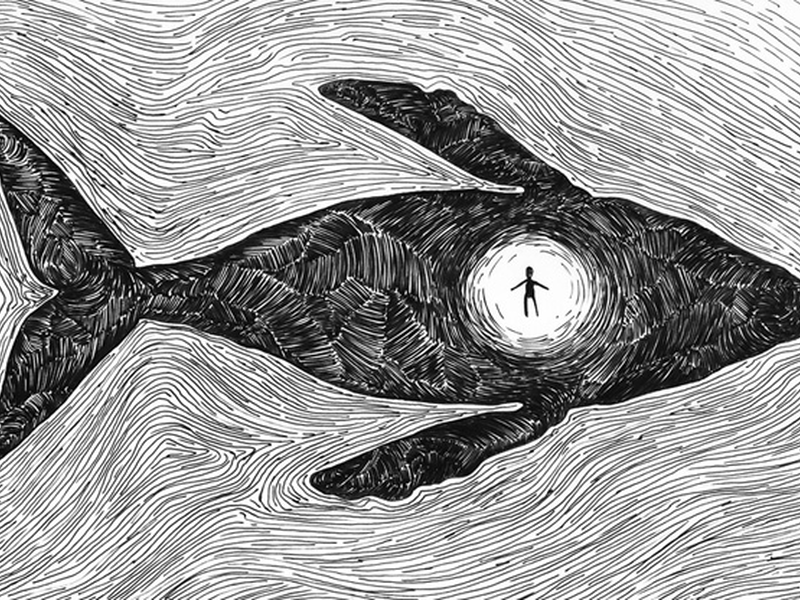
In the Fish: The Church as Tomb

"For just as Jonah was three days and three nights in the belly of the sea-monster, so will the Son of Man be three days and three nights in the heart of the earth" (Matthew 12:40). Some reflections on Jonah’s Big Fish have led to the following essay. Let me…

by James B. JordanJanuary 28, 1997
Hermeneutics

God Most High

Citing Melchizedek in Genesis 14:18-20, James Jordan has written that "the name of God in use among the nations was God Most High’" (Hebrew, `el `elyon ; in Through New Eyes , p. 176). In addition to Melchizedek, one could cite the example of Balaam, who invokes the Lord both…

by Peter LeithartJanuary 27, 1997

Showing page 260 of 309

See all
See all
Uncategorized

Gone Fishin’

June 24, 2014

Impure Holiness

Isaiah 65 piles up charges of idolatry and impurity against Israel. They are supposed to offer continuous sacrifices, but their sacrifices are a continuous provocation (65:3). They build their altars from bricks rather than from stones, as the law requires (65:3). The sacrificial smoke doesn’t sooth Yahweh but is an…

June 23, 2014

Coding Trance

In an essay at Slate , David Auerbach tells a story about John Harris, a game-programmer: “While working on an 8-bit Atari port of Frogger in the early 1980s, Harris said, “’ glued my hands to the keyboard.’ One day he started programming midafternoon, losing himself in work. The next…

June 23, 2014

Smart Dumb

P oet Kenneth Goldsmith gives a taxonomy of smartness and dumbness. There are various permutations. He prefers dumb, but it has to be smart dumb: “There is dumb dumb and there is smart dumb. There is also smart smart. Dumb dumb is plain dumb and smart smart is plain smart.…

June 23, 2014

Kynics and Cynics

In a 1987 review of Peter Sloterdijk’s Critique of Cynical Reason , Neil Wilson observes that for Sloterdijk “cynicism is enlightenment turned sour: a sourness which results from the self-denial that self-survival in a society dominated by instrumental rationality requires” (55). It is not a new attitude, but an ancient…

June 23, 2014

Physiognamy’s revenge

Peter Sloterdijk distinguishes in his Critique of Cynical Reason (139-40) between the objectifying and distancing aims of Enlightenment thought and the inescapable “physiognomic sense” of life among fleshly humans: “Whereas the process of civilization, whose core is constituted by the sciences, teaches us to distance ourselves from people and things…

June 23, 2014

Showing page 581 of 2212

Browse by Category

In Medias Res

Your weekly digest for all things Theopolis.

Donate

Theopolis is nearly 100% donor-supported. Consider joining us on our mission.