Theopolis Logo

Writing

Explore our collection of theological essays, biblical studies, and reflections on faith and culture.

See all
timothy-eberly-djj49s6ud2o-unsplash
Leviticus

Yahweh's War Against Death

Stories, frankly all human stories are practically always about one thing aren’t they? Death. The inevitability of death. . . . “There is no such thing as a natural death. Nothing that happens to man is ever natural, since his presence calls the whole world into question. All men must…

by Brian MarrApril 14, 2014

screenshot-2023-09-21-at-4-52-42-pm
Matthew

Inescapable Blood

Matthew is organized around 5 discourses, which trace out the history of Jesus as a recapitulation of the history of God and Israel in the Old Testament. Jesus first speaks as a new Moses, instructing His disciples on a mountain about a righteousness that surpasses the righteousness of the scribes…

by Peter LeithartApril 10, 2014
screen-shot-2022-05-12-at-12-07-23-pm
Angels

Did Angels Marry People? The Sin of Cultural Intermarriage

The fall of the Sethites in Genesis 6 is the third fall of mankind, or the third degree of Adam’s original fall. Adam sinned in a Garden against his Father by stealing something he was supposed to wait to obtain. (“Every tree shall be food for you” Genesis 1:29.) Cain…

by James B. JordanApril 7, 2014
sixteen-miles-out-al48tflf4e8-unsplash
Angels

Did Angels Marry People? The Sons of God in Genesis 6

The recent fantasy film Noah and a slightly related blog comment by my friend Douglas Wilson have stirred up again the question of whether the “sons of God” in Genesis 6 who married the “daughters of men” were fallen angels or the priestly line of Seth. Doug argues for angels,…

by James B. JordanApril 4, 2014
kiwihug-l4gw27xzn1i-unsplash
Angels

The Angels of Jude

The prophecy of Jude concerns apostasy. An illustration of apostasy and its consequences is found in verse 6, which the New American Standard Bible translates this way: "And angels who did not keep their own domain, but abandoned their proper abode, He has kept in eternal bonds under darkness for…

by James B. JordanApril 3, 2014
screenshot-2023-09-21-at-4-22-42-pm
Matthew

Women at the Cross

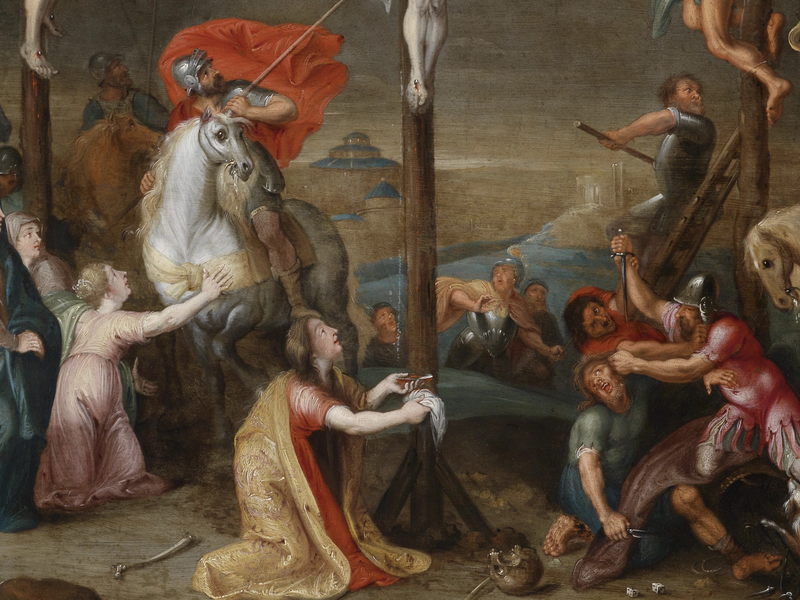
At His death, Jesus is surrounded by a Roman centurion and his cohort of Gentile solders. Matthew doesn't say that any disciples are there. But women are, and so is Joseph of Arimathea, identified as a “disciple” but, as John tells us, a “secret disciple for fear of the Jews,”…

by Peter LeithartMarch 31, 2014

Showing page 176 of 309

See all
See all

Burning Offerings in Israel and Elsewhere

Erhard Gerstenberger ( Leviticus , 34) claims that “The completely burned sacrifice is probably an Israelite peculiarity.” James Watts ( Ritual and Rhetoric ) disagrees. He argues (75) that “The practice of burning offerings gained popularity during the first millennium and spread from its original home in northwest Syria. Burnt…

May 31, 2014

Blood and Water

Sacramental interpretations of the blood and water from Jesus’ side are too tempting to resist. We ought not resist them. Of course, it is the blood of the new covenant and the water of baptism (John 20:34). But the order brings us up short: Not water and blood, but blood…

May 31, 2014

Table Among Enemies

It’s one of the most famous lines in one of the most famous songs: “You spread a table before me in the presence of my enemies” (Psalm 23). Israel knows very well that this is what Yahweh the Shepherd does. This is how Israel was born as a people -…

May 31, 2014

Heartless

Ancient Israelites offered the inner organs of sacrificial animals - entrails, kidneys, a portion of the liver. The heart is never mentioned. In all of the complicated sacrificial instructions of Leviticus, the word leb never appears, even once. We learn what happens to the stomach (Deuteronomy 18:3) but not the…

May 31, 2014

Peace System

If we stay with the strict terminology of Leviticus, the word “sacrifice” ( zabach ) is not a generic term for offering animals on altars but is used specifically of the “peace offering,” often in phrases like “the sacrifice of the peace offerings.” The burnt or ascension offering ( olah…

May 30, 2014

Numerological Patterns in Leviticus

As Wilfried Warning points out in his engaging study, Literary Artistry in Leviticus , the book of Leviticus uses word repetitions to create meaningful literary and theological patterns. At times, the word repetitions are designed to highlight the themes of a particular section. “Fat” ( chalev ) occurs twelve times…

May 30, 2014

Showing page 597 of 2212

Browse by Category

In Medias Res

Your weekly digest for all things Theopolis.

Donate

Theopolis is nearly 100% donor-supported. Consider joining us on our mission.