Theopolis Logo

Writing

Explore our collection of theological essays, biblical studies, and reflections on faith and culture.

See all
tanner-mardis-xuxghzhibn4-unsplash-1-2
Deuteronomy

The Second Word II: Seeing & Hearing; Exposition

Hearing, Seeing, and History God is Word, not picture. He speaks, but He is not visible in Himself. Thus, God initiates history through language. He speaks the world into existence, and speaks to us to bring us out of formlessness and emptiness into the fullness of being His Bride. Similarly,…

by James B. JordanAugust 10, 1994
tim-wildsmith-jyculofqjak-unsplash-1
Biblical Studies

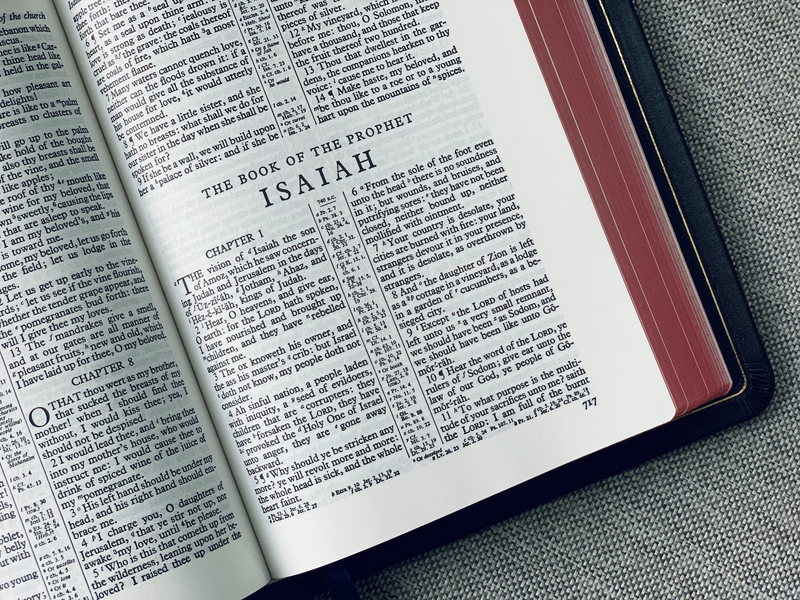
Passover and Exodus in Isaiah

The consensus of modern critical scholarship is that the book assigned to Isaiah was in fact composed by several different hands. "Deutero-Isaiah" supposedly begins with Isaiah 40:1. There are many good reasons for rejecting this conclusion. Among these, the narrative pattern of chapters 36-39 is a neglected piece of evidence.…

by Peter LeithartJuly 23, 1994
davide-ragusa-slgtmf8ejye-unsplash
Biblical Horizons

Human Life in Four Directions

Eugen Rosenstock-Huessy has pointed out throughout his many fascinating and occasionally quixotic writings and lectures that human life exists in four directions. These four directions are inward, outward, backward, and forward. In this article I want to explore these as they relate to the work of the Church. Each of…

by James B. JordanJuly 10, 1994
jan-kahanek-g3o5ztrk2e4-unsplash
Biblical Chronology

The Chronology of the Pentateuch (Part 5)

14. Joseph and Judah Genesis 38 tells us about Judah’s sons and grandsons, and if we try to get these events into the time before the descent of the Hebrews into Goshen, it is very difficult to do so. But this passage is almost certainly dischronologized. Thematically Genesis 38 is…

by James B. JordanJuly 10, 1994
trnava-university-sd8ujsf4xm4-unsplash
Art

A Short Survey of Good Fantasy and Science Fiction for Christian Schools and Home Schools

From time to time I am asked what is good SF and fantasy that teenagers in Christian and home schools might enjoy. The following brief discussion is my answer that question. I’ve tried to point out authors and stories that are not widely known, and therefore have set aside G.…

by James B. JordanJuly 10, 1994
whichbooksbelongintheot
Hermeneutics

Daniel 12:2

"And many of those who sleep in the dust of the ground will awaken, some to life everlasting and others to disgrace, to contempt everlasting." This verse is often cited as proof that there was a belief in the resurrection of the body in the Old Testament times. In fact,…

by James B. JordanJune 10, 1994

Showing page 277 of 309

See all
See all

Burning Offerings in Israel and Elsewhere

Erhard Gerstenberger ( Leviticus , 34) claims that “The completely burned sacrifice is probably an Israelite peculiarity.” James Watts ( Ritual and Rhetoric ) disagrees. He argues (75) that “The practice of burning offerings gained popularity during the first millennium and spread from its original home in northwest Syria. Burnt…

May 31, 2014

Blood and Water

Sacramental interpretations of the blood and water from Jesus’ side are too tempting to resist. We ought not resist them. Of course, it is the blood of the new covenant and the water of baptism (John 20:34). But the order brings us up short: Not water and blood, but blood…

May 31, 2014

Table Among Enemies

It’s one of the most famous lines in one of the most famous songs: “You spread a table before me in the presence of my enemies” (Psalm 23). Israel knows very well that this is what Yahweh the Shepherd does. This is how Israel was born as a people -…

May 31, 2014

Heartless

Ancient Israelites offered the inner organs of sacrificial animals - entrails, kidneys, a portion of the liver. The heart is never mentioned. In all of the complicated sacrificial instructions of Leviticus, the word leb never appears, even once. We learn what happens to the stomach (Deuteronomy 18:3) but not the…

May 31, 2014

Peace System

If we stay with the strict terminology of Leviticus, the word “sacrifice” ( zabach ) is not a generic term for offering animals on altars but is used specifically of the “peace offering,” often in phrases like “the sacrifice of the peace offerings.” The burnt or ascension offering ( olah…

May 30, 2014

Numerological Patterns in Leviticus

As Wilfried Warning points out in his engaging study, Literary Artistry in Leviticus , the book of Leviticus uses word repetitions to create meaningful literary and theological patterns. At times, the word repetitions are designed to highlight the themes of a particular section. “Fat” ( chalev ) occurs twelve times…

May 30, 2014

Showing page 597 of 2212

Browse by Category

In Medias Res

Your weekly digest for all things Theopolis.

Donate

Theopolis is nearly 100% donor-supported. Consider joining us on our mission.