Theopolis Logo

Writing

Explore our collection of theological essays, biblical studies, and reflections on faith and culture.

See all
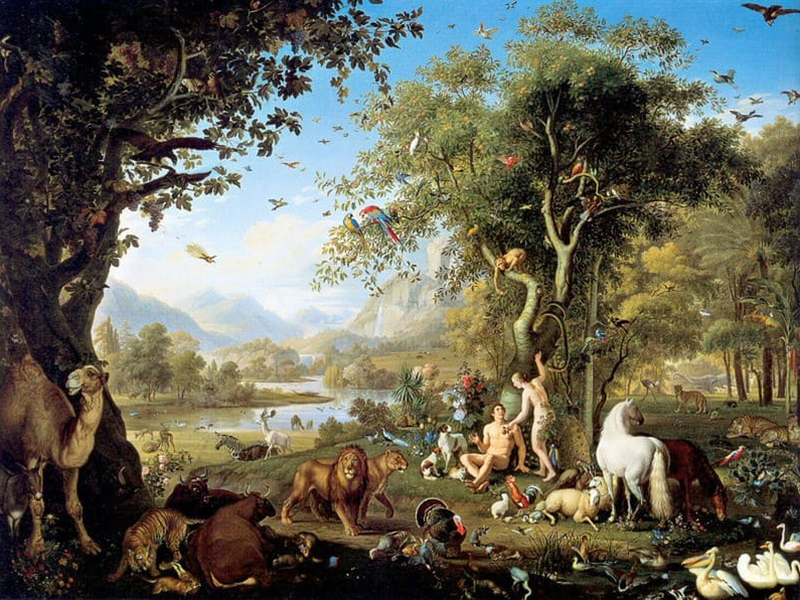
29994-adam-and-eve-in-the-garden-of-eden-800w-tn
Biblical Theology

Jesus in the Garden

Figure: Literary structure of the Garden narrative The Garden narrative describes God forming the adam , resting him in his presence, then provisioning for his appetites of food, vocation, and mate. It continues to describe a snake, the introduction of death, and humanity's expulsion from the garden. The pages of…

by Scott FairbanksJune 25, 2019
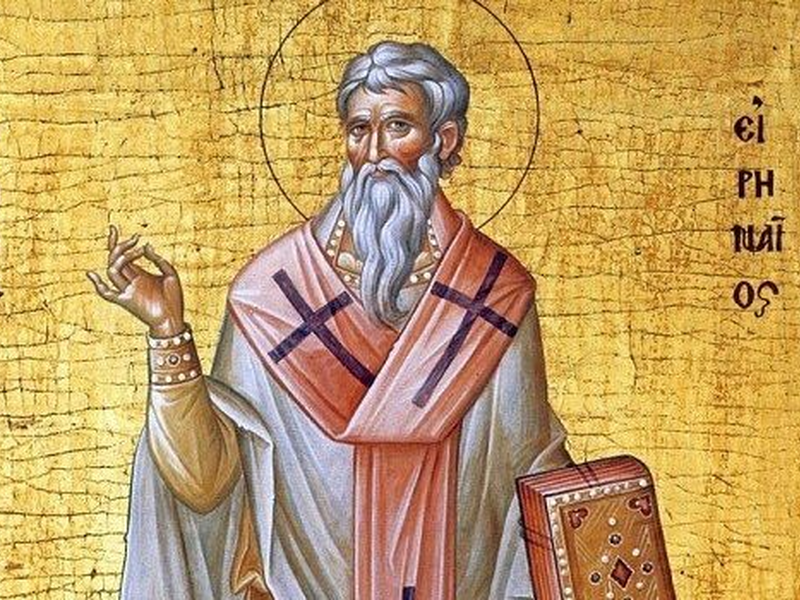
irenaeus-of-lyons-620x350
Christology

St. Irenaeus, the Beatific Vision, and the Instrumentalization of Creation

I’ve spent the last few years studying the theology of St. Irenaeus (d. circ. 200ad). In particular, I’ve been gripped by the way that Irenaeus consistently resisted the anti-body emphasis that emerged in later Christian theology. His eschatology is remarkably focused on the resurrection of the body, and the renewal…

by Gerald HiestandJune 18, 2019
aaron-burden-1ebsmyrau-s-unsplash
Exodus

The Light Before the Switch

Details of Jesus in Exodus 1:22-2:25 Although there are a great many Christ-types in the Old Testament, it is hard to overplay the obviousness of some that seem to necessarily rise to the top before others. One of these is Isaac, with his near sacrifice by his own father after…

by Eric RobinsonJune 11, 2019
thomas-habr-185321-unsplash
Biblical Theology

Characteristics of the Wicked City

What can we say about Cain's wicked sanctuary-city of Enoch? First that it was built with a brother's blood as its cornerstone. The Church is also built such, for Jesus was the younger brother of the whole Adamic race, slain by that company of older brothers because they hated Him.…

by James B. JordanJune 4, 2019
simon-caminada-107680-unsplash
Biblical Theology

Trees and Thorns

In Genesis 2:9 the ground brought forth trees good for food, delightful to view, and in two cases, life-giving or rule-bestowing. Adam, made of the ground (2:7), would by implication bring forth new trees, and thus trees and plants are among the symbols for human beings throughout the Bible. The…

by James B. JordanMay 28, 2019
annie-spratt-44241-unsplash
Biblical Theology

Trees for Food

One of the must fundamental teachings of the Bible and of the Christian religion is that man does not have life in himself. Man must get life from outside of himself, in order to maintain his life. The way this is done is through eating and drinking. Apart from life,…

by James B. JordanMay 21, 2019

Showing page 78 of 309

See all
See all
Uncategorized

Not Monolithic

Many Protestants still think of the Catholic church as a monolithic, uniform church. It’s been a long time since Catholics have thought of the church that way. Aloys Grillmeier sums up the results of Vatican II’s embrace of communio ecclesiology: “catholicity is understood as a union of opposites. The people…

May 24, 2014

What Science Cannot Know

Nicholas Rescher argues in Unknowability that there are certain things that logically cannot be known, such as “an idea that will never occur to any human being.” Prominent among unknowables are the unknowables of science. Given the way scientific research and discovery work, it is impossible for present science to…

May 24, 2014

Can the Dead Praise?

Heaven, earth, sea: That three-decker universe is standard-issue in biblical cosmology (Exodus 20:11; Psalm 69:34; 96:11; 135:6; 146:6; Revelation 10:6). Occasionally a second heaven is added to the scheme (Nehemiah 9:6). But when the Lamb ascends to take the book, praise arises from four dimensions of creation: heaven, earth, under…

May 23, 2014

Semper, ubique, ab omnibus?

Thomas Guarino ( Vincent of Lerins ) outlines Newman’s arguments against the Vincentian canon (orthodoxy is what is taught always, everywhere, by everyone). In his Essay on Development , Newman provides historical examples “to demonstrate that the first rule is, at beast, a leaky and dubious criterion. As Newman boldly…

May 23, 2014
Uncategorized

Fresh Logic

In his preface to Receptive Ecumenism , Paul Murray explains that the “driving assumption is that if all were to be asking and acting upon this question, even relatively independently of each other, then all would be moving, albeit somewhat unpredictably, and in such a fashion as might open up…

May 23, 2014

Receptive Ecumenism in Practice

As Avery Dulles recounts it in The Catholicity of the Church , the reforms of Vatican II came partly from what Paul Murray calls “ receptive ecumenism ,” an ecumenism of attentive listening to the other. Dulles wasn’t exactly a receptive ecumenist himself. While acknowledging that “the Church can certainly…

May 23, 2014

Showing page 603 of 2212

Browse by Category

In Medias Res

Your weekly digest for all things Theopolis.

Donate

Theopolis is nearly 100% donor-supported. Consider joining us on our mission.