Theopolis Logo

Writing

Explore our collection of theological essays, biblical studies, and reflections on faith and culture.

See all
sculptor
Art

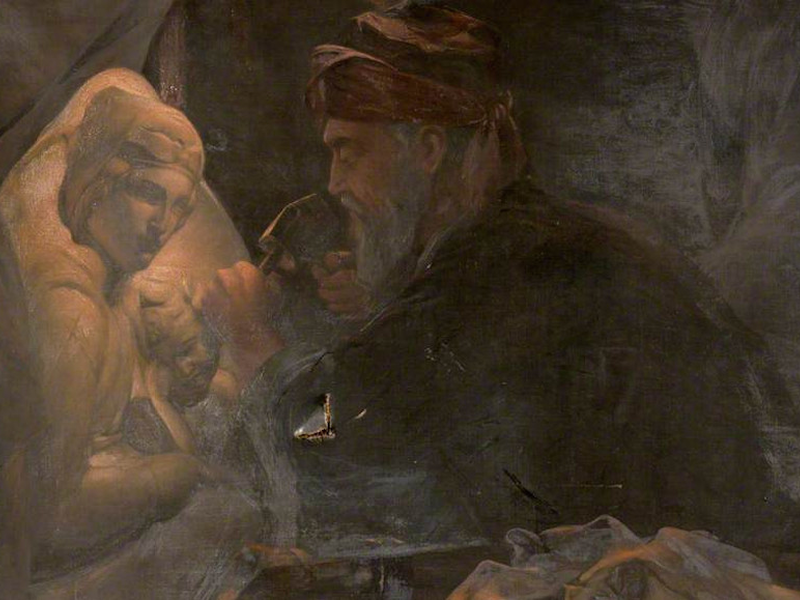
The Artist's Litany

If we say that we have no sin, we deceive ourselves, and the truth is not in us. (1 John 1:8) O God the Father, creator of heaven and earth, Alpha and Omega, beginning and end, who inspired Creation with the breath of your nostrils, who placed Adam in the…

by Christian LeithartFebruary 2, 2016
sodom_and_gomorrah_afire_by_jacob_jacobsz-_de_wet_d-_j-_probably_koln_c-_1680_oil_on_canvas_-_hessisches_landesmuseum_darmstadt_-_darmstadt_germany_-_dsc01149-e1632540497247
American Culture

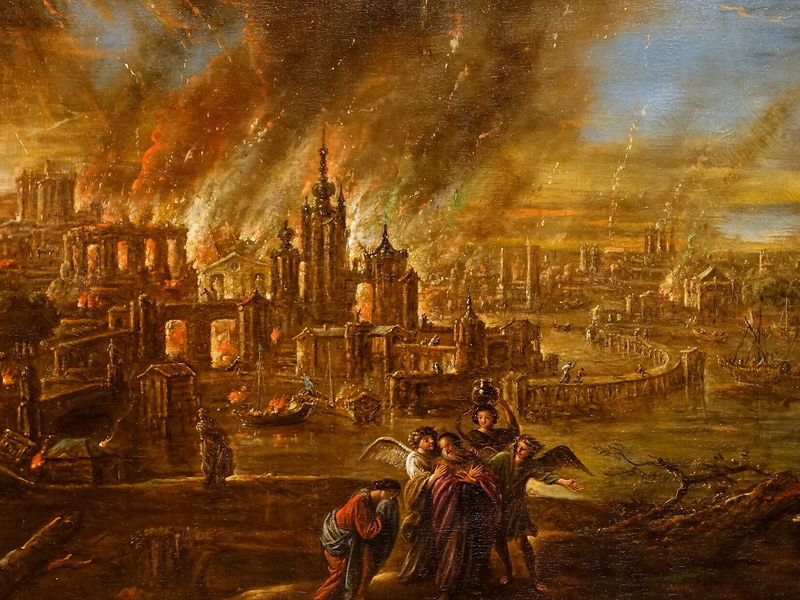
American Sodom

For nearly a half-century, Sodom has been a key symbol in the American culture wars. On the one side, we have an aggressive movement among homosexuals that has first decriminalized homosexual conduct, then to force cultural and legal recognition of homosexuals as a minority and to normalize homosexual behaviors, finally…

by Peter LeithartJanuary 28, 2016
image-20150409-15244-1r08rsu
Biblical Theology

The Meaning of the Mount of Olives

Speaking of the Church, Romans 11:16-17 says, "And if the root be holy, the branches are also. But if some of the branches were broken off, and you, being a wild olive were grafted in among them and became partaker with them of the root of the fatness of the…

by James B. JordanJanuary 26, 2016
img_6134
Isaiah

No Sabbath for God

At the end of Isaiah 61, Yahweh's Servant rejoices because the Lord clothes Him with salvation and righteousness. He decks Him like a bridegroom with a garland on His head. He wears jewels like a bride. He is a new bridegroom in a new garden of Eden, a garden of…

by Peter LeithartJanuary 21, 2016
hebrew-manuscript-2
Biblical Law

Approaching the Torah

Before anything else, a word about “Torah” may be in order. I have been persuaded that “law” is a bad translation of “Torah,” even though it is evident that what is called “Torah” does have commandments, statutes, and ordinances in abundance. Why not “law?” “Law” as a translation for “Torah”…

by Ralph Allan SmithJanuary 19, 2016
jane-austen-2
Biblical Horizons

Jane Austen, Pundit

Few novelists seem as innocent of the temptation to punditry as Jane Austen. Though living through a period that witnessed the birth of an independent United States, the French Revolution and the Terror, the Napoleonic wars and the rise of revolutionary romanticism, and the upheavals of the Industrial Revolution, she…

by Peter LeithartJanuary 14, 2016

Showing page 137 of 309

See all
See all

Local Grace

In his introduction to Charles Taylor’s A Secular Age , James KA Smith sums up Taylor’s argument that the Reformation hastened the “disenchantment” of the world ( How (Not) To Be Secular , 38-9). Taylor’s summary of Calvin sounds like a summary of Barth: “The Reformers ‘all see the reigning…

April 25, 2014

Encounter with Orthodoxy

John P. Burgess of Pittsburgh Theological Seminary spent a year with his family in Russia and recounts the experience of Russian Orthodoxy in his 2013 Encounters with Orthodoxy . It’s a very personal, sympathetic account. He describes Orthodox practices, and also some theology, in a way that I suspect an…

April 25, 2014

Confessional and Catholic?

Willem van Asselt’s Introduction to Reformed Scholasticism provides a superb overview of the history of Reformed Scholasticism, as well as a survey of the current state of the literature. Early on, he emphasizes the “catholicity” of Reformed Scholasticism: “those who practiced it explicitly aimed to stand within the tradition of…

April 25, 2014

Via Negativa

Benjamin Kaplan’s Divided By Faith is primarily a revisionist history of the rise of toleration in early modern Europe. He challenges the Enlightenment notion that 18th-century intellectuals introduced the idea, showing instead that toleration appeared first as a set of practices in religiously diverse regions of Europe and was first…

April 25, 2014

Lifted

Lifts might not have changed everything, but they changed a lot, according to Andreas Berard’s Lifted: A Cultural History of the Elevator . The TLS reviewer observes how the elevator transformed architecture, and the class distribution of vertical space: “The lift allowed the dramatic recalibration of building types. Staircases were…

April 24, 2014

Red, Black, Gray

How did religion survive and revive in China? Answering that question in Religion in China , Fenggang Yang sketches the outlines of a political-economic sociology of religion. Like many sociologists of religion, he rejects the theory of secularization. Modernity has not proven to be the solvent of religious faith that…

April 24, 2014

Showing page 626 of 2212

Browse by Category

In Medias Res

Your weekly digest for all things Theopolis.

Donate

Theopolis is nearly 100% donor-supported. Consider joining us on our mission.