Theopolis Logo

Writing

Explore our collection of theological essays, biblical studies, and reflections on faith and culture.

See all
aaron-burden-h8s0pf2rcqs-unsplash
Galatians

The Restoration of the Galatians

While controversies over the writings of Paul continue in various corners of the intellectual globe, the word of God given through Paul and his scribe and all of the church’s interpreters and translators over the last two millennia is still readily available to the lofty and the lowly. Paul, as…

by Grace LangnessMarch 25, 2013

kiwihug-l4gw27xzn1i-unsplash
Deuteronomy

Law and History: How to Read the Law of Moses (Part 2)

The second in a series of studies in Deuteronomy. Deuteronomy 22:30: A man shall not take his father’s wife, and shall not uncover his father’s wing (Hebrew: kanaf ). There are a number of unusual features in this law that mark it out from the previous context, indicating that it…

by Ralph Allan SmithMarch 20, 2013
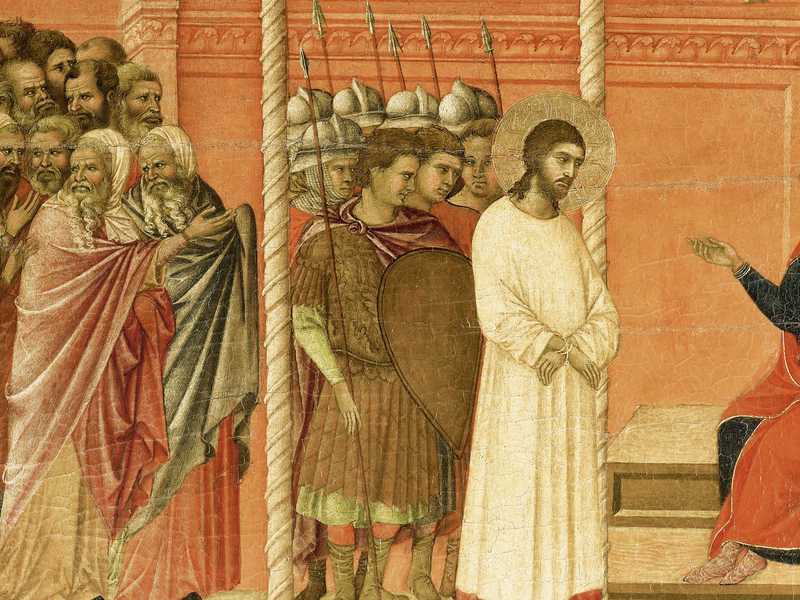
200403-moss-pilate-tease_pncfq5
History

Victimhood and the Gospel

The texts of Christianity have been slowly at work, under the power of the Holy Spirit for 2000 years now. If we could be magically transported back into the world of two millennia ago, modern Americans would be shocked at the cruelty of that world. There was no concern for…

by Richard BledsoeMarch 18, 2013
aaron-burden-1ebsmyrau-s-unsplash
Luke

The Dysfunctional Family of the Gadarene Madman

The Story of the Gadarene Madman is told in all three synoptic Gospels (Matthew 8:28-34, Mark 5:1-20, Luke 8:26-37). Jesus ventures into a Gentile area when He passes over the Sea of Galilee. Upon disembarking from his boat, he is immediately met by a demon-possessed madman. Upon meeting Jesus, he…

by Richard BledsoeMarch 13, 2013
aaron-burden-1ebsmyrau-s-unsplash
Deuteronomy

Law and History: How to Read the Law of Moses

Part 1 of a multi-part series of studies on Deuteronomy 22:30-23:8. Eric Auerbach, in his classic work on Western literature, devotes his first chapter to contrasting Homer with the Bible. Of Homer, he writes of the “need of Homeric style to leave nothing which it mentions half in darkness and…

by Ralph Allan SmithMarch 12, 2013
markus-winkler-aid-xyrtlec-unsplash
Theopolis News

James Jordan in Korea, Japan

Trinity House Fellow James B. Jordan will be a speaker at an International Conference on Biblical Symbolism that will be held in Seoul on Monday, May 27 in 2013. He will address "The Importance of Biblical Symbolism and Symbolic Interpretation of the Bible." The conference will have three other speakers…

by Peter LeithartMarch 9, 2013

Showing page 197 of 309

See all
See all

Difference

Ancient Greeks sacrificed and ate pigs and dogs. Israelites were forbidden to do so. Ancient Greeks made blood pudding from sacrifices. Israelites were not supposed to eat blood. Ancient Greeks sometimes sacrificed pregnant sows. Israelites were commanded not to take both the eggs and the hen. Greek sacrificial goats were…

April 11, 2014

Equality and Privilege

Was sacrificial meat distributed equally or hierarchically in ancient Greece? Some have resolved the question diachronically: Archaic Greece had a more democratic sacrificial distribution that democratic classical Athens. Gunnel Ekroth concludes that the two systems lived side-by-side. Choice pieces were given to dignitaries and priests, but the bulk of the…

April 11, 2014

Hold, Cold, Between

Jesus charges the Laodicean angel with being lukewarm, neither hot nor cold (Revelation 3). This is understandably and rightly taken as a symbol of their indecisiveness and lethargic piety. But there’s a whole lot more going on. Hot and cold match day and night (Genesis 8:22). “Heat of the day”…

April 11, 2014

Thoughts on 1 Samuel 17

A few scattered thoughts on 1 Samuel 17. Saul offers David his armor for battle, but David refuses (v. 39). After the battle, though, David accepts the armor of Jonathan, signifying David’s elevation to crown prince (18:1-4). David kills Goliath with a rock, trusting in Yahweh the Rock. There is…

April 11, 2014

Socially Constructed Self

By the time a child is two, he or she has developed “narrative” memory, the ability to “store” and recall events in story form. This is essential to the development of thought and self-reflection, but it is, Daniel Siegel argues, a shared, social process ( The Developing Mind , 60-1),…

April 10, 2014

Pluralist Paralysis

Millennials aren’t apathetic or lazy, argues Zachary Fine in the NYT . They are simply paralyzed, and pluralism is one of the causes. “The art critic Craig Owens once wrote that pluralism is not a ‘recognition, but a reduction of difference to absolute indifference, equivalence, interchangeability.’ Some millennials who were…

April 10, 2014

Showing page 637 of 2212

Browse by Category

In Medias Res

Your weekly digest for all things Theopolis.

Donate

Theopolis is nearly 100% donor-supported. Consider joining us on our mission.