Theopolis Logo

Writing

Explore our collection of theological essays, biblical studies, and reflections on faith and culture.

See all
screen-shot-2020-03-05-at-9-05-54-am
Family

Childbearing as Liminal Space

Notwithstanding she shall be saved in childbearing, if they continue in faith and charity and holiness with sobriety. (1 Timothy 2:15) Years ago, the wife of a prominent American theologian recognized that even in Christian circles mothers were under a kind of social pressure to justify the worthwhileness of their…

by Garrett SoucyMarch 24, 2020

pablo-merchan-montes-wyopqmtdd0w-unsplash
Motherhood

Parenting through Coronavirus

I caught my five year old washing his hands again. He had already washed them several times that hour, so I asked him if he was okay. He told me he didn’t want to get “the virus”. That was before I had told him anything about coronavirus, but we did…

by Lindsey TollefsonMarch 20, 2020
arturo-castaneyra-tpe60ik97qw-unsplash
Discipleship

Take a Walk

Very early in life, I developed the habit of walking and thinking and meditating. I came from a rather strict home, and the only way I could get out of the house at night was to walk the dog. So, I did. I would walk the dog for miles and…

by Richard BledsoeMarch 17, 2020
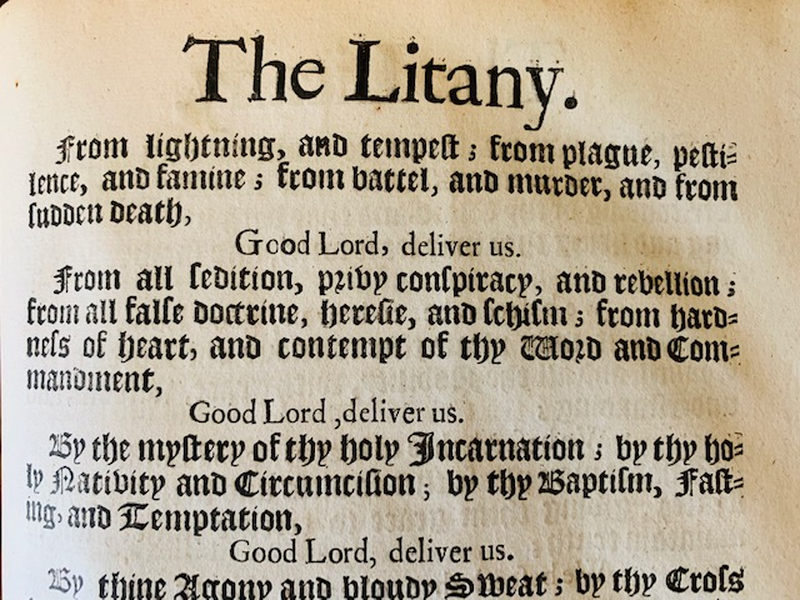
litany-1669-1
Coronavirus

Disease, Deprecations, and Deliverance in an Age of Safe Spaces | Reflections from a University President

From lightning and tempest; from plague, pestilence, and famine; from battle and murder, and from sudden death, Good Lord, deliver us. The Fourth Deprecation from Thomas Cranmer's 1544 Litany 1 A deprecation, such as that above, is a prayer to be spared from disaster, its Latin root deprecari meaning to…

by Alexander WhitakerMarch 16, 2020
lukasz-lada-q7z-aulhpaw-unsplash
Biblical Studies

The Son of Man in the Clouds | Part 2

In the previous essay in this series, we saw that Jesus’ words about coming on the clouds were spoken on more than one occasion, first to the disciples on the Mount of Olives (Matthew 24:30; Mark 11:36; Luke 21:27), then, a few days later, to the high priest and Jewish…

by Ralph Allan SmithMarch 10, 2020
screen-shot-2020-03-05-at-9-05-54-am
Epistemology

Voice and God’s Relational Biology

The following is excerpted from an essay first published at Church Life Journal . We are grateful to the editors for permission to repost here. The word “science” at its root means “to know” and the word “theology” at its root means “to think about God.” Can we know anything…

by Kristin M. Collier MDMarch 5, 2020

Showing page 69 of 309

See all
See all

Circular Evolution

In his Natural History of Religion, David Hume proposes an evolutionary progress from natural polytheism to more developed monotheism. This, he thinks, is the natural and virtually inevitable progress: “As far as writing or history reaches, mankind, in ancient times, appears universally to have been polytheists” and idolaters. It makes…

March 11, 2014

Persistent Protest

Protestant problematics about sacraments still run in the background of early modern debates about religion. In response to evidence of similarities between Jewish and “savage” Indian religion, some early modern thinkers argued that the ritual similarities were marginal to Judaism. Some thought of Jewish ceremonies as a kind of prophylactic…

March 11, 2014

Jubilee: Real or Ideal?

Many scholars have concluded that the Jubilee legislation of Leviticus 25 is an idealized portrait of an institution that Israel never practiced. In a 2003 essay in Vetus Testamentum , Lee Casperson takes issue with this viewpoint: “There are extensive parallels in the ancient Near East, long predating the entry…

March 11, 2014

Reenacted Exodus

Leigh Trevaskis tries to suss out the rationale for sticking Leviticus 24 (menorah, showbread, blasphemy) between Leviticus 23 (Israel’s festival calendar) and Leviticus 25 (Jubilee). He proposes a symbolic solution to the puzzle. He observes that chapter 24 begins with a reverence to “light” (v. 2), alluding back to the…

March 11, 2014

Epistemological Dualism

Esther Lightcap Meek presents the most devastating little critiques of epistemological dualism I’ve ever read near the beginning of A Little Manual for Knowing . Epistemological dualism describes the way we “distinguish knowledge from beliefs, facts from values, reason from faith, theory from application, thought from emotion, mind from body,…

March 11, 2014

Righteous aggressors

Halbertal ( On Sacrifice , 72-3) offers this fine analysis of the self-justificating moves of aggressors: “The mind can play complicated games, and among them is the accusation that an aggressor directs toward his victim for causing him to become violent, which all too easily turns into a justification for…

March 10, 2014

Showing page 663 of 2212

Browse by Category

In Medias Res

Your weekly digest for all things Theopolis.

Donate

Theopolis is nearly 100% donor-supported. Consider joining us on our mission.