Theopolis Logo

Writing

Explore our collection of theological essays, biblical studies, and reflections on faith and culture.

See all
max-kukurudziak-qbc3zmxw0g8-unsplash
History

Report from Ukraine

We lost Crimea. That is very clear. Putin proved he was not lying when he said he would place women and children ahead of his soldiers to storm Ukrainian military bases. Russian soldiers did exactly that with women (some who volunteered and some who were forced). Russia now occupies all…

by San SanychMarch 28, 2014

screenshot-2023-09-21-at-3-59-23-pm
Church Calendar

God Gone Silent

Sound is an indicator of life and energy. “Sound signals the present use of power, since sound must be in active production to exist at all.” Things don’t have to be alive to make themselves visible, and “a primitive hunter can see, feel, smell, and taste an elephant when the…

by Peter LeithartMarch 26, 2014
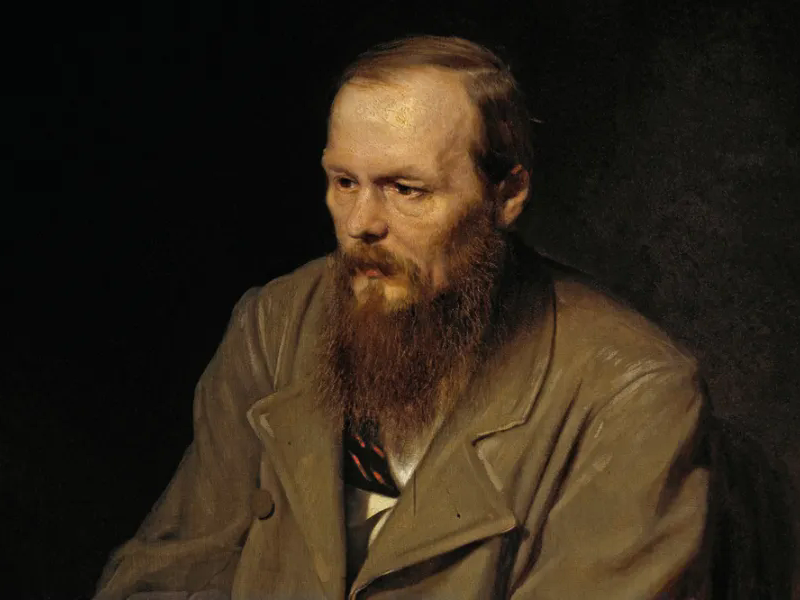
web-lead-image_final_dostoevsky
Books

Dostoevsky the Liberal

In the most famous section of his best-known novel, Dostoevsky’s Ivan Karamazov brings forward his case against God. He opens with a horrific litany of outrages against children. Turkish soldiers make a baby laugh and then shoot a pistol into his face. A little girl is beaten, thrashed, kicked by…

by Peter LeithartMarch 24, 2014
kelly-sikkema-ggs0_g6wi-i-unsplash
Epistemology

Subsidiary-Focal Integration and Liturgy

​At the heart of Esther Lightcap Meek's splendid ​Little Manual for Knowing is a concept she picked up from Michael Polanyi, "subsidiary-focal integration." The concept begins from the insight that all our knowing, all our experience, is double. We focus on something, but we are capable of "indwelling" that focal…

by Peter LeithartMarch 19, 2014
engin-akyurt-uz9qpvbol0e-unsplash
Revelation

White Stone

Jesus promises the overcomers of Pergamum "hidden manna" and a "white stone." The hidden manna is often linked with the manna stashed away in the ark of the covenant. The white stone has proved more elusive. Exodus tells us that manna was white (Exodus 16:31) and like bdellium (Numbers 11:7),…

by Peter LeithartMarch 17, 2014
226961fgsdl
Leviticus

A Theology of Festivity

Leviticus 23 begins with a reference to “Yahweh’s appointed times” ( mo’ade-YHWH ). Mo’ed is the common term for the feasts of Israel. A few dimensions to this term. First, it means “appointed time” or “designated time.” It is a time set by Yahweh. Yahweh has claimed certain times as…

by Peter LeithartMarch 12, 2014

Showing page 177 of 309

See all
See all

Bloody Christians

Rabbinic Judaism, Stephen Geller suggests, is the “triumph of Deuteronomy and the Word.” After the fall of the temple especially, the place of the cult was taken by prayer and the liturgy. The literary temple became far more important than any possible future building. And with the end of the…

March 7, 2014

Vocal Silence

Michel Anteby’s Manufacturing Morals is an “ethnography” of the Harvard Business School. It’s an odd book, very insight-the-HBS, but along the way he develops the intriguing notions of “vocal silence.” Routine seems to rob individuals of responsibility. But most routines, Anteby points out, require some degree of responsible judgment: “Police…

March 6, 2014

Traumatic Neighbors

In his contribution to The Neighbor , Zizek offers this typically contrarian, typically extreme, description of the impact of God’s command to love the neighbor: “What gets lost in this ‘critique of ethical violence’ is precisely the most precious and revolutionary aspect of the Jewish legacy. Let us not forget…

March 6, 2014

Rivers

Rivers have a unique place in biblical cosmology. Though watery, rivers are unlike the sea, which always threatens to overwhelm the land. Channeled, water becomes life-giving. They keep land fruitful, set boundaries between peoples or join them as liquid roads. A river is water brought into service to human needs,…

March 6, 2014

Gratitude according to Barth

Someone asked me recently if my Gratitude includes a section on Barth. It doesn’t, and I’m sure this is not the last time I will turn sheepish as I confess to a large, unconscionable gap in the book. It doesn’t make up for the oversight, but here are some summary…

March 6, 2014

Literary Facts

Stephen Geller opens an essay on blood in “P” by stating that he is treating the Pentateuch as a literary unit. What the “priestly editor” produced, he argue is not “patchwork aggregate signifying nothing” but “a work meaningful in the whole, a tapestry more than the sum of its woven…

March 6, 2014

Showing page 666 of 2212

Browse by Category

In Medias Res

Your weekly digest for all things Theopolis.

Donate

Theopolis is nearly 100% donor-supported. Consider joining us on our mission.