Theopolis Logo

Writing

Explore our collection of theological essays, biblical studies, and reflections on faith and culture.

See all
aaron-burden-qjdzyt_k8xg-unsplash
Biblical Horizons

Twelve Fundamental Avenues of Revelation, Part 2

Theophanic revelation is historically progressive, or eschatological, in character. First of all, in Genesis 1:2, the Spirit appeared inside the creation, sent by the Father. After the creation of man, the Spirit worked and works with humanity to bring us to maturity, from Daughter to Bride to fruitful Mother. He…

by James B. JordanFebruary 28, 1997

gang-coo-nt7tyrsofwk-unsplash
Biblical Studies

The Calf of the Purification Offering

On the eighth day of the rite of "filling the hand," Aaron began his service at the altar. His first offering was a "calf" (Heb. `egel ), which served as a purification offering for himself and (apparently) his household (Leviticus 9:2, 8). This is striking for a couple of reasons.…

by Peter LeithartFebruary 27, 1997
sergey-shmidt-koy6flccy5s-unsplash
Exodus

A Blossom of Yahweh’s Garden

One of the distinctive items of the high priest’s clothing was the "golden plate" inscribed with the words "Holy to Yahweh" (Exodus 28:36-38). The word translated as "plate" is tsits , which literally means "flower." The verbal and noun forms are both used in Numbers 17:8, which describes Aaron’s rod…

by Peter LeithartFebruary 27, 1997
davide-ragusa-slgtmf8ejye-unsplash
Biblical Horizons

Squaring Off and Crossing Up

The square, rectangle, and cross shapes appear all over the sanctuaries God reveals in the Bible: Tabernacle, Solomon’s Temple, Ezekiel’s Temple, New Jerusalem. One thing that can be said right away about these designs, and the occasional perfect circle (the lavers), is that they do not occur in nature. They…

by James B. JordanJanuary 28, 1997
schlanger_jonah_prison_090913_620px
Biblical Studies

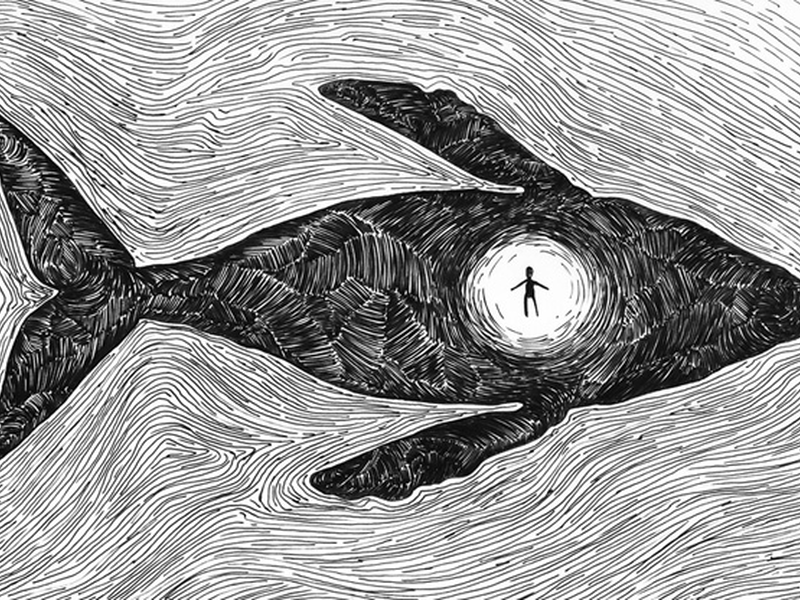
In the Fish: The Church as Tomb

"For just as Jonah was three days and three nights in the belly of the sea-monster, so will the Son of Man be three days and three nights in the heart of the earth" (Matthew 12:40). Some reflections on Jonah’s Big Fish have led to the following essay. Let me…

by James B. JordanJanuary 28, 1997
Hermeneutics

God Most High

Citing Melchizedek in Genesis 14:18-20, James Jordan has written that "the name of God in use among the nations was God Most High’" (Hebrew, `el `elyon ; in Through New Eyes , p. 176). In addition to Melchizedek, one could cite the example of Balaam, who invokes the Lord both…

by Peter LeithartJanuary 27, 1997

Showing page 260 of 309

See all
See all

Seal of Baptism

In an 1873 article in the Mercersburg Review, E.V. Gerhart, a professor at Mercersburg seminary, argued that nineteenth-century views of baptism had departed radically from the viewpoint of the Protestant confessions: “Claiming to be the faithful representative of Reformational ideas, the religious press of our day, generally at least, denies,…

February 28, 2014

Renewed in Baptism

E.V. Gerhart argues in his 1873 Mercersburg Review article that the Heidelberg Catechism teaches that “Baptism makes the sinner a new man.” He explains: “The word ‘renewed’ in this connection . . . is to be taken as affirming a new organic relation of the subject of Baptism with Christ,…

February 28, 2014

Historicism’s Dilemmas

At the beginning of her The Philosophical Question of Christ , Caitlin Smith Gilson sketches the multiple dilemmas of historicism. Historicism “takes the historicist out of history,” which is not only paradoxical but, on historicist terms, impossible, since outside history “there is no place to be” (xiii). How does this…

February 28, 2014

Pity the Subversive

Frank Kermode summarizes Alain Robbe-Grillet’s experimental novel, In the Labyrinth , in his The Sense of an Ending : “the soldier who is the central figure only slowly emerges (in so far as he does emerge) from other things, the objects described with equal objectivity, such as the mysterious packet…

February 27, 2014

Voluntary Impurity

In a contribution to Women and Water: Menstruation in Jewish Life and Law , Leslie Cook helpfully traces the differentiations of Leviticus back to the divisions of creation. In the creation accounts, God is differentiated from human beings and human beings from nature by “body, blood, food, time, and space”…

February 27, 2014

Bringing up the Cud

To be accounted clean, land animals have to “chew the cud.” The Hebrew for “chew” is alah , to bring up or to ascend. That’s quite literal. Animals that chew the cud swallow, and then regurgitate the food back to the mouth to chew. By the time we get to…

February 27, 2014

Showing page 671 of 2212

Browse by Category

In Medias Res

Your weekly digest for all things Theopolis.

Donate

Theopolis is nearly 100% donor-supported. Consider joining us on our mission.