Theopolis Logo

Writing

Explore our collection of theological essays, biblical studies, and reflections on faith and culture.

See all
sodom
Judges

The Levite, the Concubine, and Israel's Story

The story of Judges 19 and the subsequent chapters are some of the most shocking and appalling accounts in all of Scripture. The callousness of the old host and the Levite, and the monstrous brutality of the men of Gibeah, leaves us feebly scrabbling for words by which to surmount…

by Alastair RobertsNovember 1, 2016
david-ark-2
Biblical Theology

Adam Ascended

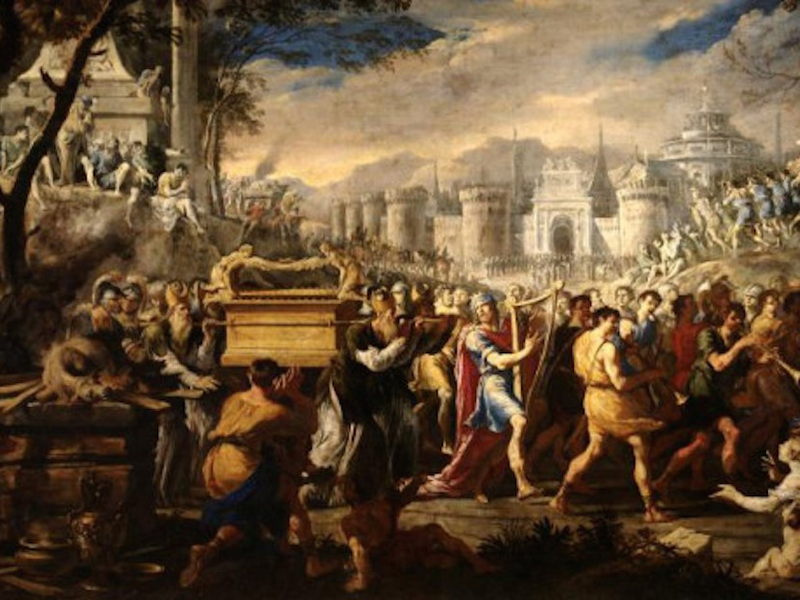
David has become king. He has conquered the capital city of Jerusalem. He has brought the ark of Yahweh into the city and placed it in a tent. He has stationed Levites at the tent to offer sacrifices of praise. An anomaly hits him: He has a cedar-paneled palace, and…

by Peter LeithartOctober 27, 2016
last-supper-2
Eucharist

The Epiclesis in the Reformed Eucharistic Prayer, 3

In Part 2 of this series we traced what we have of the development of the epiclesis in the liturgy of the Church. In this third and final part we’ll look at the theological implications of this and how we may apply what we’ve learned. As we saw in Part…

by Christopher KouOctober 25, 2016
jimpreaching
How to Worship

Reformational Catholicism, A Wish List

In a 2014 piece published in First Things , I offered a "wish list" for Protestant churches, a checklist for a future catholic Protestantism. The wish list doesn't cover everything. It doesn't mention those things that Protestants, especially Evangelicals, already do, often exceedingly well, things like missions and evangelism and…

by Peter LeithartOctober 20, 2016
last-supper-2
Eucharist

The Epiclesis in the Reformed Eucharistic Prayer, (Part 2)

In the first part of this series we examined the meaning of “blessing” in Scripture and its parallels in Jewish liturgical tradition, but did not find anything that we could properly call an epiclesis (an invocation of the Holy Spirit). We did find examples of invocation of Jesus to “come”…

by Christopher KouOctober 18, 2016
moses-gives-aaron-priesthood-39465-wallpaper
Baptism

Renewing Circumcision

When the Aaronic priests were ordained, the blood of the ram of "filling” was placed on the lobe of the right ear, the right thumb, and the right big toe (Lev. 8:22-24). Similarly, the cleansing rite for a leper included smearing the right ear lobe, thumb, and big toe with…

by Peter LeithartOctober 13, 2016

Showing page 123 of 309

See all
See all

The argument of Romans

Mark Horne continues his studies in Romans at the Trinity House site.

June 17, 2013
American Religion

Founded on founding

Prior to the founding of America, argues Hannah Arendt in On Revolution , political orders were justified and legitimated by appeal to absolutes: “a divinity, not nature but nature’s God, not reason but a divinely informed reason” gave validity to political order and buttressed political power. Over time, the early…

June 16, 2013
Philosophy

Piety and Nihilism

Theory, Nietzsche argued, arises from the will to “correct existence.” Taking his cues from Nietzsche, Lyotard describes the difference between “pious” and “pagan” theorizing. The former is guilty of Nietzsche’s charge: Since Plato, Lyotard argues, philosophers have attempted to formulate a perfect theory of justice or freedom on the grounds…

June 16, 2013

New Frontiers

In their contribution to American Space/American Place: Geographies of the Contemporary United States , John Agnew and Joanne Sharp describe the context and import of Frederick Jackson Turner’s famed “Frontier Thesis.” Turner wrote in the context of the downturn of the 1890s, and his argument was partly about the future…

June 16, 2013
Economics

Papal economics

Michael Miller’s essay in Christian Theology and Market Economics focuses on “Business as a moral enterprise.” In part, he offers a summary of John Paul II’s teaching on economics and business, especially as expressed in the encyclical Centessimus Annus . As one might expect, John Paul puts business into the…

June 13, 2013

Productive Money

In his contribution to Christian Theology and Market Economics , Stephen Grabill reviews the “pre-Enlightenment” history of economic theory. That is to say, scholastic economics. For many economic historians, the notion of a scholastic economic theory is fallacious, and Exhibit #1 is always the scholastic prohibition of usury, grounded in…

June 13, 2013

Showing page 719 of 2212

Browse by Category

In Medias Res

Your weekly digest for all things Theopolis.

Donate

Theopolis is nearly 100% donor-supported. Consider joining us on our mission.