Theopolis Logo

Writing

Explore our collection of theological essays, biblical studies, and reflections on faith and culture.

See all
rembrandt-main
Art

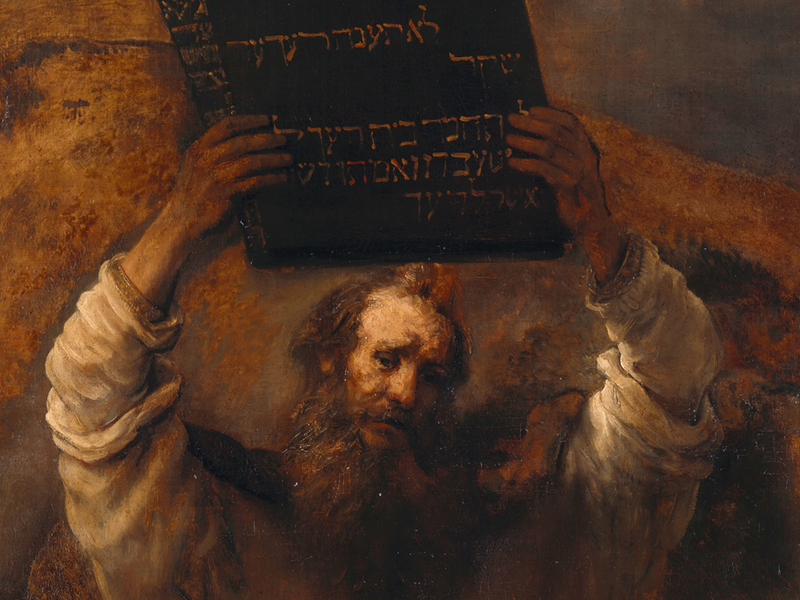
The Second Word V: On Images and Art, Part 3

The Failure of the Church Yet a third factor played an important role in this historical development, in addition to the imperial adoption of icons and the rise of the icons of the holy man. Brown writes: "The great Christian basilicas of the previous centuries tended to stand empty, except…

by James B. JordanSeptember 4, 1998

screenshot-2023-09-11-at-11-34-45-am
Biblical Horizons

Patriarchal Dominion

The three large patriarchal narratives of Genesis concern the three aspects of the cosmos: matter, space, and time. Over these three is man given dominion. Lucifer was originally appointed to train man in this dominion, but he chose to lead man into rebellion instead. Thus, the Angel of Yahweh replaced…

by James B. JordanAugust 4, 1998
trnava-university-beeyeib-am8-unsplash
Biblical Horizons

The Case Against Western Civilization, Part 6

Part 6: Living in a Dying World (continued) The "Trivium" (continued) The five stages of education are simply the five stages of the covenant as God administers it in human life and history, and in the liturgy of covenant renewal: First, God announces Himself. "I am Yahweh Your God." He…

by James B. JordanAugust 4, 1998
screen-shot-2022-05-12-at-12-07-23-pm
Biblical Studies

Re-creation in the Ascension Offering

The following essay is tentative and exploratory, offered for your consideration. It seems to me that the ritual of the Ascension Offering (incorrectly translated as Burnt Offering) of Leviticus 1 is a symbolic recapitulation of Genesis 1, which thereby portrays the sacrificial ritual as way of moving from a fallen…

by James B. JordanJuly 4, 1998
Biblical Horizons

The Framework Hypothesis: A Gnostic Heresy

Just as the vast majority of evangelical Christians in America today are Arminian and Baptist, so the vast majority do not believe in a creation around 4000 BC. I don’t expect any of these three situations to change anytime soon. Powerful presuppositions are at work in all three instances, along…

by James B. JordanJuly 4, 1998
picture-mosaic-cathedral-jesus-christ-cefalu-italy-copy
Art

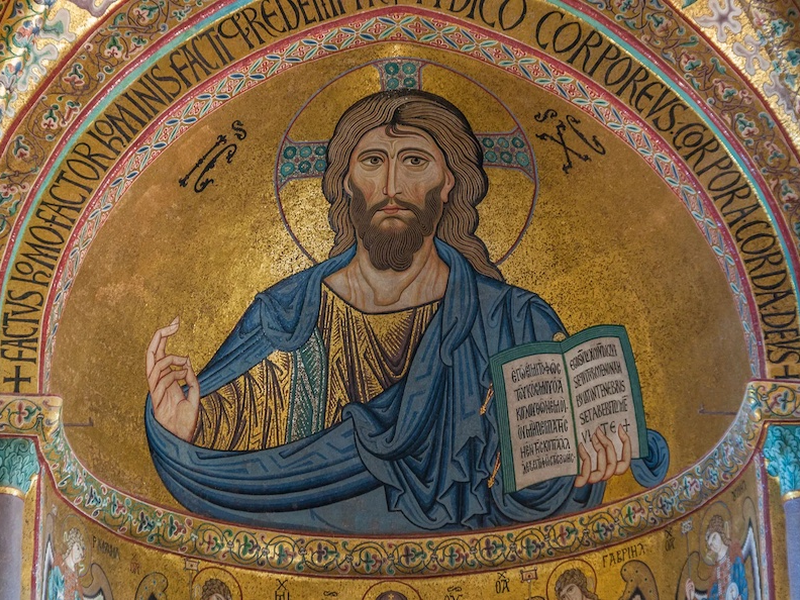
The Second Word V: On Images and Art, Part 2

The Iconoclastic Controversy Continuing Pagan Influence How did images creep in? To begin with, there was in the post-Constantinian Church a concerted effort on the part of the semi-pagans to interpret Christianity in essentially pantheistic terms. The heretics put God and man on a continuum of "being," so that God…

by James B. JordanJuly 4, 1998

Showing page 248 of 309

See all
See all

The argument of Romans

Mark Horne continues his studies in Romans at the Trinity House site.

June 17, 2013
American Religion

Founded on founding

Prior to the founding of America, argues Hannah Arendt in On Revolution , political orders were justified and legitimated by appeal to absolutes: “a divinity, not nature but nature’s God, not reason but a divinely informed reason” gave validity to political order and buttressed political power. Over time, the early…

June 16, 2013
Philosophy

Piety and Nihilism

Theory, Nietzsche argued, arises from the will to “correct existence.” Taking his cues from Nietzsche, Lyotard describes the difference between “pious” and “pagan” theorizing. The former is guilty of Nietzsche’s charge: Since Plato, Lyotard argues, philosophers have attempted to formulate a perfect theory of justice or freedom on the grounds…

June 16, 2013

New Frontiers

In their contribution to American Space/American Place: Geographies of the Contemporary United States , John Agnew and Joanne Sharp describe the context and import of Frederick Jackson Turner’s famed “Frontier Thesis.” Turner wrote in the context of the downturn of the 1890s, and his argument was partly about the future…

June 16, 2013
Economics

Papal economics

Michael Miller’s essay in Christian Theology and Market Economics focuses on “Business as a moral enterprise.” In part, he offers a summary of John Paul II’s teaching on economics and business, especially as expressed in the encyclical Centessimus Annus . As one might expect, John Paul puts business into the…

June 13, 2013

Productive Money

In his contribution to Christian Theology and Market Economics , Stephen Grabill reviews the “pre-Enlightenment” history of economic theory. That is to say, scholastic economics. For many economic historians, the notion of a scholastic economic theory is fallacious, and Exhibit #1 is always the scholastic prohibition of usury, grounded in…

June 13, 2013

Showing page 719 of 2212

Browse by Category

In Medias Res

Your weekly digest for all things Theopolis.

Donate

Theopolis is nearly 100% donor-supported. Consider joining us on our mission.