Theopolis Logo

Writing

Explore our collection of theological essays, biblical studies, and reflections on faith and culture.

See all
max-kukurudziak-qbc3zmxw0g8-unsplash
History

Report from Ukraine

We lost Crimea. That is very clear. Putin proved he was not lying when he said he would place women and children ahead of his soldiers to storm Ukrainian military bases. Russian soldiers did exactly that with women (some who volunteered and some who were forced). Russia now occupies all…

by San SanychMarch 28, 2014

screenshot-2023-09-21-at-3-59-23-pm
Church Calendar

God Gone Silent

Sound is an indicator of life and energy. “Sound signals the present use of power, since sound must be in active production to exist at all.” Things don’t have to be alive to make themselves visible, and “a primitive hunter can see, feel, smell, and taste an elephant when the…

by Peter LeithartMarch 26, 2014
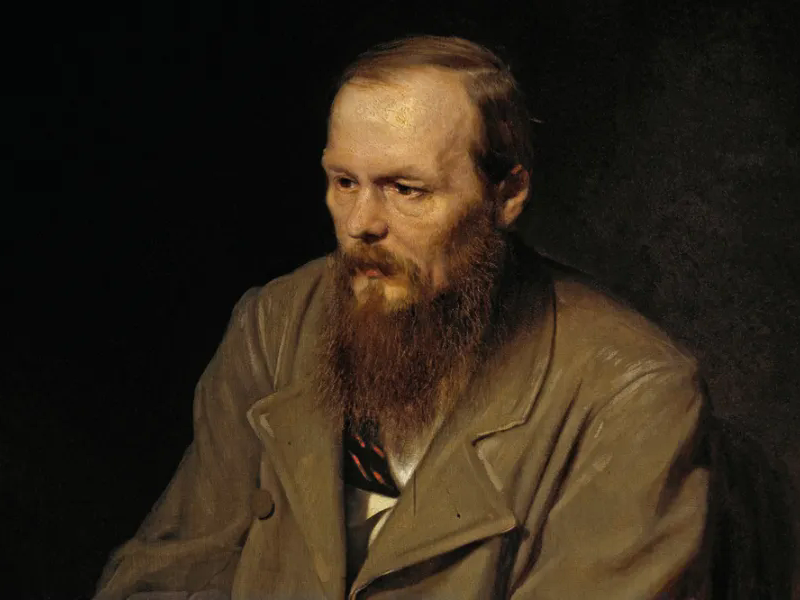
web-lead-image_final_dostoevsky
Books

Dostoevsky the Liberal

In the most famous section of his best-known novel, Dostoevsky’s Ivan Karamazov brings forward his case against God. He opens with a horrific litany of outrages against children. Turkish soldiers make a baby laugh and then shoot a pistol into his face. A little girl is beaten, thrashed, kicked by…

by Peter LeithartMarch 24, 2014
kelly-sikkema-ggs0_g6wi-i-unsplash
Epistemology

Subsidiary-Focal Integration and Liturgy

​At the heart of Esther Lightcap Meek's splendid ​Little Manual for Knowing is a concept she picked up from Michael Polanyi, "subsidiary-focal integration." The concept begins from the insight that all our knowing, all our experience, is double. We focus on something, but we are capable of "indwelling" that focal…

by Peter LeithartMarch 19, 2014
engin-akyurt-uz9qpvbol0e-unsplash
Revelation

White Stone

Jesus promises the overcomers of Pergamum "hidden manna" and a "white stone." The hidden manna is often linked with the manna stashed away in the ark of the covenant. The white stone has proved more elusive. Exodus tells us that manna was white (Exodus 16:31) and like bdellium (Numbers 11:7),…

by Peter LeithartMarch 17, 2014
226961fgsdl
Leviticus

A Theology of Festivity

Leviticus 23 begins with a reference to “Yahweh’s appointed times” ( mo’ade-YHWH ). Mo’ed is the common term for the feasts of Israel. A few dimensions to this term. First, it means “appointed time” or “designated time.” It is a time set by Yahweh. Yahweh has claimed certain times as…

by Peter LeithartMarch 12, 2014

Showing page 177 of 309

See all
See all

Hegelian Violence

In Battling to the End: Conversations with Benoît Chantre , Girard admits that Hegel’s analysis of the master/slave relationship, especially as mediated through Kojeve’s Introduction to the Reading of Hegel: Lectures on the Phenomenology of Spirit (which emphasizes the role of desire), helped shape his understanding of mimetic desire and…

March 27, 2013

Not all equalities are equal

Steven Smith, who teaches law at the University of San Diego, explains how rhetorical appeals to “equality” obscure rather than illuminate public debate. Citing a Harvard Law Review article by Peter Westen (“The Empty Idea of Equality”), he observes that everyone is for equality if it is defined as “like…

March 27, 2013

Place-Taking

Janowski ( The Suffering Servant: Isaiah 53 in Jewish and Christian Sources ) traces modern doubts about vicarious substitution back to Kant, who argues that guilt, being an “intrinsic personal feature” cannot be transferred. Guilt is not like a financial debt, which can be paid by someone else, but, Kant…

March 27, 2013

Yahweh’s Plan

In his superb essay in The Suffering Servant: Isaiah 53 in Jewish and Christian Sources , Bernd Janowski argues for a “place-taking” interpretation of Isaiah 53. The Servant takes the place of the people to bear their sins. Along the way, he notes some important nuances of the passage, especially…

March 27, 2013

End of the law

Jesus’ death delivers not just from the curse of the law but from the bondage of law itself. Because of Jesus’ death, those in Christ are no longer “under the law.” How does that work? In Jesus - God and Man , Pannenberg offers the following explanation. Jesus was charged…

March 27, 2013

Abel-ness

In his contribution to The Words of the Wise are like Goads (Eisenbrauns, 2013), Russell L. Meek explores the intertextual connections between Ecclesiastes and Genesis. He shows that: “(1) Qohelet relies on the language used to describe the Garden of Eden to describe his own building projects; (2) Qohelet borrows…

March 27, 2013

Showing page 766 of 2212

Browse by Category

In Medias Res

Your weekly digest for all things Theopolis.

Donate

Theopolis is nearly 100% donor-supported. Consider joining us on our mission.