Theopolis Logo

Writing

Explore our collection of theological essays, biblical studies, and reflections on faith and culture.

See all
jelleke-vanooteghem-gnxb59lgu1m-unsplash
Baptism

Baptism and the Spirit

Pneumatology, the doctrine of the Holy Spirit, is often formulated along dispensational lines. The Holy Spirit’s work in the Old Testament, we tend to think, was earthly, concerned with political and military leadership, while in the New Testament the Spirit’s work has to do with mediating salvation achieved by Christ.…

by Peter LeithartMay 27, 1996

trnava-university-beeyeib-am8-unsplash
Biblical Horizons

Open Book 6: Views & Reviews

Homosexuality and the Love of Death Some years ago (September, 1980) Midge Decter published in Commentary one of the most illuminating pieces that I have ever seen on homosexuality. It was a very autobiographical piece dealing with her own summer vacation experiences on Fire Island off of New Jersey. When…

by Richard BledsoeApril 28, 1996
tim-wildsmith-j6jv-mkdzqs-unsplash
Esther

Esther: Historical & Chronological Comments (II)

C. The Battle of Gog and Magog (Ezekiel 38-39) (continued for previous issue) A final corroboration of this interpretive hypothesis comes from what we might call the "Amalek Pattern" in the Bible. Note in Genesis 12-15 that Abram moves into the land after escaping Pharaoh (ch. 12), settles down and…

by James B. JordanApril 28, 1996
image-20150409-15244-1r08rsu
Romans

Christ in the Holy of Holies: The Meaning of the Mount of Olives

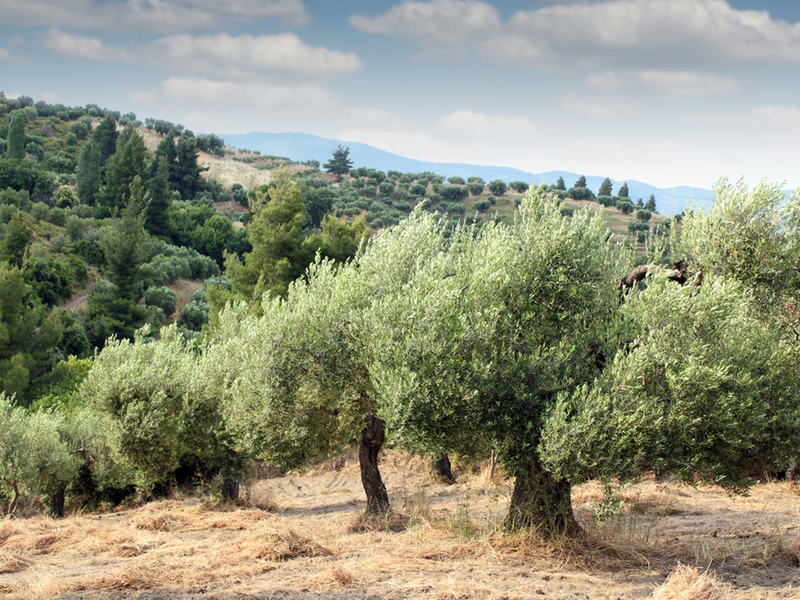
Speaking of the Church, Romans 11:16-17 says, "And if the root be holy, the branches are also. But if some of the branches were broken off, and you, being a wild olive were grafted in among them and became partaker with them of the root of the fatness of the…

by James B. JordanApril 28, 1996
aaron-burden-h8s0pf2rcqs-unsplash
Romans

Committed to the Form of Teaching

But thanks be to God that though you were slaves of sin, you became obedient from the heart to that form of teaching (tupos didaskales) to which you were committed, and having been freed from sin, you became slaves of righteousness (Romans 6:17-18). In his study of the use of…

by Peter LeithartApril 27, 1996
screenshot-2023-07-27-at-10-25-35-am
Biblical Horizons

Review: Biblical Theology, by John Owen

John Owen (1616-1683), Biblical Theology, or the Nature, Origin, Development, and Study of Theological Truth in Six Books, translated by Stephen P. Westcott (Pittsburgh: Soli Deo Gloria Publications, [1661] 1994), hardcover, 911 pages, $50.00. Here for the first time in English is one of Owen’s most important Latin works, along…

by James B. JordanMarch 28, 1996

Showing page 266 of 309

See all
See all

Abraham the Rock

Abraham is a rock (Isaiah 51). What does that mean? He’s a chip off the Rock of Israel, Yahweh himself. No matter how much you water them, rocks don’t grow into rock gardens, but Abraham becomes a garden because He is blessed by the Lord. Abraham the rock grows to…

March 7, 2013

Full of fury

At the end of Isaiah 51, the prophet uses the image of the cup of wrath (cf. Psalm 75; Jeremiah 25; Revelation 18). Jerusalem has drunk so much that she has been asleep; she stumbles around without anyone to help her (v. 18). No one can help because all her…

March 7, 2013

Four by Four Equals Six

Isaiah 3 promises “comfort” for barren, bereft mother Zion. Comfort isn’t just soothing pain, but a change of condition. Yahweh brings comfort because He brings justice, establishing righteousness. The comfort is spelled out in a lovely list: From her wilderness as Eden From the Arabah as the garden of God…

March 7, 2013

Hewn from the Rock

Isaiah tells the people of Judah to look to the “rock from which you were hewn, and to the cistern from which you were dug” (Isaiah 51:1). The next verse makes it clear that he is talking about Abraham and Sarah. Abraham the father is the rock; mother Sarah is…

March 7, 2013

Uti and Frui

In his recent Theology of Augustine: An Introductory Guide to His Most Important Works (6-7), Matthew Levering offers this summary of Augustine’s distinction between use and enjoyment, uti and frui : “In loving our neighbors and ourselves, we should do nothing that is not also fully and truly love of…

March 7, 2013

Shared Glory

When he turned proud and boasted in the “power and glory of my majesty” (Daniel 4:30), Nebuchadnezzar was “driven away from mankind and began eating grass like cattle” (v. 33). Boasting in glory diminished his glory. He later came to his senses, and coming to his senses meant confessing that…

March 7, 2013

Showing page 781 of 2212

Browse by Category

In Medias Res

Your weekly digest for all things Theopolis.

Donate

Theopolis is nearly 100% donor-supported. Consider joining us on our mission.