Theopolis Logo

Writing

Explore our collection of theological essays, biblical studies, and reflections on faith and culture.

See all
max-kukurudziak-qbc3zmxw0g8-unsplash
History

Report from Ukraine

We lost Crimea. That is very clear. Putin proved he was not lying when he said he would place women and children ahead of his soldiers to storm Ukrainian military bases. Russian soldiers did exactly that with women (some who volunteered and some who were forced). Russia now occupies all…

by San SanychMarch 28, 2014

screenshot-2023-09-21-at-3-59-23-pm
Church Calendar

God Gone Silent

Sound is an indicator of life and energy. “Sound signals the present use of power, since sound must be in active production to exist at all.” Things don’t have to be alive to make themselves visible, and “a primitive hunter can see, feel, smell, and taste an elephant when the…

by Peter LeithartMarch 26, 2014
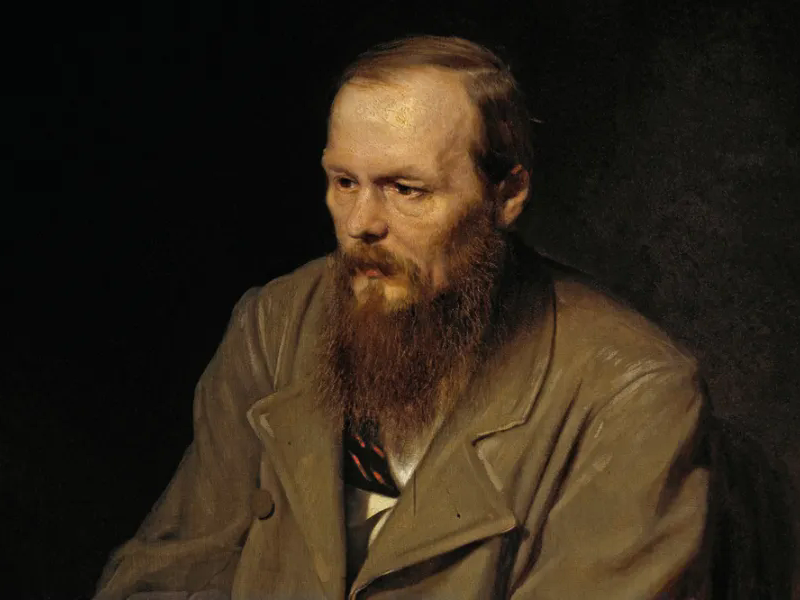
web-lead-image_final_dostoevsky
Books

Dostoevsky the Liberal

In the most famous section of his best-known novel, Dostoevsky’s Ivan Karamazov brings forward his case against God. He opens with a horrific litany of outrages against children. Turkish soldiers make a baby laugh and then shoot a pistol into his face. A little girl is beaten, thrashed, kicked by…

by Peter LeithartMarch 24, 2014
kelly-sikkema-ggs0_g6wi-i-unsplash
Epistemology

Subsidiary-Focal Integration and Liturgy

​At the heart of Esther Lightcap Meek's splendid ​Little Manual for Knowing is a concept she picked up from Michael Polanyi, "subsidiary-focal integration." The concept begins from the insight that all our knowing, all our experience, is double. We focus on something, but we are capable of "indwelling" that focal…

by Peter LeithartMarch 19, 2014
engin-akyurt-uz9qpvbol0e-unsplash
Revelation

White Stone

Jesus promises the overcomers of Pergamum "hidden manna" and a "white stone." The hidden manna is often linked with the manna stashed away in the ark of the covenant. The white stone has proved more elusive. Exodus tells us that manna was white (Exodus 16:31) and like bdellium (Numbers 11:7),…

by Peter LeithartMarch 17, 2014
226961fgsdl
Leviticus

A Theology of Festivity

Leviticus 23 begins with a reference to “Yahweh’s appointed times” ( mo’ade-YHWH ). Mo’ed is the common term for the feasts of Israel. A few dimensions to this term. First, it means “appointed time” or “designated time.” It is a time set by Yahweh. Yahweh has claimed certain times as…

by Peter LeithartMarch 12, 2014

Showing page 177 of 309

See all
See all

How Jesus Saved the World

The first part of a Lenten meditation on John’s Passion narrative by Pastor Jeff Meyers at the Trinity House site.

February 20, 2013
Politics

Normative events

Some years ago it struck me how much current political opinion and theory depend on appeals to normative events. We can’t do or say X because of the Holocaust, or because of Fascism, or because of the Civil Rights Act. Events close off certain political and moral options. This mode…

February 20, 2013

Natural law and Supernatural ends

In the current issue of First Things , David Bentley Hart expresses his skepticism of “the attempt om recent years by certain self-described Thomists, particularly in America, to import [natural law] tradition into public policy debates.” He has in mind the idea that “compelling moral truths can be deduced from…

February 20, 2013

Lovers of the Poor

Summarizing the work of Peter Brown, James Davison Hunter ( To Change the World: The Irony, Tragedy, and Possibility of Christianity in the Late Modern World , 55) points to the crucial connection between Christian attitudes toward the poor and the transformation of Roman society: Prior to Christianity, the poor…

February 19, 2013
Music

Ears to Hear

Trinity Reformed Church recently had Ken Myers of Mars Hill Audio out to Moscow for a series of lectures on music. They were spectacular, and are now available online at Canon Wired .

February 19, 2013

Allegorical proof

It’s a truism of Protestant biblical hermeneutics that, whatever else you might be able to do with allegories and typologies, you cannot use them to prove doctrine. “Allegories are fine ornaments, but not of proof,” Luther said in The Table Talk of Martin Luther . Paul never learned this rule.…

February 19, 2013

Showing page 791 of 2212

Browse by Category

In Medias Res

Your weekly digest for all things Theopolis.

Donate

Theopolis is nearly 100% donor-supported. Consider joining us on our mission.