Theopolis Logo

Writing

Explore our collection of theological essays, biblical studies, and reflections on faith and culture.

See all
tim-marshall-k2u71wv2ei4-unsplash
Apostasy

Regeneration and Lettuce

My good friend, Jason Ewert, recently posted a review of Pastor Douglas Wilson’s book, Against the Church . Jason correctly notes that Pastor Wilson’s main pastoral motivation in writing this book is to combat dead orthodoxy. Dead orthodoxy is a real problem in Reformed churches that celebrate the primacy of…

by Garry VanderveenJuly 31, 2014
the_last_supper_-_leonardo_da_vinci_-_high_resolution_32x16-2
Eucharist

Jesus Eats First

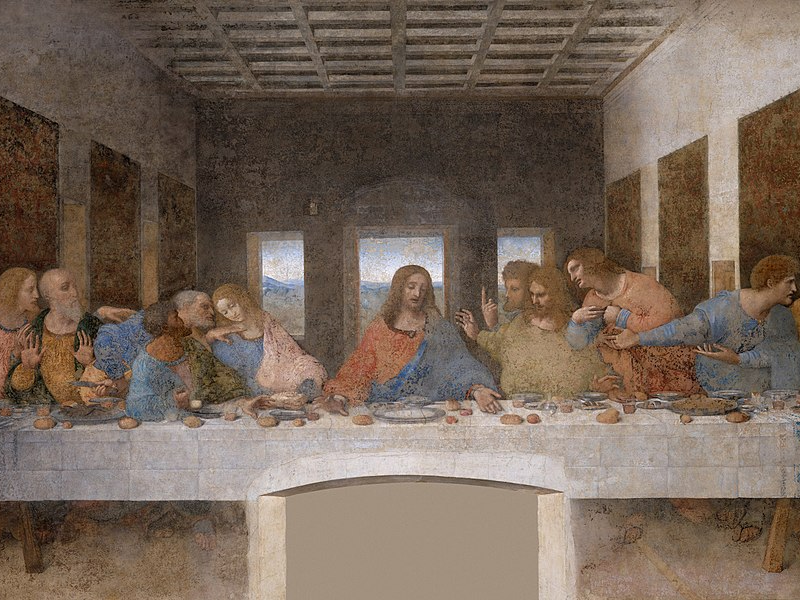
At the church I pastor, we have four servers who distribute the communion elements to the congregation, and I distribute the elements to those in the foyer and nursery. The servers and I do not partake of the bread and wine until the congregation is served first. As this has…

by Burke ShadeJuly 28, 2014
markus-winkler-aid-xyrtlec-unsplash
Theopolis News

Church of the Present, Pastors of the Future

We at Trinity House believe that the church ought to raise and train her future pastors. Part of that training may be carried out by specialized institutions like Trinity House, but the church and her leaders are ultimately responsible for that training. To encourage churches to assume that responsibility, Trinity…

by Peter LeithartJuly 23, 2014
aaron-burden-1ebsmyrau-s-unsplash
Exodus

Mutilated Bodies

Sandra Jacobs's ​The Body as Property examines the role of physical disfigurement in the Hebrew Bible, with focus on the Torah, and more specifically on the (fictitious) Priestly document, P. After an introduction laying out a rationale for the comparative method that guides her research, she explores circumcision, the use…

by Peter LeithartJuly 23, 2014
Isaiah

Saving Judah

Yahweh saves. That’s what Isaiah’s name means, and that’s what Isaiah’s prophecy is about. Yah saves Judah when Aram and Israel pressure her. He saves Jerusalem from the Assyrian siege. He brings Judah back from the grave of Babylonian exile. But this triumphant message of Isaiah fizzles. The last few…

by Peter LeithartJuly 21, 2014
screen-shot-2019-11-12-at-5-58-16-pm
Apostasy

Apostasy and Assurance

Are apostasy and assurance mutually exclusive? Some seem to think so. But let’s consider this a bit: No Reformed man would ever say that a man who is “saved” today will be safe forever no matter what . Rather we say, “your sins are forgiven, now, walk faithfully, glorify the…

by Steve WilkinsJuly 16, 2014

Showing page 171 of 309

See all
See all

At the breast

The Torah never mentions breasts as an object of erotic fascination; they are solely nourishment for infants. In the wisdom literature, things are different. Solomon encourages young men to delight in the breasts of their wives - not of another, a strange woman (Proverbs 5) -, and in the Song…

February 14, 2013

Uncontained beauty

Solomon describes the beauty of his beloved in a neat and symmetrical poem in Song of Songs 7:1-6. Framed by “how beautiful you are” (vv. 1, 6), the poem describes ten features of her body. He starts with her feet and his gaze makes its way up. The ten features…

February 14, 2013
Literature

Books and Covers

The old adage applies in spades to the covers of Pride and Prejudice sampled in the NYTBR . Don’t judge the book by any of these covers, especially the Lady Godiva, the Twilight knock-off, and the “smokin’ bad boy Darcy” ones.

February 14, 2013

Concealed technology

Technology promises to accomplish the same things that have always been done more efficiently. Borgmann is skeptical ( Technology and the Character of Contemporary Life: A Philosophical Inquiry ) (45-46), and he summarizes George Sturt’s The Wheelwright’s Shop (Craftsman) to explain the notion of the “concealment” of technology, the fact…

February 14, 2013

Devices and Machinery

In his Technology and the Character of Contemporary Life: A Philosophical Inquiry , Albert Borgmann makes a crucial distinction between a technical device and its machinery. This is “a specific instance of the means-ends distinction” (43), the machinery being the means by which the device becomes useful to its user.…

February 14, 2013
Uncategorized

Literary Names

Claude Rawson’s review of Alastair Fowler’s Literary Names: Personal Names in English Literature focuses on names used to mock and deride. Swift, for instance, “attached enormous importance to naming and not being named (a characteristic Fowler incidentally identifies with Milton’s fallen angels). Swift scrupulously marked with an ‘X; every reference…

February 14, 2013

Showing page 795 of 2212

Browse by Category

In Medias Res

Your weekly digest for all things Theopolis.

Donate

Theopolis is nearly 100% donor-supported. Consider joining us on our mission.