Theopolis Logo

Writing

Explore our collection of theological essays, biblical studies, and reflections on faith and culture.

See all
aaron-burden-h8s0pf2rcqs-unsplash
Galatians

The Restoration of the Galatians

While controversies over the writings of Paul continue in various corners of the intellectual globe, the word of God given through Paul and his scribe and all of the church’s interpreters and translators over the last two millennia is still readily available to the lofty and the lowly. Paul, as…

by Grace LangnessMarch 25, 2013

kiwihug-l4gw27xzn1i-unsplash
Deuteronomy

Law and History: How to Read the Law of Moses (Part 2)

The second in a series of studies in Deuteronomy. Deuteronomy 22:30: A man shall not take his father’s wife, and shall not uncover his father’s wing (Hebrew: kanaf ). There are a number of unusual features in this law that mark it out from the previous context, indicating that it…

by Ralph Allan SmithMarch 20, 2013
200403-moss-pilate-tease_pncfq5
History

Victimhood and the Gospel

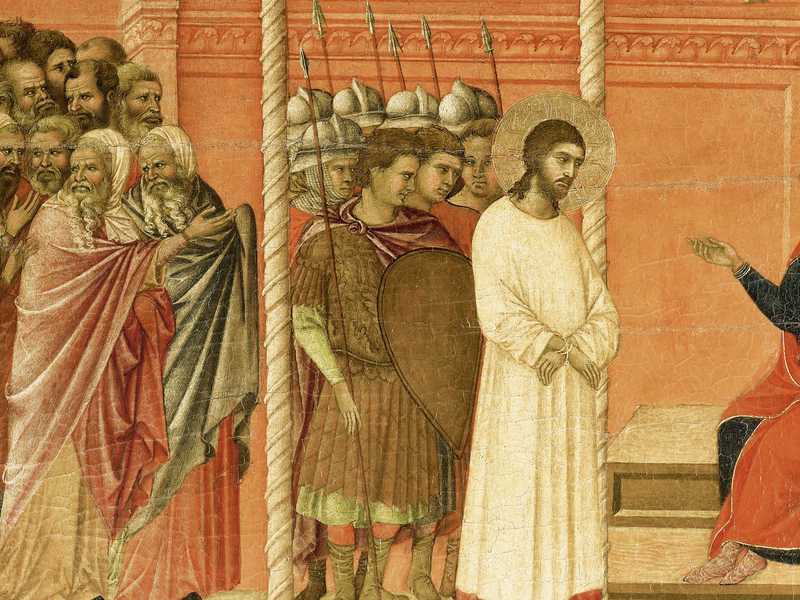
The texts of Christianity have been slowly at work, under the power of the Holy Spirit for 2000 years now. If we could be magically transported back into the world of two millennia ago, modern Americans would be shocked at the cruelty of that world. There was no concern for…

by Richard BledsoeMarch 18, 2013
aaron-burden-1ebsmyrau-s-unsplash
Luke

The Dysfunctional Family of the Gadarene Madman

The Story of the Gadarene Madman is told in all three synoptic Gospels (Matthew 8:28-34, Mark 5:1-20, Luke 8:26-37). Jesus ventures into a Gentile area when He passes over the Sea of Galilee. Upon disembarking from his boat, he is immediately met by a demon-possessed madman. Upon meeting Jesus, he…

by Richard BledsoeMarch 13, 2013
aaron-burden-1ebsmyrau-s-unsplash
Deuteronomy

Law and History: How to Read the Law of Moses

Part 1 of a multi-part series of studies on Deuteronomy 22:30-23:8. Eric Auerbach, in his classic work on Western literature, devotes his first chapter to contrasting Homer with the Bible. Of Homer, he writes of the “need of Homeric style to leave nothing which it mentions half in darkness and…

by Ralph Allan SmithMarch 12, 2013
markus-winkler-aid-xyrtlec-unsplash
Theopolis News

James Jordan in Korea, Japan

Trinity House Fellow James B. Jordan will be a speaker at an International Conference on Biblical Symbolism that will be held in Seoul on Monday, May 27 in 2013. He will address "The Importance of Biblical Symbolism and Symbolic Interpretation of the Bible." The conference will have three other speakers…

by Peter LeithartMarch 9, 2013

Showing page 197 of 309

See all
See all

Instructions for writers

For aspiring writers, I offer five key stages of writing a book. My plan applies best to non-fiction. Fiction, I’m sure, has its own rhythms. Stage 1: Ambition. You want to write the definitive yet wildly popular book about everything. This stage is marked by long periods of dreamy reflection,…

November 28, 2012
History

Conform or Go Away

Writing about the church of England’s rejection of female bishops in The New Yorker , Jane Kramer notes that “there are already calls for the disestablishment of the Church of England.” She doesn’t see that as a realistic possibility, but does think that there will be consequences: “there is some…

November 28, 2012

Salvation by/as argument

“Though He slay me, I will hope in Him,” Job says (13:15). But hope is not inconsistent with complaint. In hope, “I will argue my ways to His face,” he immediately adds. Job argues with the Lord not in spite of hope, but because of hope. He’s like an attorney…

November 28, 2012

Irrepressible church

I’ve argued in various contexts that the sheer existence of the church forces a choice on political powers. They can try to suppress the church, they can accommodate and make room, they can try to bound off the church and keep it safely private. But once the church exists, and…

November 28, 2012

Be first second

In his contribution to The Word Leaps the Gap: Essays on Scripture and Theology in Honor of Richard B. Hays , John Barclay highlights the creativity of Paul’s notion of reciprocity in the church. Reciprocity as Paul conceives it “has the capacity to complicate power relations, and to work against…

November 28, 2012

No debts

Residing as we do in a monetary economy, we immediately and thoughtlessly translate biblical warnings and cautions about debt into financial terms. “Owe nothing to anyone” (Romans 13:8) means “don’t take out a thirty-year mortgage.” It’s much more likely that Paul has social debts in mind. This might include indebtedness…

November 28, 2012

Showing page 839 of 2212

Browse by Category

In Medias Res

Your weekly digest for all things Theopolis.

Donate

Theopolis is nearly 100% donor-supported. Consider joining us on our mission.