Theopolis Logo

Writing

Explore our collection of theological essays, biblical studies, and reflections on faith and culture.

See all
screen-shot-2023-05-02-at-1-14-25-pm
Poetry

Seed-bearing Fruit

Ten-thousand ‘yeses’ and a single ‘no.’ From bough it dangles, beauty to the eyes, For belly, food, a fruit to make one wise. Too soon, they eat; they know; the leaves they sew, But, oh! the Love who asks, “Where did you go?” Confessions flow from under leaf’s disguise; A…

by Marc HaysAugust 16, 2023

screenshot-2023-08-15-at-8-22-28-am
Augustine

Eternal Life Chiasm in John's Gospel

In his masterful work, De Doctrina Christiana , Augustine of Hippo writes: I would have learned men to know that the authors of our Scriptures use all those forms of expression which grammarians call by the Greek name tropes, and use them more freely and in greater variety than people…

by Doug PonderAugust 15, 2023
screenshot-2023-08-08-at-11-13-28-am
Ruth

Lot, Ruth, and the Work of New Creation

“In accordance with the creation pattern, God sovereignly took hold of Adam and put him to sleep. Then God divided Adam by removing flesh and bone from his side, and restructured humanity into male and female. When Adam awoke, God distributed the woman to him. Adam gazed upon her and…

by Josh JensenAugust 8, 2023
rev-1-barbie-tp-0002-high-res-jpeg-647e152f50df6-2
Culture

The Barbie Movie

Greta Gerwig’s new film, Barbie, has been criticized, probably rightly, for having too many ideas and layers to properly bring in any for a landing. Gerwig herself thought the script was so “ wild and anarchic ” that she was surprised WB agreed to make it. Many see it as…

by Robin HarrisAugust 1, 2023
mariam-soliman-ht5xmeulydg-unsplash-2
Matthew

Why Does John the Baptizer Look Like a Camel?

“Now John wore a garment of camel’s hair and a leather belt around his waist, and his food was locusts and wild honey” (Matt. 3:4). Why is John the Baptizer clothed with camel’s hair? Why does he want to look like a camel? Or at least: what does he expect…

by Jeff MeyersJuly 26, 2023
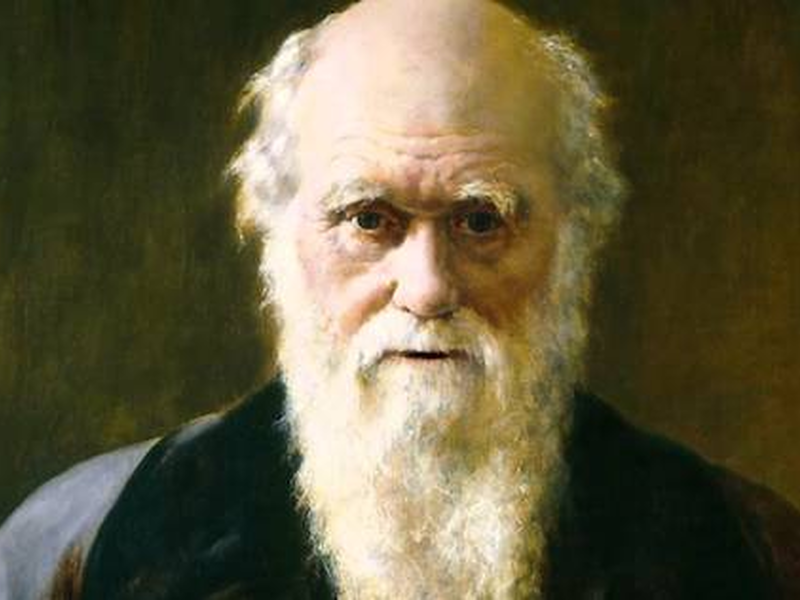
darwin
Literature

Stinking, Rotten Ministers of the Gospel

In the second greatest story ever told, The Brothers Karamazov , Fyodor Dostoyevsky tells the story of a family plagued by the lasting legacy of sin’s destructive power and the all-surpassing truth that God is Light and in Him is no darkness. The young protagonist, Alyosha, is a monk committed…

by Garrett SoucyJuly 18, 2023

Showing page 29 of 309

See all
See all

Pilgrimage of nations

Kelly Kapic ( God So Loved, He Gave: Entering the Movement of Divine Generosity , 206-8) explains the various motivations of Pal’s Collection for the saints in Jerusalem: to relieve poverty, to unify the churchto share God’s grace together. There was also an eschatological motivation: “While it is nowhere stated…

August 2, 2012

Apostolic priests

In a brief discussion of tithing, Kapic ( God So Loved, He Gave: Entering the Movement of Divine Generosity , 153) notes that the Levites received tithes from the people and then tithed the tithe to the priests “who had no other means of income.” That is somewhat overstated, since…

August 1, 2012

True King

In his excellent study of God’s generosity ( God So Loved, He Gave: Entering the Movement of Divine Generosity , 134-5), Kelly Kapic summarizes the “righteousness” of Job: “In Job 29:1-25 this man describes, in his own words, what his righteousness actually looked like. Above all, we find that Job’s…

August 1, 2012
Uncategorized

Reciprocity

In his introduction to Reciprocity in Ancient Greece (p. 5), Richard Seaford argues that the “debate about the extent to which virtues in Homer are cooperative (such as justice and generosity) or competitive (such as individual prowess in war)” is wrong-headed. Seaford claims that “this distinction may obstruct our understanding…

August 1, 2012

Symbolic Violence

John Thompson explains Pierre Bourdieu’s notion of symbolic violence in his introduction to Language and Symbolic Power : “Instead of analyzing the exchange of gifts in terms of a formal structure of reciprocity, in the manner of Lévi–Strauss, Bourdieu views it as a mechanism through which power is exercised and…

August 1, 2012

Nazilympics

In his Megaevents and Modernity: Olympics and Expos in the Growth of Global Culture , Maurice Roche has a scathing review of the International Olympic Committee’s interactions with the Nazis at the Berlin Olympics in 1936: “The IOC collaborated with the Nazi government in allowing what was predictably a major…

July 31, 2012

Showing page 886 of 2212

Browse by Category

In Medias Res

Your weekly digest for all things Theopolis.

Donate

Theopolis is nearly 100% donor-supported. Consider joining us on our mission.