Theopolis Logo

Writing

Explore our collection of theological essays, biblical studies, and reflections on faith and culture.

See all
chris-bair-ndczc5739ck-unsplash
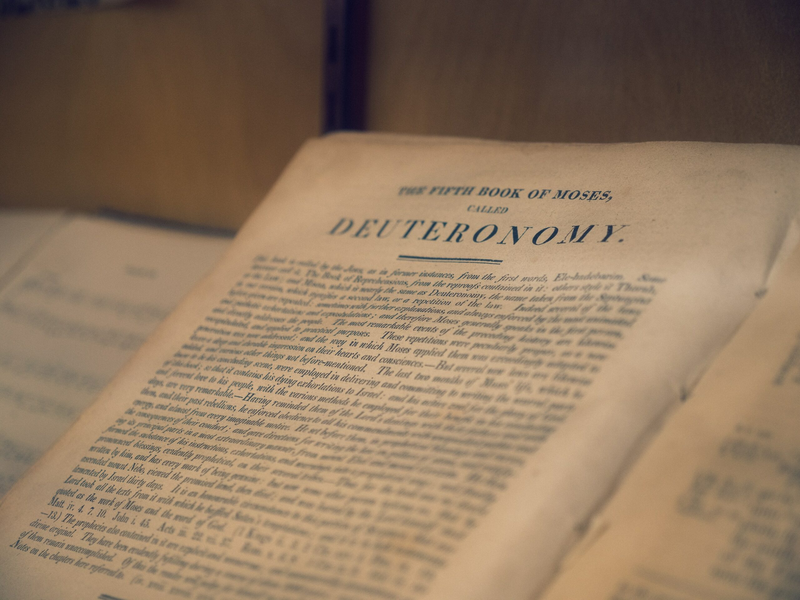
Deuteronomy

Allusive Torah

In the first part of this essay, I argued that the story of the covenant is what unifies and grounds the laws in the book of Deuteronomy. In the third section of this essay, as part of my argument that Deuteronomy 14:1-21 forms a distinct pericope, I claimed that these…

by Ralph Allan SmithJuly 22, 2013

blogging-guide-k5dy18hy5jq-unsplash
Economics

So You Wanna Be Rich?

Paul ends 1 Timothy with convicting warnings about the temptations of wealth and the danger of pursuing wealth. Godliness involves contentment and gratitude for the basics – food and clothing (1 Timothy 6:8). To reinforce the point, Paul reminds Timothy that we came into the world without anything, which is…

by Peter LeithartJuly 17, 2013
channel-82-urfja47nuhu-unsplash
Catholicism

The Festival and the Mass

Like Marx himself, the Marxist sociologist Henri Lefebvre was a firm believer in the dictum that “the criticism of religion is the premise of all criticism,” though he dissented from Marx’s prior claim that the criticism of religion is essentially complete. He includes a vicious, sarcastic, Marxist diatribe against the…

by Peter LeithartJuly 15, 2013
markus-winkler-aid-xyrtlec-unsplash
Theopolis News

Biblical Horizons Summer Conference

This week, Trinity House fellows James Jordan, Jeff Meyers, Rich Bledsoe, and Peter Leithart will be lecturing in Niceville, Florida, at the Biblical Horizons Summer Conference. Fore more information, check the Biblical Horizons web site.

by Peter LeithartJuly 15, 2013
guido-jansen-nz-zat4qiuu-unsplash
Isaiah

Combustible God

Fire seems to be a motif in Isaiah 6. The chapter opens “in the year that king Uzziah died,” and we know that Uzziah died a leper because he tried to burn incense in the temple against the law of God. And in this context, in the year king Uzziah…

by Daniel StanleyJuly 10, 2013
sixteen-miles-out-d40gdcd_-he-unsplash
Biblical Studies

Rehabilitating the Quadriga

According to the medieval theory of the "Quadriga" or the "fourfold sense" of Scripture, each passage of Scripture has four dimensions of meaning. Protestants generally cast a suspicious eye on this "method" of reading. That's a mistake. It's a handy guide to the questions we should always ask as we…

by Peter LeithartJuly 8, 2013

Showing page 191 of 309

See all

Showing page 20 of 43

See all
Literature

Hamlet, 3.4

This scene, like the scene that opens Act 3, shows Hamlet encountering a woman who in his mind has betrayed him. Again, he has been sent for, and probably suspects that it is another setup like the one with Ophelia. He has just come from the play, ready to drink…

February 16, 2006
Literature

Pierre and Hamlet

FO Matthiessen described Melville’s Pierre as “an American Hamlet,” a novel that attempts to “translate” Shakespeare into 19th-century American life. In part, this is a matter of Melville matching characters and plots: “Lucy’s pale innocence fails Pierre as Ophelia’s did Hamlet; the well-named Reverend Mr. Falsgrave’s cushioned voice of worldly…

February 16, 2006
Philosophy

Metaphysics of presence

Derrida, famously, challenges what he calls the metaphysics of presence. What is challenging is not the reality of presence as such, but the notion that we can arrive at some pure presence of a thing, a moment, a self that is unmixed with anything other than itself. A pure instant…

February 16, 2006
Philosophy

How Deconstruction Works

Culler offers an example from Nietzsche that provides an excellent example of the ju-jitsu of deconstruction. Nietzsche argues that causality is not something given, but is the product of a rhetorical operation, a chronological reversal ( chronologische Umdrehung ). I feel a pain, and go searching for a cause of…

February 15, 2006
Literature

New Criticism and theory

At the beginning of his book on Deconstruction , Jonathan Culler notes that critical theory, seen “as an attempt to establish the validity or invalidity of particular interpretive procedures,” is profoundly indebted to New Criticism: This movement “not only instilled the assumption that the purpose of literary study is the…

February 15, 2006
Literature

Thoughts on Beowulf

All page numbers are from the Heany translation. The central focus of the first two fights is Heorot, the mead-hall of Hrothgar. The mead-hall is the focus of a complex of imagery. (The last fight has a similar origin, as Beowulf’s hall is destroyed by the dragon. The house is…

February 15, 2006

Showing page 1884 of 2212

Browse by Category

In Medias Res

Your weekly digest for all things Theopolis.

Donate

Theopolis is nearly 100% donor-supported. Consider joining us on our mission.