Theopolis Logo

Writing

Explore our collection of theological essays, biblical studies, and reflections on faith and culture.

See all
tim-marshall-k2u71wv2ei4-unsplash
Modernity

Protestantism and the Postmodern self

Postmodernism has, we are told, “decentered” the modern self, that unified, sovereign, isolated, godlike “thinking thing” discovered by Rene Descartes. The postmodern self is not single but multiple; not sovereign but controlled by external forces; not isolated but “embedded” in the world and in relation; not godlike, but human, all…

by Peter LeithartMay 6, 2013

kiwihug-l4gw27xzn1i-unsplash
Matthew

Law and History: How to Read the Law of Moses (Part 8)

This is the eighth in a series of studies on Deuteronomy 22:30-23:8. And Jesus went out thence, and withdrew into the parts of Tyre and Sidon. And behold, a Canaanitish woman came out from those borders, and cried, saying, Have mercy on me, O Lord, thou son of David; my…

by Ralph Allan SmithMay 1, 2013
screen-shot-2023-09-20-at-7-04-07-am
Augustine

A Cusan Modernity?

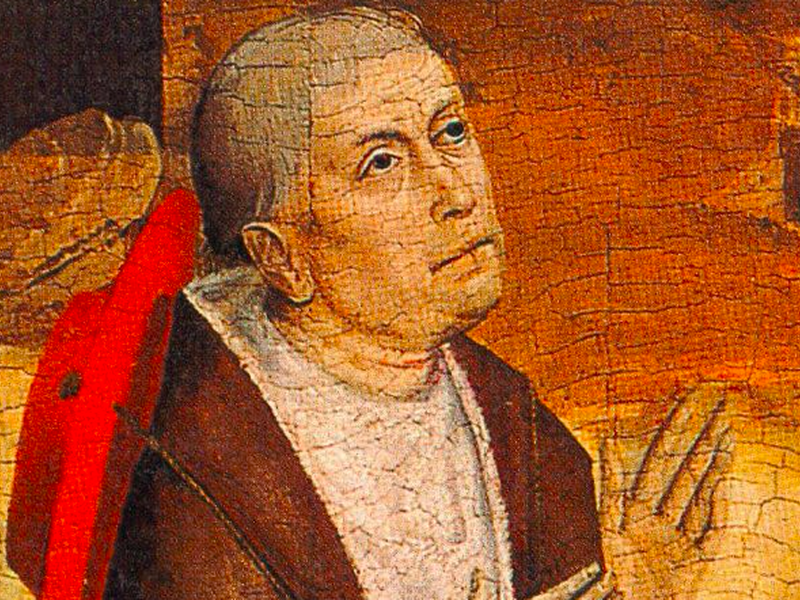
The fifteenth-century German Cardinal Nicholas of Cusa led a busy and wide-ranging life. Educated in liberal arts and law at Heidelberg and Padua, Nicholas was a leading figure in the Conciliarist movement, and later served as a papal legate to both Constantinople and throughout Germany. As Bishop of Brixen, he…

by Peter LeithartApril 29, 2013
screenshot-2023-07-27-at-10-25-35-am
Deuteronomy

Law and History: How to Read the Law of Moses (Part 7)

This is the seventh in a series of studies on Deuteronomy 22:30-23:8. Thou shalt not abhor an Edomite, for he is thy brother; thou shalt not abhor an Egyptian, because thou wast a sojourner in his land. The children of the third generation that are born unto them shall enter…

by Ralph Allan SmithApril 25, 2013
ivan-aleksic-16yxcjsoaek-unsplash
Romans

What Advantage the Jew?

A sermon on Romans 3:1-8. 1 Then what advantage has the Jew? Or what is the value of circumcision? 2 Much in every way. To begin with, the Jews were entrusted with the oracles of God. A lot of people speculate here about what kind of advantage Paul is talking…

by Mark HorneApril 22, 2013
screenshot-2023-07-27-at-10-25-35-am
Deuteronomy

Law and History: How to Read the Law of Moses (Part 6)

This is the sixth in a series of studies on Deuteronomy 22:30-23:8. An Ammonite or a Moabite shall not enter into the assembly of Yahweh; even to the tenth generation shall none belonging to them enter into the assembly of Yahweh forever: because they met you not with bread and…

by Ralph Allan SmithApril 17, 2013

Showing page 195 of 309

See all

Showing page 20 of 43

See all

Poesis in Renaissance

More evidence of “poesis” in Renaissance notions of human nature and “self-fashioning.” The first quotation is from Pico, and is drawn from Lewis’s English Literature in the Sixteenth Century : God’s words to Adam at creation were: “To thee, O Adam, we have given no certain habitation nor countenance of…

January 14, 2004

Greenblatt on Fashion

A couple of quotations from Stephen Greenblatt’s Renaissance Self-Fashioning , with a comment appended. He is talking about the changing meanings of “fashion” in the English Renaissance: “In the sixteenth century there appears to be an increased self-consciousness about the fashioning of a human identity as a manipulable, artful process.…

January 13, 2004
Philosophy

Quotations from Michel de Montaigne

Some fun quotations from Michel de Montaigne, taken from Stephen Toulmin’s excellent Cosmopolis: The Hidden Agenda of Modernity : “He who wants to detach his soul, let him do it. When his body is ill, to free it from the contagion; at other times, on the contrary, let the soul…

January 13, 2004
Philosophy

Zizek on Modernity

Slavoj Zizek has this to say at the beginning of his The Puppet and the Dwarf : “One possible definition of modernity is: the social order in which religion is no longer fully integrated into and identified with a particular cultural life-form, but acquires autonomy, so that it can survive…

January 13, 2004
Philosophy

Derrida on Presence and Absence

Joel Garver helpfully explains Derrida’s deconstruction of “presence/absence” by suggesting that Derrida is attacking a particular view that assumes absolute presence and absolute absence. Either a thing is here or it is not, we instinctively thing, but in fact in all kinds of ways absent things leave “traces” of their…

January 13, 2004
Theology

Barth on God’s Omnipotence

Barth has a wonderful discussion of the omnipotence of God in Dogmatics in Outline (pp 48-49). He disputes the notion of absolute power, power in itself, as a description of God’s almightiness, and concludes (in line with the tradition of God’s simplicity) that God’s power is His holiness, righteousness, mercy,…

January 12, 2004

Showing page 2137 of 2212

Browse by Category

In Medias Res

Your weekly digest for all things Theopolis.

Donate

Theopolis is nearly 100% donor-supported. Consider joining us on our mission.