Theopolis Logo

Writing

Explore our collection of theological essays, biblical studies, and reflections on faith and culture.

See all
sixteen-miles-out-al48tflf4e8-unsplash
Food

Gluttony In The Bible (As Opposed To Gluttony In The American Church)

In the Bible, fatness is such a blessing, that it is especially hard to understand why wicked men are permitted to enjoy such a state. It requires a theodicy and faith in God. Thus: “For they have no pangs until death; their bodies are fat and sleek . They are…

by Mark HorneAugust 12, 2013

jeremy-yap-j39x2xx_8cq-unsplash
How to Worship

Biblical Worship (Video with James B. Jordan)

[fve]http://vimeo.com/71901553[/fve]

by Peter LeithartAugust 8, 2013
chris-bair-ndczc5739ck-unsplash
Deuteronomy

Holy Things for Holy People

The allusion to the Exodus story is contained in the first words of Deuteronomy 14:1 — “ye are the sons of Yahweh your God” — as well as in 14:2 in the use of the technical term translated “treasured possession,” “His own possession,” “peculiar people,” “precious people,” and so forth.…

by Ralph Allan SmithAugust 5, 2013
adam-and-eve-in-the-garden-of-eden-wenzel-peter
Deuteronomy

Forbidden Foods

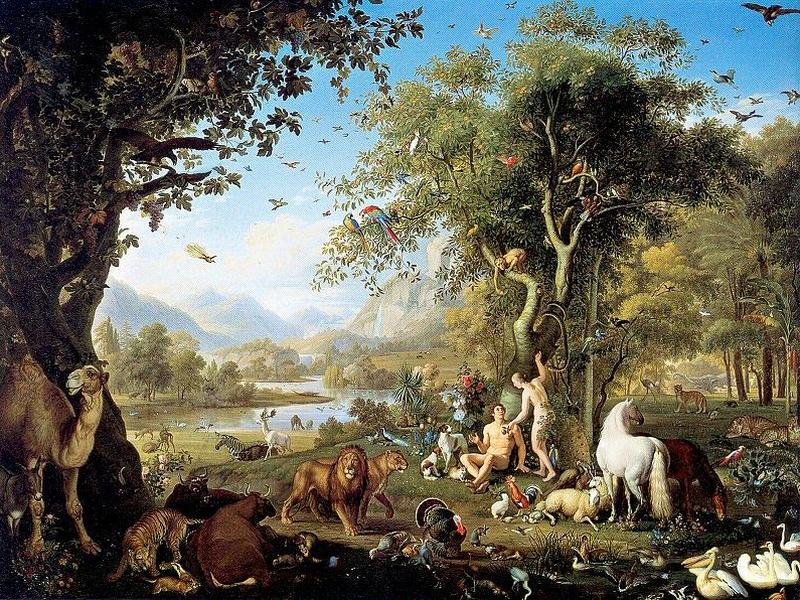
I have argued that Deuteronomy 14:1-21 is an independent literary unit that applies the Third Word to the lives of Israelites from the time of Moses and Joshua. In this short pericope, Moses suggests broad and deep meaning by means of literary allusion to the stories of the creation and…

by Ralph Allan SmithJuly 31, 2013
david-weber-fwuo_zluhnw-unsplash
How to Worship

Pro-Sacramental Reformation

In his recently republished The New Creation , the late, delightful Herbert McCabe defends the priesthood of the plebs as roundly as anyone could want. Citing Hebrews, he claims that "there is an essential difference between the Christian community and the community of the Old Law, or any other religious…

by Peter LeithartJuly 29, 2013
eric-ward-7kqe_8meex8-unsplash
Augustine

Sexual Idolatry

Augustine famously prayed, “Our hearts our restless until they rest in You.” True indeed. Being creatures, we inherently sense our ontological poverty—our innate condition of dependence—and are compelled to find a sense of security. And it is also true—as Augustine’s own narrative painfully illustrates—that one of the things we most…

by Gerald HiestandJuly 24, 2013

Showing page 190 of 309

See all

Showing page 20 of 43

See all

Day of Wrath (Romans 2)

What about taking “day of wrath” in Romans 2 as AD 70? Some arguments: 1) Dunn lists the verses that use similar phrases for “wrath and indignation” and “tribulation and distress,” and most of them are about historical judgments on Israel. There’s a cluster of uses in Deut 28:55ff, which…

November 7, 2003
Theology

Intellectualism and Voluntarism both arise

Intellectualism and voluntarism both arise from the same theological error: from the assumption that there is some realm that is independent and autonomous. This is most obvious with intellectualism: For intellectualists, things have indepdendent value that God recognizes and evaluates. Voluntarists are, however, making the same error. They assume that…

November 6, 2003

Studebaker on Pauw

Steve Studebaker writers in the Scottish Journal of Theology (56:3) about Edwards’s trinitarian theology, and includes an extended critique of Amy Plantinga Pauw’s treatment of Edwards’s incipient “social trinitarianism.” According to Studebaker, Pauw’s analysis only works if one assumes that the history of Trinitarian theology can be sketched out as…

November 5, 2003

The Olive Tree (Romans 11)

In the same issue of JSNT, Philip Esler examines ancient oleiculture to illumine Paul’s use of the olive tree image in Romans 11. When he describes branches being grafted into an olive tree, Paul refers to a common practice. But the normal practice is to graft cultivated olive branches onto…

November 5, 2003

Acts 20:20

Jerome Neyrey has an interesting article on Acts 20:20 in the current issue of JSNT. He examines the cultural background to Paul’s use of the phrase “in public and from house to house” by examining various expressions in Greek and Latin writers that correspond to modern “public” and “private.” These,…

November 5, 2003
Literature

Modernity

To what extent is modernity merely a recovery of the tragic? Tragedy, to my knowledge, simply didn’t exist in the medieval world. Drama revived late in the medieval period, but tragedy was reintroduced by the Renaissance. In Shakespeare, the tragic is set in a larger Christian comic setting, with profoundly…

November 5, 2003

Showing page 2170 of 2212

Browse by Category

In Medias Res

Your weekly digest for all things Theopolis.

Donate

Theopolis is nearly 100% donor-supported. Consider joining us on our mission.