Theopolis Logo

Writing

Explore our collection of theological essays, biblical studies, and reflections on faith and culture.

See all
tanner-mardis-xuxghzhibn4-unsplash-1-2
Biblical Studies

Tweets-turned-Notes on the Bible’s Chronology

Summary In what follows, I will consider the “year-stamps” employed in Scripture, i.e., statements of the form, “Such-and-such an event took place in the Xth year of Y.” In the process, I will suggest some ways in which the Biblical narrative might relate to events in the extra-Biblical world, though…

by James BejonJuly 16, 2019
durer-prodigal-son-2
Luke

Perspectives on the Prodigal, (Part 2)

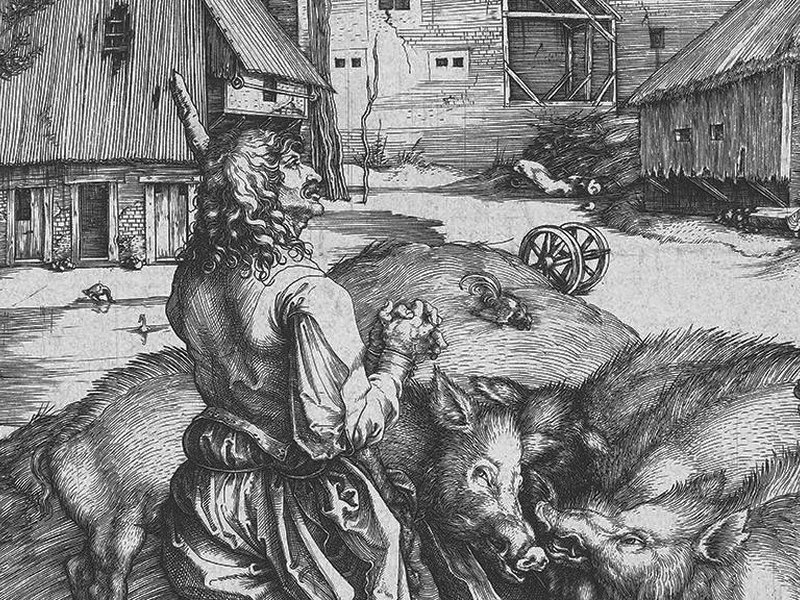
In the first essay on the parable of the Prodigal Son, I suggested that the problems commentators and others encounter in interpreting Jesus three-part parable are not accidental. These are not just problems in our ignorance of cultural background. They are intentional features of the stories —stories designed to poke…

by Ralph Allan SmithJuly 11, 2019
durer-prodigal-son-2
Luke

Perspectives on the Prodigal, (Part 1)

The story of the Prodigal Son is perhaps the most well-known story in the Bible. As others have observed, it may also be one of the most misunderstood. In two short essays, I will point out features of this story that are commonly neglected, aspects of Jesus’ parable that might…

by Ralph Allan SmithJuly 9, 2019
de-rijke-man-en-de-arme-lazarus-by-jacopo-da-ponte-16th-century
Luke

Lazarus and the Rich Man

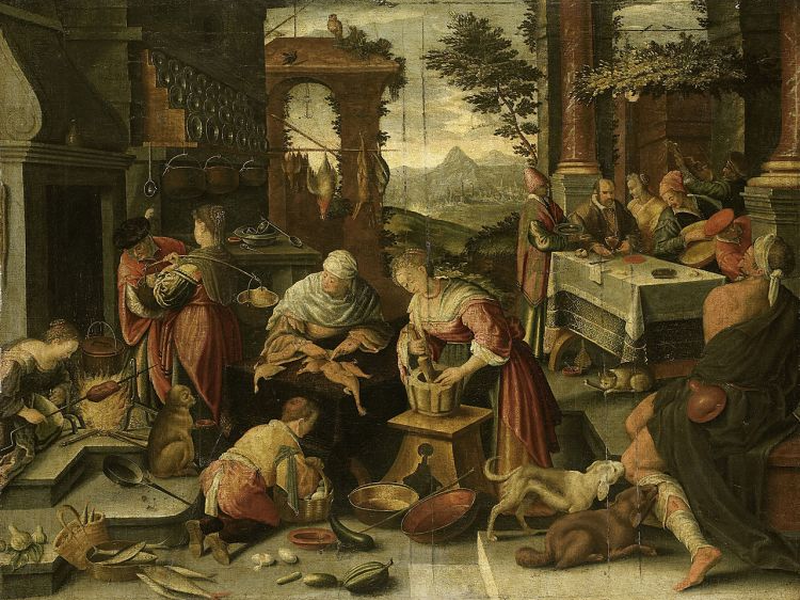
The parable of Lazarus and the nameless rich man is not an independent story. It is part of a long context that begins in Luke 15:1, where Jesus is eating with tax collectors and sinners and the scribes and Pharisees grumble. In response to their hardheartedness, Jesus tells a three-part…

by Ralph Allan SmithJuly 4, 2019
aaron-burden-uynrnfdkjwg-unsplash
Luke

Everybody has Dropsy - Luke 14:1-24

The Bible is written so that even when a reader cannot pick up on what might be deeper or more detailed aspects of a text, there is virtually always a message to be heard. In the ancient world, where the “reader” of Scripture would likely be a church official facing…

by Ralph Allan SmithJuly 2, 2019
communion
Biblical Theology

Fruit Trees and Grain Plants

The distinction between garden (or vineyard) and field begins in Genesis 2. This relates to the ordering of the formless world. Plants of the field are contrasted with the garden planted by God in Genesis 2:5&8. Later on, under the Old Covenant the Israelites will be required to keep their…

by James B. JordanJune 27, 2019

Showing page 77 of 309

See all

Showing page 20 of 43

See all

Shakespeare's Songs

Late at night in Lady Olivia’s great house in Illyrium, three friends – Sir Toby, the lady’s uncle, Feste her fool, and Sir Andrew Aguecheek, her hapless suitor – sing drunken songs that resound loudly through the empty halls. Malvolio, Lady Olivia’s stern steward and “something of a Puritan,” rises…

December 7, 2015

Parochial Postmodernism

David Harvey ( Ways of the World ) describes our cultural moment in terms of “space-time compression,” and finds an analogy with the speed-up of life that was widely noted at the beginning of the twentieth century: “While historical analogies are always dangerous, I think it no accident that postmodern…

December 7, 2015

Momanomics

In her collection of essays on money, Slave of Two Masters , Melinda Selmys devotes several pages to the celebration of motherhood and its unique economics. Taking her cue from the curse of Genesis 3, she argues that men have always “lorded” over women by claiming all important human achievements…

December 7, 2015

How God Fixes Things

The cry has come up from our national journalogians at the NYT and the Daily News : “God isn't fixing this. No more prayers. Let's get some action.” If God - the living God - were to get busy fixing things, they may not like the way He goes about…

December 7, 2015

In the Fullness of Time

As Robert Jenson has argued, the big question of religion is the question of eternity: How is God related to time? For Greco-Roman paganism and for the great religions of the far east, god or the gods are immune to time, alien to time. The whole point of Plato's forms…

December 4, 2015

Hamlet in Society

Despite the distracting use of the opposition of of “authenticity” and “responsibility,” Terry Eagleton has some thoughtful observations on the tragic dilemma in Hamlet ( Shakespeare and Society , 1967). Hamlet’s is a society of “reciprocal human definitions,” that is to say, a man’s identity is mirrored to him by…

December 4, 2015

Showing page 344 of 2212

Browse by Category

In Medias Res

Your weekly digest for all things Theopolis.

Donate

Theopolis is nearly 100% donor-supported. Consider joining us on our mission.