Theopolis Logo

Writing

Explore our collection of theological essays, biblical studies, and reflections on faith and culture.

See all
tanner-mardis-xuxghzhibn4-unsplash-1-2
Biblical Studies

Tweets-turned-Notes on the Bible’s Chronology

Summary In what follows, I will consider the “year-stamps” employed in Scripture, i.e., statements of the form, “Such-and-such an event took place in the Xth year of Y.” In the process, I will suggest some ways in which the Biblical narrative might relate to events in the extra-Biblical world, though…

by James BejonJuly 16, 2019
durer-prodigal-son-2
Luke

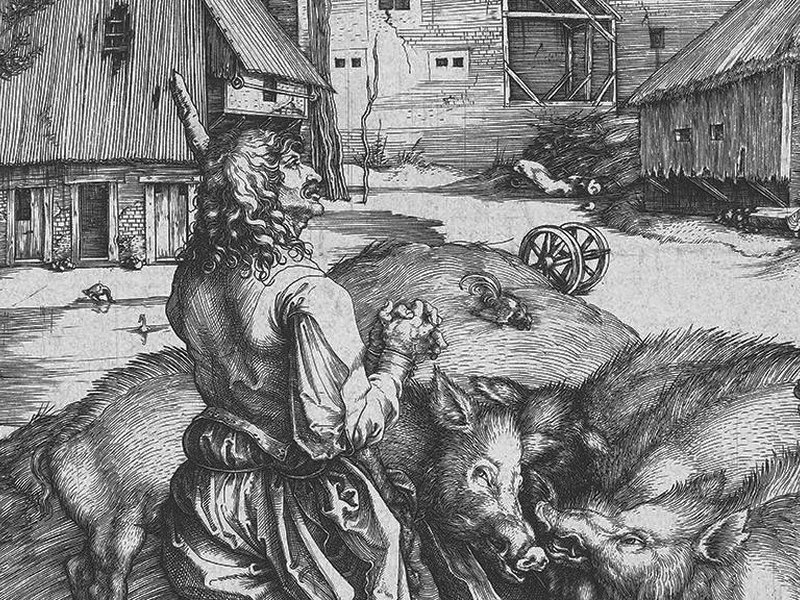
Perspectives on the Prodigal, (Part 2)

In the first essay on the parable of the Prodigal Son, I suggested that the problems commentators and others encounter in interpreting Jesus three-part parable are not accidental. These are not just problems in our ignorance of cultural background. They are intentional features of the stories —stories designed to poke…

by Ralph Allan SmithJuly 11, 2019
durer-prodigal-son-2
Luke

Perspectives on the Prodigal, (Part 1)

The story of the Prodigal Son is perhaps the most well-known story in the Bible. As others have observed, it may also be one of the most misunderstood. In two short essays, I will point out features of this story that are commonly neglected, aspects of Jesus’ parable that might…

by Ralph Allan SmithJuly 9, 2019
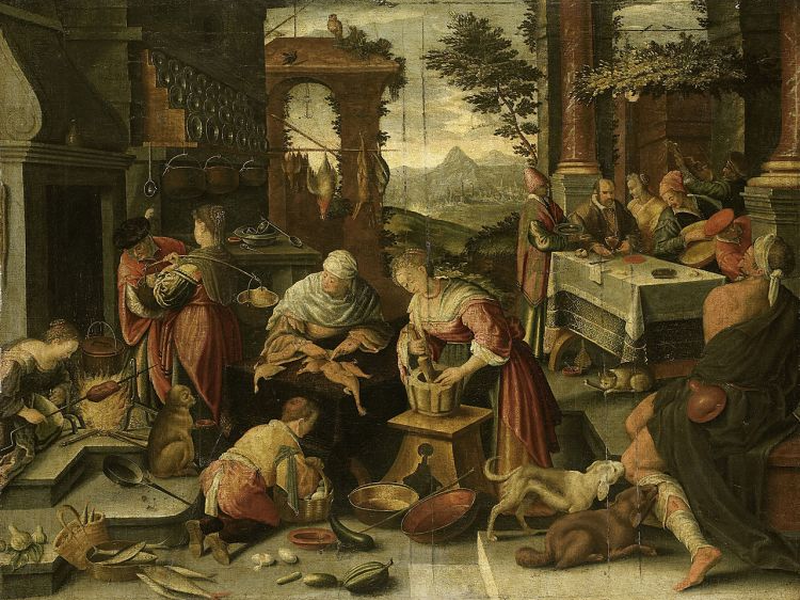
de-rijke-man-en-de-arme-lazarus-by-jacopo-da-ponte-16th-century
Luke

Lazarus and the Rich Man

The parable of Lazarus and the nameless rich man is not an independent story. It is part of a long context that begins in Luke 15:1, where Jesus is eating with tax collectors and sinners and the scribes and Pharisees grumble. In response to their hardheartedness, Jesus tells a three-part…

by Ralph Allan SmithJuly 4, 2019
aaron-burden-uynrnfdkjwg-unsplash
Luke

Everybody has Dropsy - Luke 14:1-24

The Bible is written so that even when a reader cannot pick up on what might be deeper or more detailed aspects of a text, there is virtually always a message to be heard. In the ancient world, where the “reader” of Scripture would likely be a church official facing…

by Ralph Allan SmithJuly 2, 2019
communion
Biblical Theology

Fruit Trees and Grain Plants

The distinction between garden (or vineyard) and field begins in Genesis 2. This relates to the ordering of the formless world. Plants of the field are contrasted with the garden planted by God in Genesis 2:5&8. Later on, under the Old Covenant the Israelites will be required to keep their…

by James B. JordanJune 27, 2019

Showing page 77 of 309

See all

Showing page 20 of 43

See all

Losing the Body

The Economist's review of Thomas Lacqueur's The Work of the Dead highlights the shifts in our funeral customs over the past few centuries: “A large part of the book is devoted to the slow transition from churchyards to cemeteries, a story of changing sensibilities, epitomised by the gradual replacement of…

December 4, 2015

Cultural Geography

In his forthcoming collection of essays, The Ways of the World , David Harvey observes that “it is impossible on the ground and in the streets to see where nature ends and culture begins. imposing a dichotomy where there is none is a fatal mistake.” Geography is his great illustration…

December 4, 2015

Hamlet Among Protestants and Catholics

Most readers and viewers of Hamlet take Hamlet’s most famous soliloquy as a meditation on suicide. In Hamlet, Protestantism, and the Mourning of Contingency , John E. Curran, Associate Professor of English at Marquette University, argues there are bigger things at work. Hamlet is opposing two ontologies, religious universes, moralities.…

December 3, 2015

Rhetoric: Ancient, Modern, Postmodern

Rhetoric is an ancient art. It was one of the main courses of study in ancient schools, along with grammar and logic. During the days of the Roman Empire, learning rhetoric was a path to power and prestige. Augustine, the great church father of North Africa, was trained as a…

December 3, 2015

Jerusalem, Sennacherib, and Us

The story of Jerusalem's deliverance from Sennacherib's Assyrian army, told in both 2 Kings and Isaiah, is an exciting account. It's a story worthy of Byron’s galloping verse, his medieval ballad. But still: So what? What does all this ancient history have to do with me, with my problems, with…

December 3, 2015

Would you sacrifice yourself for Iraq?

Why do we talk about patriotism in religious terms? asks Ivan Strenski (in a Library of Social Science essay): “For a student of religion what strikes one as odd is that we name the act of giving up one’s life for the sake of one’s nation, as a ‘sacrifice.' Why…

December 2, 2015

Showing page 345 of 2212

Browse by Category

In Medias Res

Your weekly digest for all things Theopolis.

Donate

Theopolis is nearly 100% donor-supported. Consider joining us on our mission.