Theopolis Logo

Writing

Explore our collection of theological essays, biblical studies, and reflections on faith and culture.

See all
sixteen-miles-out-al48tflf4e8-unsplash
Food

Gluttony In The Bible (As Opposed To Gluttony In The American Church)

In the Bible, fatness is such a blessing, that it is especially hard to understand why wicked men are permitted to enjoy such a state. It requires a theodicy and faith in God. Thus: “For they have no pangs until death; their bodies are fat and sleek . They are…

by Mark HorneAugust 12, 2013

jeremy-yap-j39x2xx_8cq-unsplash
How to Worship

Biblical Worship (Video with James B. Jordan)

[fve]http://vimeo.com/71901553[/fve]

by Peter LeithartAugust 8, 2013
chris-bair-ndczc5739ck-unsplash
Deuteronomy

Holy Things for Holy People

The allusion to the Exodus story is contained in the first words of Deuteronomy 14:1 — “ye are the sons of Yahweh your God” — as well as in 14:2 in the use of the technical term translated “treasured possession,” “His own possession,” “peculiar people,” “precious people,” and so forth.…

by Ralph Allan SmithAugust 5, 2013
adam-and-eve-in-the-garden-of-eden-wenzel-peter
Deuteronomy

Forbidden Foods

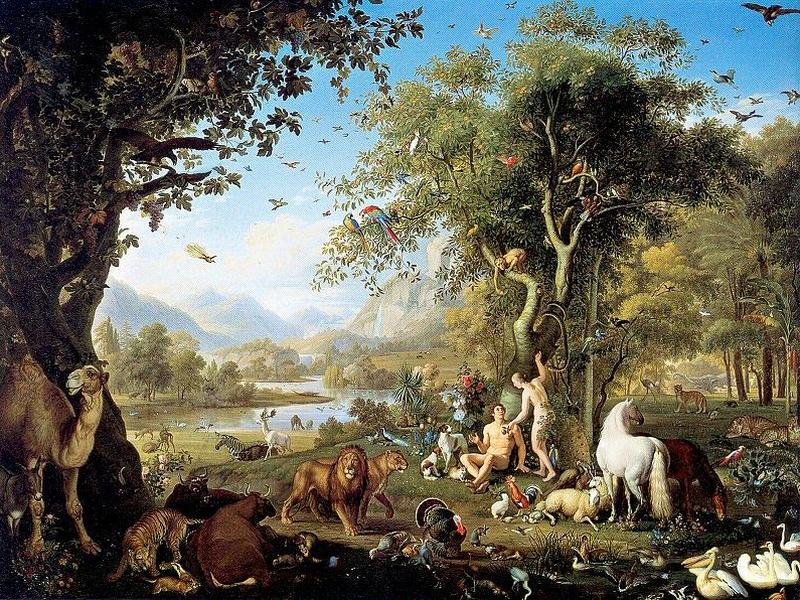
I have argued that Deuteronomy 14:1-21 is an independent literary unit that applies the Third Word to the lives of Israelites from the time of Moses and Joshua. In this short pericope, Moses suggests broad and deep meaning by means of literary allusion to the stories of the creation and…

by Ralph Allan SmithJuly 31, 2013
david-weber-fwuo_zluhnw-unsplash
How to Worship

Pro-Sacramental Reformation

In his recently republished The New Creation , the late, delightful Herbert McCabe defends the priesthood of the plebs as roundly as anyone could want. Citing Hebrews, he claims that "there is an essential difference between the Christian community and the community of the Old Law, or any other religious…

by Peter LeithartJuly 29, 2013
eric-ward-7kqe_8meex8-unsplash
Augustine

Sexual Idolatry

Augustine famously prayed, “Our hearts our restless until they rest in You.” True indeed. Being creatures, we inherently sense our ontological poverty—our innate condition of dependence—and are compelled to find a sense of security. And it is also true—as Augustine’s own narrative painfully illustrates—that one of the things we most…

by Gerald HiestandJuly 24, 2013

Showing page 190 of 309

See all

Showing page 20 of 43

See all

In Defense of Kitsch

W e should, Paul Griffiths says ( Decreation , 324–5), be careful about the aesthetic judgments we make: “every human creature's formation in the discernment and delight in beauty is different, and because each of us is badly damaged with respect to our capacity to make reliable judgments about the…

April 16, 2015

The Materiality of Hell

As recorded in the supplement to the Summa , Thomas Aquinas teaches that the damned will rise again with bodies and will be tormented in hell corporeally. This leaves open questions about the materiality of the various biblical descriptions of those torments, and in question 97 of the supplement, Thomas…

April 16, 2015

Epistemo-technics

In his Organizing Enlightenment , Chad Wellmon explains how the modern research university was a response to a crisis of “information overload.” The Enlightenment saw an explosion of new knowledge and research. The Enlightenment empire of erudition was a bookish empire. Philosophes imagined they could provide a unified account of…

April 16, 2015

Essence, Energies, and the Presence of God

If the infinite God is to be present within a finite creation, writes David Bentley Hart ( Beauty of the Infinite , 204), “the finite must . . . become ever more open, ever greater and more capacious . . . ; and creaturely mutability allows for this.” Hart is…

April 15, 2015

Father of Reconstructionism

T he name of R.J. Rushdoony, the polymathic Reformed theologian, historian, and activist, has appeared with increasing frequency in accounts of the religious right. There is a small industry in screeds warning of the dire threat of theocracy, and Rushdoony plays the role of the father of all theocrats. It's…

April 15, 2015

Sabbath Joy

The prophecy of Habakkuk closes with a lovely poem of joy in the midst of adversity and lack (Habakkuk 3:17-19). The poem opens with six lines that describe the barrenness of the land. It is a nihil-land; the Hebrew negative lo' occurs twice (“fig tree does not blossom”; “the field…

April 15, 2015

Showing page 439 of 2212

Browse by Category

In Medias Res

Your weekly digest for all things Theopolis.

Donate

Theopolis is nearly 100% donor-supported. Consider joining us on our mission.