Theopolis Logo

Writing

Explore our collection of theological essays, biblical studies, and reflections on faith and culture.

See all
tanner-mardis-xuxghzhibn4-unsplash-1-2
Biblical Studies

Tweets-turned-Notes on the Bible’s Chronology

Summary In what follows, I will consider the “year-stamps” employed in Scripture, i.e., statements of the form, “Such-and-such an event took place in the Xth year of Y.” In the process, I will suggest some ways in which the Biblical narrative might relate to events in the extra-Biblical world, though…

by James BejonJuly 16, 2019
durer-prodigal-son-2
Luke

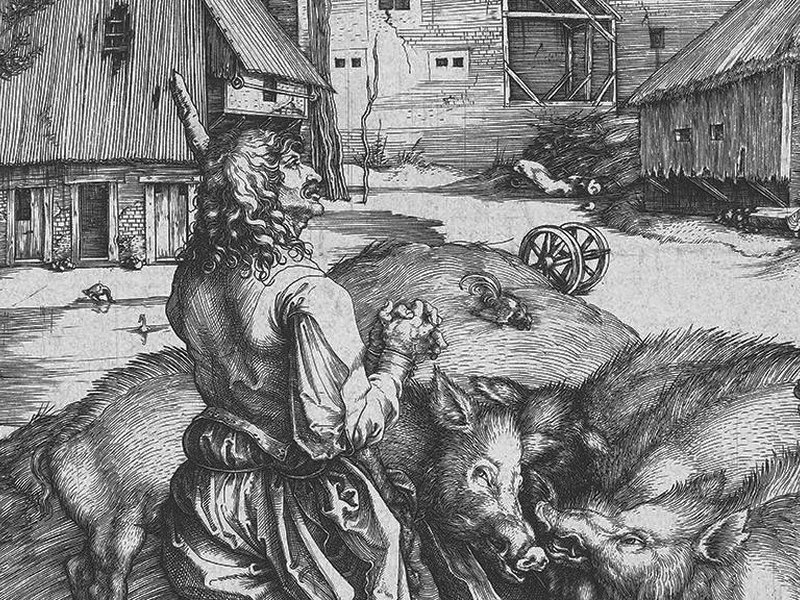
Perspectives on the Prodigal, (Part 2)

In the first essay on the parable of the Prodigal Son, I suggested that the problems commentators and others encounter in interpreting Jesus three-part parable are not accidental. These are not just problems in our ignorance of cultural background. They are intentional features of the stories —stories designed to poke…

by Ralph Allan SmithJuly 11, 2019
durer-prodigal-son-2
Luke

Perspectives on the Prodigal, (Part 1)

The story of the Prodigal Son is perhaps the most well-known story in the Bible. As others have observed, it may also be one of the most misunderstood. In two short essays, I will point out features of this story that are commonly neglected, aspects of Jesus’ parable that might…

by Ralph Allan SmithJuly 9, 2019
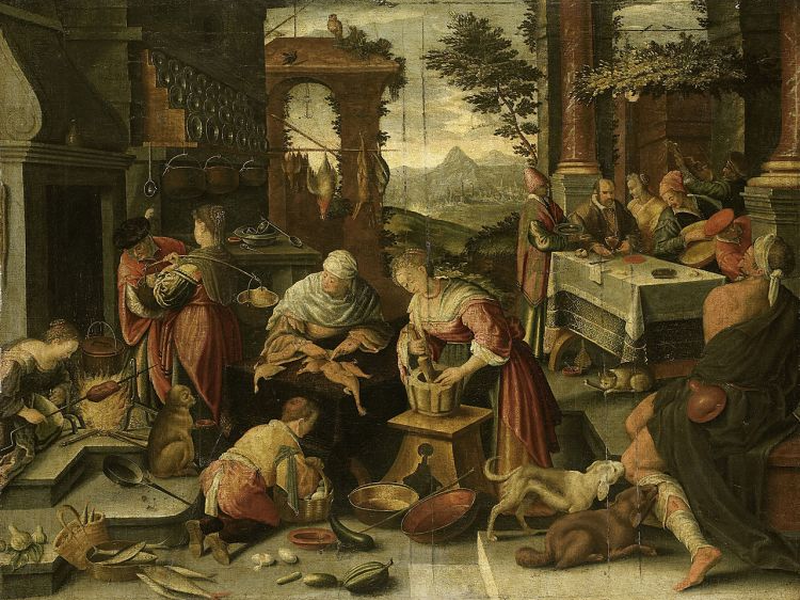
de-rijke-man-en-de-arme-lazarus-by-jacopo-da-ponte-16th-century
Luke

Lazarus and the Rich Man

The parable of Lazarus and the nameless rich man is not an independent story. It is part of a long context that begins in Luke 15:1, where Jesus is eating with tax collectors and sinners and the scribes and Pharisees grumble. In response to their hardheartedness, Jesus tells a three-part…

by Ralph Allan SmithJuly 4, 2019
aaron-burden-uynrnfdkjwg-unsplash
Luke

Everybody has Dropsy - Luke 14:1-24

The Bible is written so that even when a reader cannot pick up on what might be deeper or more detailed aspects of a text, there is virtually always a message to be heard. In the ancient world, where the “reader” of Scripture would likely be a church official facing…

by Ralph Allan SmithJuly 2, 2019
communion
Biblical Theology

Fruit Trees and Grain Plants

The distinction between garden (or vineyard) and field begins in Genesis 2. This relates to the ordering of the formless world. Plants of the field are contrasted with the garden planted by God in Genesis 2:5&8. Later on, under the Old Covenant the Israelites will be required to keep their…

by James B. JordanJune 27, 2019

Showing page 77 of 309

See all

Showing page 20 of 43

See all

In Defense of Kitsch

W e should, Paul Griffiths says ( Decreation , 324–5), be careful about the aesthetic judgments we make: “every human creature's formation in the discernment and delight in beauty is different, and because each of us is badly damaged with respect to our capacity to make reliable judgments about the…

April 16, 2015

The Materiality of Hell

As recorded in the supplement to the Summa , Thomas Aquinas teaches that the damned will rise again with bodies and will be tormented in hell corporeally. This leaves open questions about the materiality of the various biblical descriptions of those torments, and in question 97 of the supplement, Thomas…

April 16, 2015

Epistemo-technics

In his Organizing Enlightenment , Chad Wellmon explains how the modern research university was a response to a crisis of “information overload.” The Enlightenment saw an explosion of new knowledge and research. The Enlightenment empire of erudition was a bookish empire. Philosophes imagined they could provide a unified account of…

April 16, 2015

Essence, Energies, and the Presence of God

If the infinite God is to be present within a finite creation, writes David Bentley Hart ( Beauty of the Infinite , 204), “the finite must . . . become ever more open, ever greater and more capacious . . . ; and creaturely mutability allows for this.” Hart is…

April 15, 2015

Father of Reconstructionism

T he name of R.J. Rushdoony, the polymathic Reformed theologian, historian, and activist, has appeared with increasing frequency in accounts of the religious right. There is a small industry in screeds warning of the dire threat of theocracy, and Rushdoony plays the role of the father of all theocrats. It's…

April 15, 2015

Sabbath Joy

The prophecy of Habakkuk closes with a lovely poem of joy in the midst of adversity and lack (Habakkuk 3:17-19). The poem opens with six lines that describe the barrenness of the land. It is a nihil-land; the Hebrew negative lo' occurs twice (“fig tree does not blossom”; “the field…

April 15, 2015

Showing page 439 of 2212

Browse by Category

In Medias Res

Your weekly digest for all things Theopolis.

Donate

Theopolis is nearly 100% donor-supported. Consider joining us on our mission.