Theopolis Logo

Writing

Explore our collection of theological essays, biblical studies, and reflections on faith and culture.

See all
sixteen-miles-out-al48tflf4e8-unsplash
Food

Gluttony In The Bible (As Opposed To Gluttony In The American Church)

In the Bible, fatness is such a blessing, that it is especially hard to understand why wicked men are permitted to enjoy such a state. It requires a theodicy and faith in God. Thus: “For they have no pangs until death; their bodies are fat and sleek . They are…

by Mark HorneAugust 12, 2013

jeremy-yap-j39x2xx_8cq-unsplash
How to Worship

Biblical Worship (Video with James B. Jordan)

[fve]http://vimeo.com/71901553[/fve]

by Peter LeithartAugust 8, 2013
chris-bair-ndczc5739ck-unsplash
Deuteronomy

Holy Things for Holy People

The allusion to the Exodus story is contained in the first words of Deuteronomy 14:1 — “ye are the sons of Yahweh your God” — as well as in 14:2 in the use of the technical term translated “treasured possession,” “His own possession,” “peculiar people,” “precious people,” and so forth.…

by Ralph Allan SmithAugust 5, 2013
adam-and-eve-in-the-garden-of-eden-wenzel-peter
Deuteronomy

Forbidden Foods

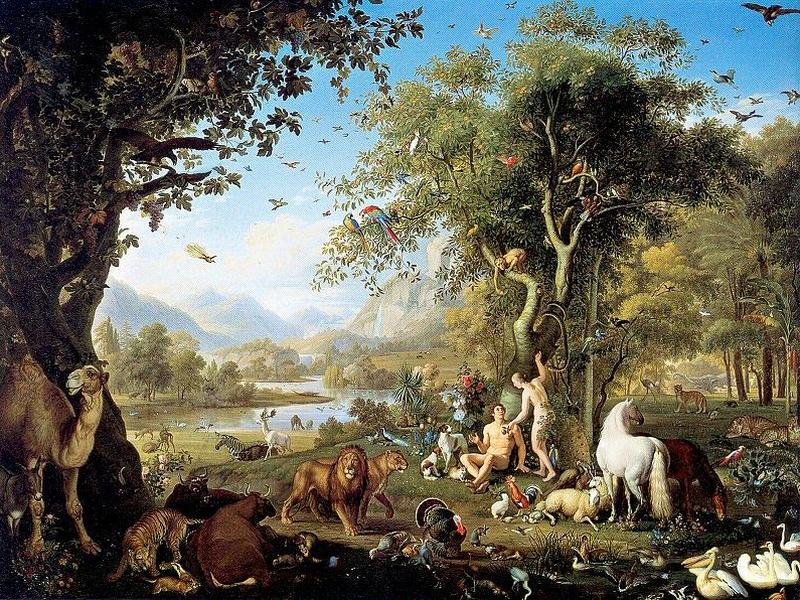
I have argued that Deuteronomy 14:1-21 is an independent literary unit that applies the Third Word to the lives of Israelites from the time of Moses and Joshua. In this short pericope, Moses suggests broad and deep meaning by means of literary allusion to the stories of the creation and…

by Ralph Allan SmithJuly 31, 2013
david-weber-fwuo_zluhnw-unsplash
How to Worship

Pro-Sacramental Reformation

In his recently republished The New Creation , the late, delightful Herbert McCabe defends the priesthood of the plebs as roundly as anyone could want. Citing Hebrews, he claims that "there is an essential difference between the Christian community and the community of the Old Law, or any other religious…

by Peter LeithartJuly 29, 2013
eric-ward-7kqe_8meex8-unsplash
Augustine

Sexual Idolatry

Augustine famously prayed, “Our hearts our restless until they rest in You.” True indeed. Being creatures, we inherently sense our ontological poverty—our innate condition of dependence—and are compelled to find a sense of security. And it is also true—as Augustine’s own narrative painfully illustrates—that one of the things we most…

by Gerald HiestandJuly 24, 2013

Showing page 190 of 309

See all

Showing page 20 of 43

See all

Informative Nature

William Dembski's latest, Being As Communion , sets out a metaphysics of information, and argues for what he calls “informational realism.” Reality is information all the way down, but that information is real. It is reality. What is information? Dembski says it's “about realizing possibilities by ruling out others. Unless…

April 6, 2015

Only the beginning

John's account of the resurrection fulfills the promise of his prologue (John 20). Here is the Word made flesh, dead and buried, now risen as new Adam, the “gardener,” with Mary Magdalene, a type of the new Eve. The Word who spoke the worlds into being speaks also after death,…

April 5, 2015

First Resurrection, Second Resurrection

Elijah's life (1 Kings 17-19) tracks that of Moses. He confronts the Pharaoh-like King Ahab, then flees from the land, as Moses fled to Midian, where he is cared for by a widow. God provides miraculously for the prophet and his host, but then her child dies. In the Moses…

April 4, 2015
Fear

With Fear and Trembling

Paul Griffiths's Decreation has some harrowing passages about sin. Like this one: “What will be left of me when I am no longer a sinner? That is a question fundamental to trembling before hell's presence in the devastation [i.e., the fallen world]. Such trembling, however, like all well-formed Christian responses,…

April 3, 2015

God the Translator

A wondrous passage from Donne: “all mankind is of one author, and is one volume; when one man dies, one chapter is not torn out of the book, but translated into a better language; and every chapter must be so translated; God employs several translators; some pieces are translated by…

April 3, 2015

Why Diversions Don't Divert

Thomas considers acedia, “sloth,” as the opposite of delight. It is “sadness directed toward what ought to yield delight” (summary by Paul Griffiths, Decreation , 196). Paul Griffiths glosses: Acedia “is the mark of those sufficiently habituated to looking at nothing that when they look at something—and most especially at…

April 2, 2015

Showing page 444 of 2212

Browse by Category

In Medias Res

Your weekly digest for all things Theopolis.

Donate

Theopolis is nearly 100% donor-supported. Consider joining us on our mission.