Theopolis Logo

Writing

Explore our collection of theological essays, biblical studies, and reflections on faith and culture.

See all
tanner-mardis-xuxghzhibn4-unsplash-1-2
Biblical Studies

Tweets-turned-Notes on the Bible’s Chronology

Summary In what follows, I will consider the “year-stamps” employed in Scripture, i.e., statements of the form, “Such-and-such an event took place in the Xth year of Y.” In the process, I will suggest some ways in which the Biblical narrative might relate to events in the extra-Biblical world, though…

by James BejonJuly 16, 2019
durer-prodigal-son-2
Luke

Perspectives on the Prodigal, (Part 2)

In the first essay on the parable of the Prodigal Son, I suggested that the problems commentators and others encounter in interpreting Jesus three-part parable are not accidental. These are not just problems in our ignorance of cultural background. They are intentional features of the stories —stories designed to poke…

by Ralph Allan SmithJuly 11, 2019
durer-prodigal-son-2
Luke

Perspectives on the Prodigal, (Part 1)

The story of the Prodigal Son is perhaps the most well-known story in the Bible. As others have observed, it may also be one of the most misunderstood. In two short essays, I will point out features of this story that are commonly neglected, aspects of Jesus’ parable that might…

by Ralph Allan SmithJuly 9, 2019
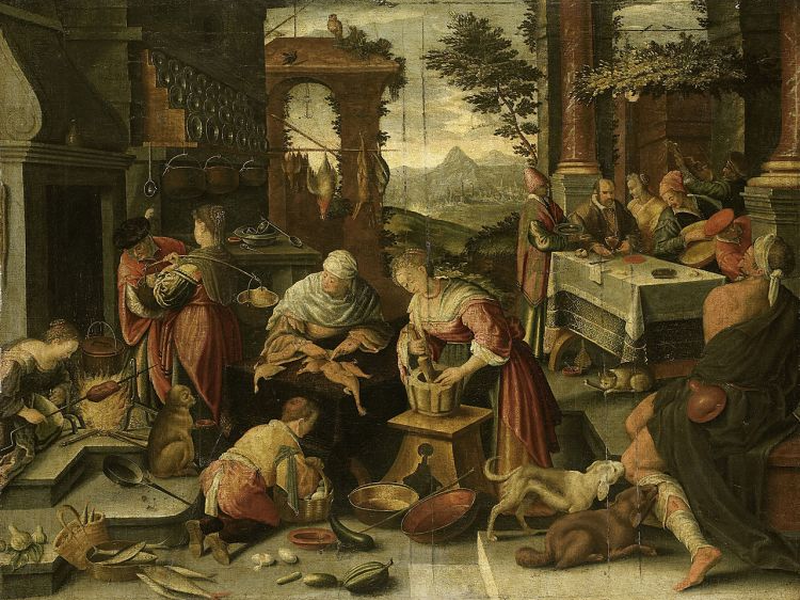
de-rijke-man-en-de-arme-lazarus-by-jacopo-da-ponte-16th-century
Luke

Lazarus and the Rich Man

The parable of Lazarus and the nameless rich man is not an independent story. It is part of a long context that begins in Luke 15:1, where Jesus is eating with tax collectors and sinners and the scribes and Pharisees grumble. In response to their hardheartedness, Jesus tells a three-part…

by Ralph Allan SmithJuly 4, 2019
aaron-burden-uynrnfdkjwg-unsplash
Luke

Everybody has Dropsy - Luke 14:1-24

The Bible is written so that even when a reader cannot pick up on what might be deeper or more detailed aspects of a text, there is virtually always a message to be heard. In the ancient world, where the “reader” of Scripture would likely be a church official facing…

by Ralph Allan SmithJuly 2, 2019
communion
Biblical Theology

Fruit Trees and Grain Plants

The distinction between garden (or vineyard) and field begins in Genesis 2. This relates to the ordering of the formless world. Plants of the field are contrasted with the garden planted by God in Genesis 2:5&8. Later on, under the Old Covenant the Israelites will be required to keep their…

by James B. JordanJune 27, 2019

Showing page 77 of 309

See all

Showing page 20 of 43

See all
Sex

Porneia

In a 2011 JBL article, Kyle Harper examines the usage of the Greek word porneia from its classical uses through the New Testament and into the early church. He hopes to specify its meaning, since the usual English translation as “sexual immorality” is “so vague” that it “inevitable threatens to…

January 14, 2015

Purity and the Other

In his contribution to Purity and the Forming of Religious Traditions , Philippe Borgeaud explores ancient comparative anthropology, the ways in which Greeks used other cultures as “mirrors.” Along the way (269-70), he discusses Porphyry’s De Abstinentia , which he compares to Mary Douglas’s classic Purity and Danger . For…

January 14, 2015
Theology

Passion of Poetry

Sketching a theological account in support of Reformed ressourcement in their Reformed Catholicity , Michael Allen and Scott Swain appeal to the argument of Reinhold Hutter’s Suffering Divine Things . Hutter tries to avoid both a notion of “strict continuation” between the church and the incarnate Christ and a Barthian…

January 14, 2015
Nevin Lectures

Nevin Lectures, 2015

Robert Louis Wilken, noted church historian and Chairman of the Board of the Institute on Religion and Public Life, will deliver the second annual Nevin Lectures on February 20-21, at the Hodges Chapel of the Beeson Divinity School, Birmingham, Alabama. Wilken will give three lectures on “The Catholic Roots of…

January 14, 2015

Baptism and Justification in Christian Tradition

In his study of Justification in Earlier Medieval Theology , Charles Carlson concludes that early medieval commentators on Paul did not give any special attention to justification. For most of the early scholastics, “justification” was a synonym for the remission of sins, and prior to the thirteenth century it was…

January 13, 2015

Priests of Babylon

Ancient Babylonian temples were busy places. There were butchers and cooks for the meat, bakers for the bread and brewers of beer. The temple was supplied by farmers and milkmen, fishermen, oxherds, orchard keepers. Some were specialists in setting the table of the god, and others artisans who work with…

January 13, 2015

Showing page 477 of 2212

Browse by Category

In Medias Res

Your weekly digest for all things Theopolis.

Donate

Theopolis is nearly 100% donor-supported. Consider joining us on our mission.