Theopolis Logo

Writing

Explore our collection of theological essays, biblical studies, and reflections on faith and culture.

See all
tanner-mardis-xuxghzhibn4-unsplash-1-2
Biblical Studies

Tweets-turned-Notes on the Bible’s Chronology

Summary In what follows, I will consider the “year-stamps” employed in Scripture, i.e., statements of the form, “Such-and-such an event took place in the Xth year of Y.” In the process, I will suggest some ways in which the Biblical narrative might relate to events in the extra-Biblical world, though…

by James BejonJuly 16, 2019
durer-prodigal-son-2
Luke

Perspectives on the Prodigal, (Part 2)

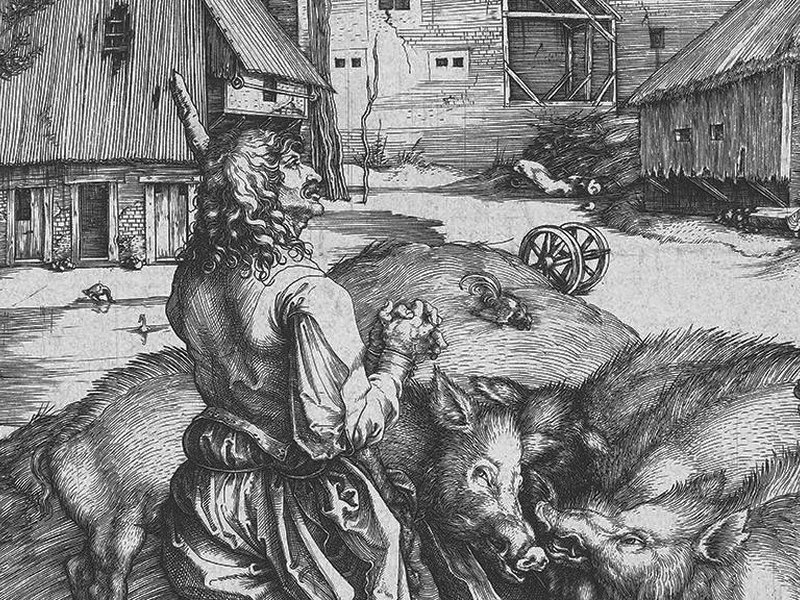
In the first essay on the parable of the Prodigal Son, I suggested that the problems commentators and others encounter in interpreting Jesus three-part parable are not accidental. These are not just problems in our ignorance of cultural background. They are intentional features of the stories —stories designed to poke…

by Ralph Allan SmithJuly 11, 2019
durer-prodigal-son-2
Luke

Perspectives on the Prodigal, (Part 1)

The story of the Prodigal Son is perhaps the most well-known story in the Bible. As others have observed, it may also be one of the most misunderstood. In two short essays, I will point out features of this story that are commonly neglected, aspects of Jesus’ parable that might…

by Ralph Allan SmithJuly 9, 2019
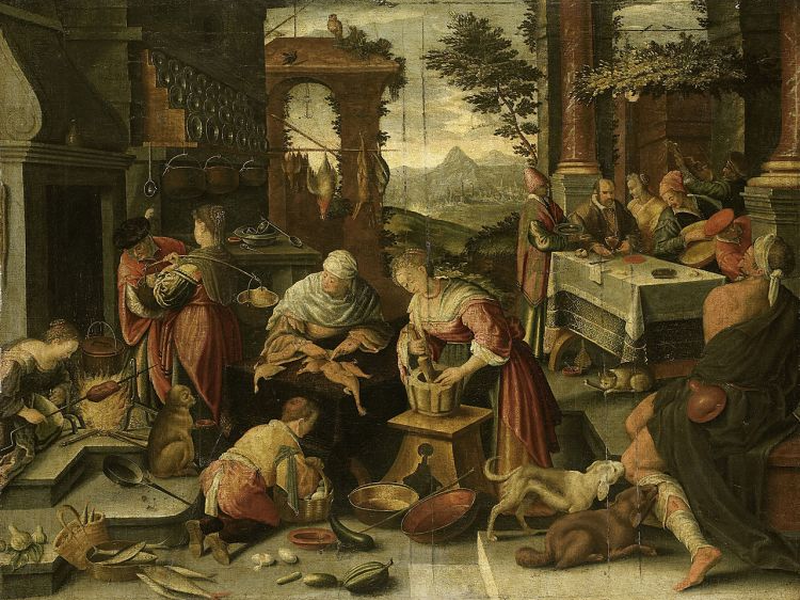
de-rijke-man-en-de-arme-lazarus-by-jacopo-da-ponte-16th-century
Luke

Lazarus and the Rich Man

The parable of Lazarus and the nameless rich man is not an independent story. It is part of a long context that begins in Luke 15:1, where Jesus is eating with tax collectors and sinners and the scribes and Pharisees grumble. In response to their hardheartedness, Jesus tells a three-part…

by Ralph Allan SmithJuly 4, 2019
aaron-burden-uynrnfdkjwg-unsplash
Luke

Everybody has Dropsy - Luke 14:1-24

The Bible is written so that even when a reader cannot pick up on what might be deeper or more detailed aspects of a text, there is virtually always a message to be heard. In the ancient world, where the “reader” of Scripture would likely be a church official facing…

by Ralph Allan SmithJuly 2, 2019
communion
Biblical Theology

Fruit Trees and Grain Plants

The distinction between garden (or vineyard) and field begins in Genesis 2. This relates to the ordering of the formless world. Plants of the field are contrasted with the garden planted by God in Genesis 2:5&8. Later on, under the Old Covenant the Israelites will be required to keep their…

by James B. JordanJune 27, 2019

Showing page 77 of 309

See all

Showing page 20 of 43

See all

In and Out

Roy Gane’s detailed, technical Cult and Character is a sustained response to Jacob Milgrom’s claim that the purification offers of the Torah did not cleanse the worshiper who offered them but the sanctuary. Gane’s overall argument is convincing, and he makes a lot of intriguing exegetical points along the way.…

December 19, 2014

Free and Now

Ben Meyer ( The Aims of Jesus , 132) summarizes Jesus message as consisting of two themes: The kingdom of God is a free gift; and it has come in Jesus’ own ministry. Jesus preaches a kingdom that is free and now . It is a demanding kingdom. The free…

December 19, 2014

Jeroboam in Early Modernity

In a 2006 article in Past & Present , Jonathan Sheehan traces the origins of the modern contrast of sacred and profane to seventeenth-century dispute about idolatry. It’s a story of keen interest, but this particularly caught my eye. He’s talking about the role of the golden calf incident in…

December 18, 2014

Trent and Sacrifice

Like another, better-known Jesuit, Robert Daly has a disarming way about him. What do you do with a Catholic who is as critical of private Masses as most Protestants? A Jesuit who says things like: “It is common to describe lack of contact with tradition as one of the characteristic…

December 18, 2014

Anti-Patriarchal Patriarchs

Nancy Jay’s analysis of the patriarchal narratives in Throughout Your Generations Forever is vitiated (to use a solid old Calvinian term) by her reliance on the documentary hypothesis. P says this, J and E that. P traces smooth sacrificial descent from fathers to sons; J and E reveal a more…

December 18, 2014

Ought We Anoint the Dying?

Anointing the sick, including the dying, is one of the traditional seven sacraments of the Catholic Church. The Reformers denied that the rite qualified as a sacrament. Formally, this was because anointing did not have a direct authorization from Jesus; more theologically, it was not one of the marks that…

December 18, 2014

Showing page 484 of 2212

Browse by Category

In Medias Res

Your weekly digest for all things Theopolis.

Donate

Theopolis is nearly 100% donor-supported. Consider joining us on our mission.