Theopolis Logo

Writing

Explore our collection of theological essays, biblical studies, and reflections on faith and culture.

See all
jacek-dylag-pmxt0xtq-a-unsplash
Culture

Consumerism, Oikos, and the Role of Women in the Church

Part 1 We do not understand the role of women in ministry because we do not understand the role of men in ministry. We do not understand the role of men in ministry because we do not understand the church. We do not understand the church because the consumer culture…

by John CarpenterJuly 11, 2023
adam-and-eve-in-the-garden-of-eden-wenzel-peter
Biblical Theology

Genesis’ Beginning Story

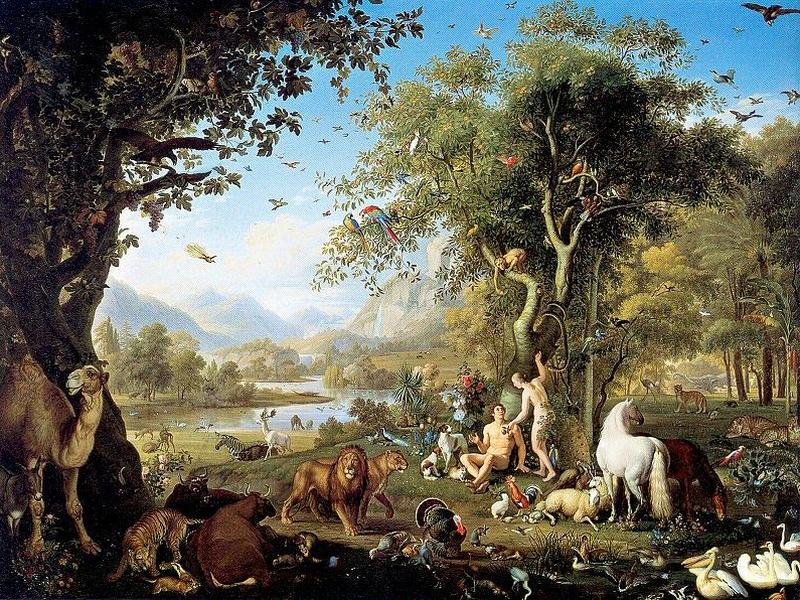
1. One structure The Creation account (G1:1-2:4) conspicuously conveys meaning using the literary shape of the text. The narrative is told with formulaic patterns, repetitions, and parallelism. The Garden account is different. It is viewed as a separate text, with its own author, employing its own structure. This second account’s…

by Scott FairbanksJune 28, 2023
jelleke-vanooteghem-gnxb59lgu1m-unsplash
Baptism

Crystalline Baptism

I was reading James Jordan’s Creation in Six Days while also preparing for Trinity Sunday in which the gospel reading is John 3:1-15. As providence would have it Jordan dropped an easter egg for me along the lines of baptism. In chapter 5 he points out, “ On the second…

by Matthew CoreyJune 20, 2023
ryan-loughlin-a8cewc-qgq-unsplash
Baptism

Christians Should Baptize Their Children, but Not Because of Circumcision

It's true. There is no verse in the New Testament that commands or records an infant baptism. This poses a problem for some Christians. Those who only look for explicit commands, or those whose theology is limited to the New Testament, will conclude that infant baptism is not biblical and…

by Adam McIntoshJune 13, 2023
adam-and-eve-in-the-garden-of-eden-wenzel-peter
Biblical Studies

Polarities

1. Goal This paper’s goal is to identify and describe a literary strategy employed by scripture, namely using two episodes that cover similar territory or themes using details drawn from opposite ends of a number of spectrums. Once described the reader may recognize numerous other instances of this strategy in…

by Scott FairbanksJune 7, 2023
juli-kosolapova-us_dv71f1bc-unsplash
Deuteronomy

Kind Capital Punishment

Numbers 14 records the tragic story of Israel’s decision to rebel against Yahweh and Moses. Twelve spies had been sent into the land to bring back a report to Israel. All twelve spies agreed: “We went to the land where you sent us. It truly flows with milk and honey”…

by Ralph Allan SmithMay 31, 2023

Showing page 30 of 309

See all

Showing page 20 of 43

See all

History of Disgust

Norbert Elias’s The Civilizing Process traces modern standards of disgust and cleanliness to the development of court society during the Renaissance. Drawing on Elias, William Miller ( Anatomy of Disgust ) suggests sensitivity to disgust and being civilized are directly proportional. Martha Nussbaum ( Hiding from Humanity , 115-6) disagrees…

December 15, 2014

Islamic Revolutionaries

In his brilliant Earthly Powers (3), Michael Burleigh cites a passage from Tocqueville’s book on the French Revolution. Taking a note from Schiller about “how early modern religious wars spilled across political boundaries, which reminded Tocqueville of the ideological struggle between Jacobins and counter-revolutionaries in late-eighteenth-century Europe,” Tocqueville drew a…

December 12, 2014

Sacrificial Politics

Semyon Frank was a Russian emigre to London. Michael Burleigh ( Sacred Causes , 39) sums up his life: “Born in 1877 into a Russian-Jewish family, he had quickly outgrown a juvenile Marxism, converting to Orthodox Christianity in 1912, on the ground that the Jewish God was as remote from…

December 12, 2014
Modernity

Un-Secular Age

Our secular age can be sustained only if the secular has been carefully distinguished from the sacred, and only if the boundary between the two is vigorously, not to say violently, guarded. But boundary-drawing between the sacred and profane is the work of a priest. It is the sacred act…

December 12, 2014

Pure Aesthetics

Hugh Grady opens his Shakespeare and Impure Aesthetics (6-10) with a brief and illuminating discussion of Kant’s aesthetics of purity. By “pure” here is meant the freedom of aesthetic experience from cognitive reason and teleological judgments, from practical or moral interests. This disinterested experience of art is an encounter with…

December 12, 2014

After the Temple

Jonathan Klawans is a great one for cutting through nonsense. In his Purity, Sacrifice, and the Temple , he points to the oddity that “documents composed three, four, or even five centuries after the destruction are labeled as delayed responses to the destruction. . . the suggestion that it took…

December 11, 2014

Showing page 487 of 2212

Browse by Category

In Medias Res

Your weekly digest for all things Theopolis.

Donate

Theopolis is nearly 100% donor-supported. Consider joining us on our mission.