Theopolis Logo

Writing

Explore our collection of theological essays, biblical studies, and reflections on faith and culture.

See all
sixteen-miles-out-al48tflf4e8-unsplash
Food

Gluttony In The Bible (As Opposed To Gluttony In The American Church)

In the Bible, fatness is such a blessing, that it is especially hard to understand why wicked men are permitted to enjoy such a state. It requires a theodicy and faith in God. Thus: “For they have no pangs until death; their bodies are fat and sleek . They are…

by Mark HorneAugust 12, 2013

jeremy-yap-j39x2xx_8cq-unsplash
How to Worship

Biblical Worship (Video with James B. Jordan)

[fve]http://vimeo.com/71901553[/fve]

by Peter LeithartAugust 8, 2013
chris-bair-ndczc5739ck-unsplash
Deuteronomy

Holy Things for Holy People

The allusion to the Exodus story is contained in the first words of Deuteronomy 14:1 — “ye are the sons of Yahweh your God” — as well as in 14:2 in the use of the technical term translated “treasured possession,” “His own possession,” “peculiar people,” “precious people,” and so forth.…

by Ralph Allan SmithAugust 5, 2013
adam-and-eve-in-the-garden-of-eden-wenzel-peter
Deuteronomy

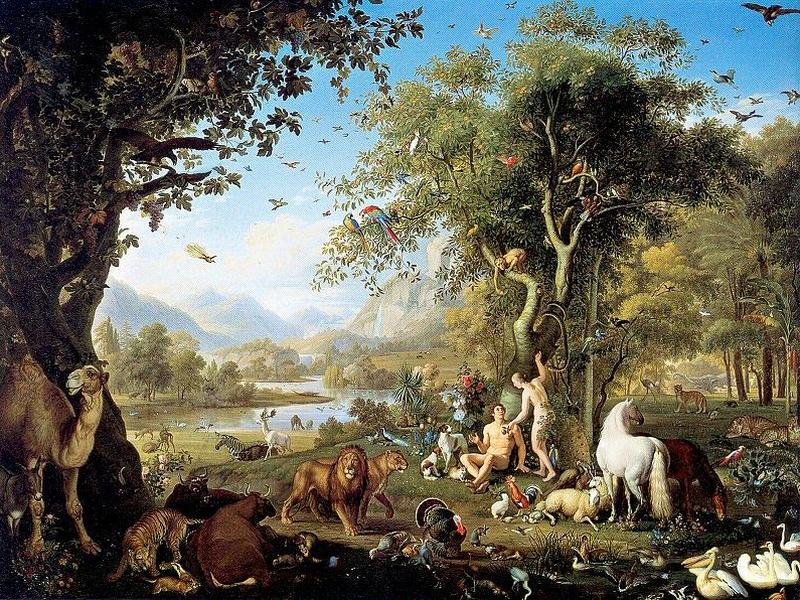
Forbidden Foods

I have argued that Deuteronomy 14:1-21 is an independent literary unit that applies the Third Word to the lives of Israelites from the time of Moses and Joshua. In this short pericope, Moses suggests broad and deep meaning by means of literary allusion to the stories of the creation and…

by Ralph Allan SmithJuly 31, 2013
david-weber-fwuo_zluhnw-unsplash
How to Worship

Pro-Sacramental Reformation

In his recently republished The New Creation , the late, delightful Herbert McCabe defends the priesthood of the plebs as roundly as anyone could want. Citing Hebrews, he claims that "there is an essential difference between the Christian community and the community of the Old Law, or any other religious…

by Peter LeithartJuly 29, 2013
eric-ward-7kqe_8meex8-unsplash
Augustine

Sexual Idolatry

Augustine famously prayed, “Our hearts our restless until they rest in You.” True indeed. Being creatures, we inherently sense our ontological poverty—our innate condition of dependence—and are compelled to find a sense of security. And it is also true—as Augustine’s own narrative painfully illustrates—that one of the things we most…

by Gerald HiestandJuly 24, 2013

Showing page 190 of 309

See all

Showing page 21 of 43

See all

Calvin on Signs

A remarkable statement of Calvin’s, from Institutes 4.14.18: speaking of the tree of knowledge and of the rainbow, Calvin says that these are given new being by the word of God that designates them as signs or testimonies. Then this Et antea quidem arbor erat arbor, arcus arcus; ubi inscripta…

February 12, 2004

Moral Luck and the Fragility of the Good Life

In Nussbaum’s treatment, “tragic” and “Aristotelian” conceptions of moral luck and the fragility of the good life are at one. In excluding poets, Plato not only kept certain forms of literature at bay, but was protecting against the tragic potential of life. For Plato, “the best and most valuable things…

February 12, 2004
Philosophy

Moral Luck

Nussbaum’s problematic of moral luck is quite intriguing: A good man is like a tree, she says at the beginning, quoting Pindar. But that means that the good man is dependent for his flourishing on all kinds of things beyond his control ?Erainfall, winds, sun, and so on and on.…

February 11, 2004
Theology

The Sophist Critique of Nomos

Should theology agree with the sophist critique of nomos ? It would seem so, as Thomas would say: The institutions of society are the product of human construction, and the claim that they are rooted in “nature” is a rhetorical device. It is human all the way down. If it…

February 11, 2004
Economics

The Weber Thesis

Years ago, I read David Landes’s Prometheus Unbound for a class in economic history, and I can still remember the fascination I experienced at his descriptions of the steel industry (though details are sadly forgotten). In his recent Wealth and Poverty of Nations , Landes, among many other things, spends…

February 11, 2004

“Nomos” in Greek Culture

There is further evidence concerning the meaning of nomos in Greek culture, coming from Martha Nussbaum’s Fragility of Goodness . In a discussion of Euripides’s Hecuba , Nussbaum points out that Polyxena, Hecuba’s daughter who is offered as a human sacrifice by the Greeks to appease the shade of Achilles,…

February 11, 2004

Showing page 2122 of 2212

Browse by Category

In Medias Res

Your weekly digest for all things Theopolis.

Donate

Theopolis is nearly 100% donor-supported. Consider joining us on our mission.