Theopolis Logo

Writing

Explore our collection of theological essays, biblical studies, and reflections on faith and culture.

See all
e99a7415
Church Calendar

Herbertian Lessons for Lent

I live in an area where Mardi Gras is in full swing, and I can remember from my upbringing that Fat Tuesday was a last ditch effort at debauchery before the pseudo-spiritual practice of “giving something up for Lent” really began. In my youth I would give up some kind…

by Brian G DaigleFebruary 13, 2018

screen-shot-2018-02-08-at-9-58-52-am
Biblical Theology

Of Wine and Wineskins

Part 1: Observations from the Texts (Matthew 9:14-17, Mark 2:18-22, Luke 5:33-39) The precipitating context for the new wine/old wineskins discussion is people asking Jesus why His disciples did not fast. His immediate answer is that you can’t get the friends of the groom to fast at the bachelor party…

by Tim NicholsFebruary 8, 2018
businessman
Culture

True Progress

Simply, “progress” means to move forward. In that sense, a slug can progress from one end of the sidewalk to the other. But for us in twenty-first century America, progress means something else. For us, it is almost a synonym for goodness. The slug can only “progress” if the other…

by Christian LeithartFebruary 6, 2018
woman-bw
Abortion

On Abortion and Real Love

I have the privilege of being able to counsel a lot of women who are seeking abortions. I can tell you that the majority of them are seeking to end their pregnancies not because they feel like it would be a fun thing to do, but because they are scared…

by MargaretAnn HesterFebruary 1, 2018
screen-shot-2018-01-29-at-3-03-21-pm
Culture

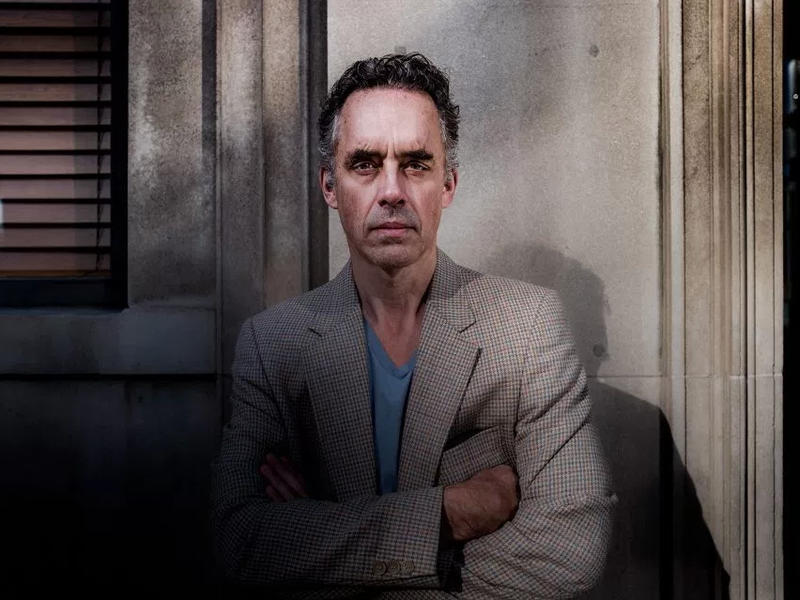
What Pastors Could Learn From Jordan Peterson

Last night, along with a few online friends, I watched this debate on the meaning of life between William Lane Craig, Rebecca Goldstein, and Jordan Peterson, hosted by Wycliffe College. While watching it, and reflecting upon Peterson’s work more generally (about which I’ve written in the past ), I was…

by Alastair RobertsJanuary 30, 2018
greg-rakozy-ompaz-dn-9i-unsplash-2
Epistemology

Seeking Integration in a Fragmented World

I’m glad to have been invited to contribute regularly to the Theopolis Institute website. Thank you, readers, for welcoming and joining what I hope will be a venture of integration. Integration itself is what I want to explore. And for me personally, this is the shape of my current integrative…

by Esther Lightcap MeekJanuary 25, 2018

Showing page 99 of 309

See all

Showing page 21 of 43

See all
Literature

Michel on Tragedy

Laurence Michel, exploring the “Possibility of a Christian Tragedy,” suggests that the creation account of Genesis opens the possibility for a “tragic sense of life.” How? “To have a world imitative of the simple perfection of God one must have multiplicity and diversity of goods. Various evils and contraries will…

January 15, 2004
Theology

Evil and Good

CS Lewis says in Pilgrim’s Regress : “Evil is fissiparous, and could never in a thousand eternities find any way to arrest its own reproduction. If it could, it could be no longer evil: for Form and Limit belong to the good.” But what then of a Good and Infinite…

January 15, 2004
Literature

Niebuhr on Christianity and Tragedy

In a chapter in Beyond Tragedy , Reinhold Niebuhr considers the relationship between Christianity and tragedy. He denies that Christianity is tragic: “The cross is not tragic but the resolution of tragedy.” In the course of his discussion he makes several intriguing points about the tragic outlook: 1) He highlights…

January 15, 2004
Literature

Weil on Tragedy

Simone Weil offered one of the most thorough-going Christian defenses of tragedy, though that defense comes at considerable cost to her orthodoxy. As Katherine Brueck points out in her study of Weil’s theory ( The Redemption of Tragedy ), Weil recognized that what was at stake in a discussion of…

January 15, 2004

More Thoughts from Segal

Some more thoughts from Segal’s book: 1) He points out the optimism that gripped Athens in the Periclean period, an optimism about the ability of human LOGOS and NOMOS to stave off the savage potential of man’s PHUSIS. But that was short-lived: The Peloponnesian wars broke out, marked by several…

January 15, 2004

civilization in Sophocles

In his study of Sophocles, Tragedy and Civilization , Charles Segal points to several Greek terms that might be translated as “civilization” and that capture various aspects of civilized life: NOMOS = the established institutions, customs, and norms of a people POLITEIA = the form of government, especially the constitutional…

January 15, 2004

Showing page 2136 of 2212

Browse by Category

In Medias Res

Your weekly digest for all things Theopolis.

Donate

Theopolis is nearly 100% donor-supported. Consider joining us on our mission.