Theopolis Logo

Writing

Explore our collection of theological essays, biblical studies, and reflections on faith and culture.

See all
cloister

Gatekeepers

1 Chronicles 9:1 seems to bring the genealogies of 1 Chronicles to an end. The Chronicler has recorded the genealogy of the human race from Adam, focusing on the descendants of Abraham through Jacob. Summing it all up, he says, “So all Israel was enrolled by genealogies; and behold, they…

by Peter LeithartJune 21, 2016
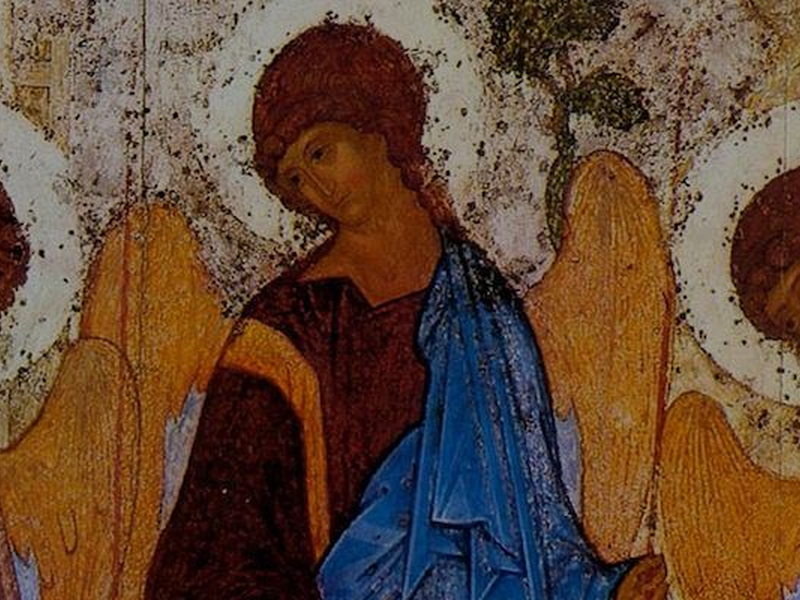
trinity-1-2
Trinity

Are the Divine Persons Persons?

The “personalist” understanding of the Trinity, articulated most influentially in the work of John Zizioulas, has fallen on hard times. Recent scholars have attacked Zizioulas’s idea that Cappadocian Trinitarianism represented an ontological revolution, hammering on the distinction between divine and human personhood. Michel Barnes’s conclusion is the most drastic of…

by Peter LeithartJune 16, 2016
img_4660-2
Architecture

On Biblical Theology

Biblical Theology is often defined as the historical unfolding of God’s revelation, or of God’s revelation and of the history of his covenantal redemption and transformation of humanity and the world. In practice, Biblical Theology is usually broader than this, and also includes the study of literary structure and of…

by James B. JordanJune 14, 2016
laughing_statue_by_xxbobbiie-d5f0meh-2
Humor

Wise Laughter

We are made to be happy. Created to enter into the eternal joy of God, our whole being inclines to that end, but the fallen world has put forth barriers and by our own sin we bar ourselves from that endless delight, and death blinds us to that reality. Yet…

by Remy WilkinsJune 7, 2016
img_7664
Liturgy

Why Theopolis? Take Two

At the end of Revelation, John sees the heavenly city descending to earth. The city shines with the brilliance of God's glory, which lightens the nations, so that kings bring their glory to the city. This is not a vision of the final new heaven and new earth. It's a…

by Peter LeithartJune 2, 2016
trinity-1-2
Attributes of God

How Can We Talk About God?

“No one has ever seen God,” writes John (John 1:18). If this is the case, then how can we speak about God? Some people say we actually cannot. Or at least we cannot speak about God positively, i.e. who He is. We can only say who or what God is…

by Bogumil JarmulakMay 31, 2016

Showing page 130 of 309

See all

Showing page 21 of 43

See all

The Church and the Street

In his contribution to Pentecostalism and the Christian Churches , Waldo Cesar calls attention to the spatial connection of Latin American Pentecostal churches with the urban streets of Latin America: “There is nothing special from an architectural point of view, and in many cases large movie theater, rented or bought,…

August 24, 2015

Foreign Protestantism

Waldo Cesar observes ( Pentecostalism and the Future of the Christian Churches , 91-92) that Protestantism has often felt like a foreign import to Latin America. There was a discontinuity between Protestant missions and the local population, and Protestantism tended to rely on the outside world. All this impressed Latin…

August 24, 2015

Melting Pot Pentecostalism

David Martin ( Future of Christianity , 68-69) notes that in the heat of Pentecostal revival, blacks and whites fuse. He admits that “the fusion of black and white was partly reversed as the movement developed, when it came to the mingling of races. The white heat of revival initially…

August 24, 2015

Muzzling the Prophet

“A key function in most religions,” write Michael Emerson and Christian Smith ( Divided By Faith ) “is to proclaim what ought to be, what is universally true, what is right and just. We call this the prophetic voice” (163). American religion, however, fragments this prophetic voice, even within the…

August 21, 2015

Genesis Redux

Leviticus 1-3 form a unit. 1:1 begins with “Yahweh called to Moses and spoke to him,” and a similar phrase, ‘Yahweh spoke to Moses, saying” shows up in 4:1. Chapters 1-3 form a single speech from God. The chapters cover three offerings: the ascension ( ‘olah ), the tribute of…

August 21, 2015

Denomination and Sacrament

One the features of denominational Christianity highlighted by David Martin is a distinctive mode of sacramental theology that he labels “subjective.” Unlike sects, denominations retain sacraments; unlike the church, the sacrament is less the work of God than the expression of the worshiper. The contours of his characterization are worth…

August 21, 2015

Showing page 386 of 2212

Browse by Category

In Medias Res

Your weekly digest for all things Theopolis.

Donate

Theopolis is nearly 100% donor-supported. Consider joining us on our mission.