Theopolis Logo

Writing

Explore our collection of theological essays, biblical studies, and reflections on faith and culture.

See all
sixteen-miles-out-al48tflf4e8-unsplash
Food

Gluttony In The Bible (As Opposed To Gluttony In The American Church)

In the Bible, fatness is such a blessing, that it is especially hard to understand why wicked men are permitted to enjoy such a state. It requires a theodicy and faith in God. Thus: “For they have no pangs until death; their bodies are fat and sleek . They are…

by Mark HorneAugust 12, 2013

jeremy-yap-j39x2xx_8cq-unsplash
How to Worship

Biblical Worship (Video with James B. Jordan)

[fve]http://vimeo.com/71901553[/fve]

by Peter LeithartAugust 8, 2013
chris-bair-ndczc5739ck-unsplash
Deuteronomy

Holy Things for Holy People

The allusion to the Exodus story is contained in the first words of Deuteronomy 14:1 — “ye are the sons of Yahweh your God” — as well as in 14:2 in the use of the technical term translated “treasured possession,” “His own possession,” “peculiar people,” “precious people,” and so forth.…

by Ralph Allan SmithAugust 5, 2013
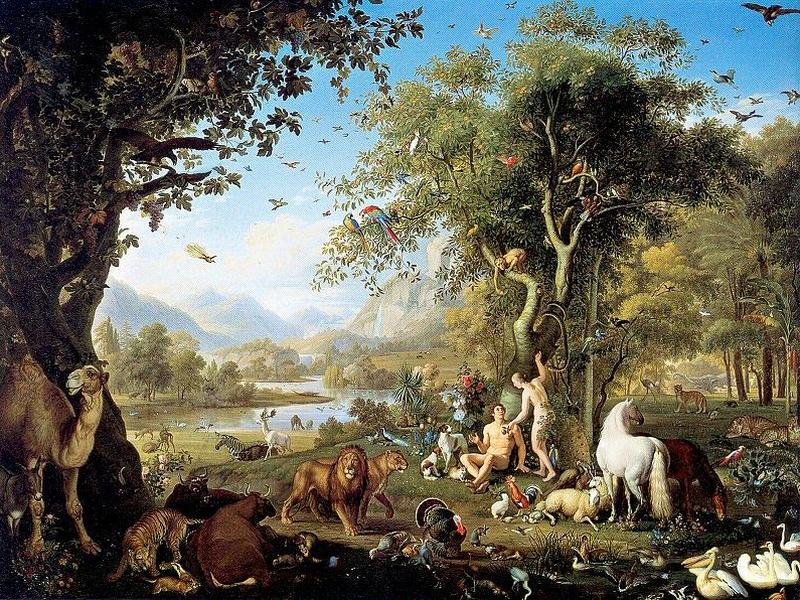
adam-and-eve-in-the-garden-of-eden-wenzel-peter
Deuteronomy

Forbidden Foods

I have argued that Deuteronomy 14:1-21 is an independent literary unit that applies the Third Word to the lives of Israelites from the time of Moses and Joshua. In this short pericope, Moses suggests broad and deep meaning by means of literary allusion to the stories of the creation and…

by Ralph Allan SmithJuly 31, 2013
david-weber-fwuo_zluhnw-unsplash
How to Worship

Pro-Sacramental Reformation

In his recently republished The New Creation , the late, delightful Herbert McCabe defends the priesthood of the plebs as roundly as anyone could want. Citing Hebrews, he claims that "there is an essential difference between the Christian community and the community of the Old Law, or any other religious…

by Peter LeithartJuly 29, 2013
eric-ward-7kqe_8meex8-unsplash
Augustine

Sexual Idolatry

Augustine famously prayed, “Our hearts our restless until they rest in You.” True indeed. Being creatures, we inherently sense our ontological poverty—our innate condition of dependence—and are compelled to find a sense of security. And it is also true—as Augustine’s own narrative painfully illustrates—that one of the things we most…

by Gerald HiestandJuly 24, 2013

Showing page 190 of 309

See all

Showing page 21 of 43

See all

Yahweh the Teacher

Genesis 1 presents a macro-creation, Genesis 2 a micro-creation. The latter follows the former, for humanity is micro-cosmic. The Spirit hovers over waters, and water arises to water the ground. God speaks light into existence, and by the same breath He makes Adam a living soul. Day 1. Yahweh forms…

April 8, 2015
Liturgy

Omnivorous Liturgy

We stand, we kneel, we sit, we stand, we kneel. The postures of liturgy write “upon the bodies of those who perform it frequently a habit of acting as an unworthy recipient of a prevenient gift” (Paul Griffiths, Decreation , 232). By developing the habits that the liturgy impresses on…

April 7, 2015

The Primacy of Pattern

“When we do science,” writes William Dembski in his Being As Communion (85), “we don't encounter matter in its raw state nor do we encounter sensory experiences in their raw state. Rather, we encounter certain patterns to the exclusion of others. In other words, we encounter information. The material and…

April 7, 2015

World-Making Word

The Creator God is a speaker, who speaks to form the formless, dark, and empty void into the structured and glorious cosmos. As images of the world-making God who speaks, we also make worlds with words. Genesis 1 provides a paradigm, an allegory of world-making words. In the darkness, words…

April 7, 2015

When Stars Fall

NT Wright has insisted over the years that the apocalyptic language of the gospels (Matthew 24; Mark 13; Luke 21) doesn't refer to the end of the space-time universe but to the end of a socio-political order. Edward Adams dissents in his 2007 The Stars Will Fall From Heaven .…

April 6, 2015

More Than Anxiety

Laura Pelaschiar's forthcoming Joyce/Shakespeare collects essays that explore the various facts of Joyce's use, misuse, criticism, and combat with Shakespeare. She observes that “Shakespeare’s existence in Joyce is tentacular and functions on many different levels: cultural, structural, political, thematic, contrapuntal, imitational, quotational/misquotational, stylistic, lexical, psychological, or psycholiterary.” Joyce's reception of…

April 6, 2015

Showing page 443 of 2212

Browse by Category

In Medias Res

Your weekly digest for all things Theopolis.

Donate

Theopolis is nearly 100% donor-supported. Consider joining us on our mission.