
Theopolis Logo

Writing

Explore our collection of theological essays, biblical studies, and reflections on faith and culture.

See all
giammarco-zeh-ljawhtg-unsplash
Biblical Horizons

OPEN BOOK: Views and Reviews

Isaac E. Mozeson, The Word: The Dictionary that Reveals the Hebrew Sources of English (Northvale, NJ: Jacob Aaronson Inc., 1995), 310 pp. Reviewed by James B. Jordan. Once there was only one language in the world, the language God spoke to Adam. At the Tower of Babel, there came to…

by James B. JordanJune 28, 1996
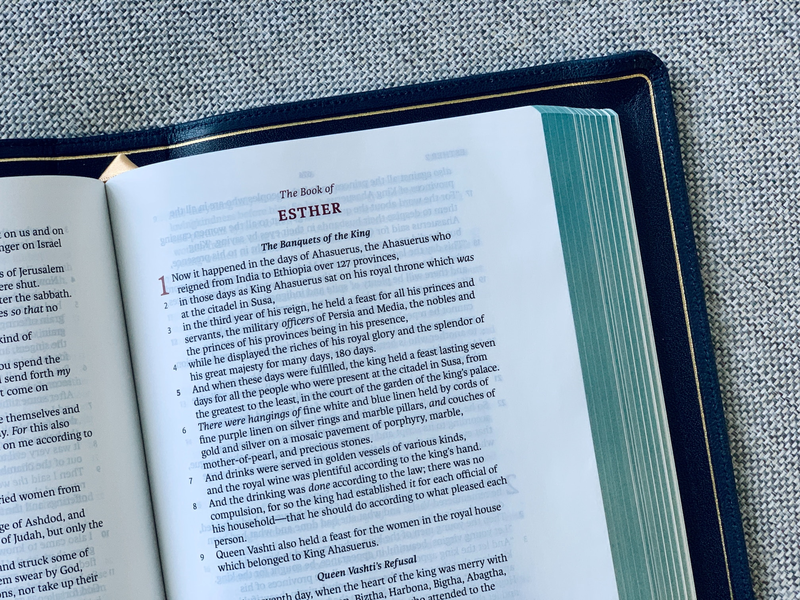
tim-wildsmith-j6jv-mkdzqs-unsplash
Esther

Esther: Historical & Chronological Comments (IV)

2. The Setting of the Book of Esther A. Xerxes (continued from previous issue) Ezra 6:14 says that the Jews finished building "according to the command of the God of Israel and the decree of Cyrus and Darius and Artaxerxes king of Persia." The problem with this verse is that…

by James B. JordanJune 28, 1996

ales-krivec-4mibe6zg5r0-unsplash
Acts

Jesus and Amalek

This essay goes with our previous study of the Amalek pattern back in Biblical Horizons No. 2. Since many do not have this essay, entitled "The Battle of Gog and Magog," let me cite the relevant paragraphs: Note in Genesis 12-15 that Abram moves into the land after escaping Pharaoh…

by James B. JordanJune 28, 1996

aaron-burden-1ebsmyrau-s-unsplash
Proverbs

The Strange Woman

Proverbs 7:6-23 is one of several passages early in the Proverbs in which Solomon warns his son about the wiles and dangers of the "strange woman." It is certainly quite proper to take these as straightforward warnings against sexual sins, and these are certainly warnings that need to be impressed…

by Peter LeithartJune 27, 1996
jan-kahanek-g3o5ztrk2e4-unsplash
Biblical Studies

Some Observations

1. In Luke 4:20 we read that after Jesus finished reading from Isaiah, "the eyes of all in the synagogue were fixed upon Him." This is usually taken in a psychological sense: They were amazed at Jesus somehow. I suggest that, as always, a merely psychological reading is a modern…

by James B. JordanMay 28, 1996
tim-wildsmith-j6jv-mkdzqs-unsplash
Esther

Esther: Historical & Chronological Comments (III)

2. The Setting of the Book of Esther Up to now we have assumed what we must prove, that the king in Esther is Darius the Great. While Biblical chronologists have usually taken this position, commentators on the book of Esther have often taken others as the king. One view,…

by James B. JordanMay 28, 1996

Showing page 265 of 309

See all

Showing page 21 of 43

See all

Jesus the Carpenter

W hen Jesus begins the Sermon on the Mount, He is sitting on a mountain teaching about the law. He is a new Moses; He is Yahweh. To get the full force of the analogy, we should recalled that God reveals more on Sinai than the Ten Word or moral…

January 6, 2015

Salt of the Earth

Mark Kulansky observes in his Salt: A World History that “Almost no place on earth is without salt. But this was not clear until revealed by modern geology, and so for all of history until the twentieth century, salt was desperately searched for, traded for, and fought over.” Salt’s importance…

January 6, 2015

Who Are The Disciples?

When we read of Jesus’ “disciples,” we naturally think of the Twelve. But that’s not nearly as clear as we try to make it. Many Bibles include the heading “the first disciples” for the episode in Matthew 4:18-22, but the text never uses the word. Peter, Andrew, James, and John…

January 5, 2015

Salty

In a classic essay on the “Symbolic Significance of Salt,” Ernst Jones neatly summarizes how the natural properties of salt lend themselves to social and religious uses: “Salt is a pure, white, immaculate and incorruptible substance, apparently irreducible into any further constituent elements, and indispensable to living beings. It has…

January 5, 2015
Atonement

Social Atonement

H ow, Walter Rauschenbush asked in his Theology for a Social Gospel , does Jesus bear our sins? Unsatisfied with “imputation” as an explanation, he turned to a “social” explanation. Jesus was in solidarity with humanity, and human history is a history of sin. Humanity is bound in a enslaving…

January 5, 2015

Joy of Justification

In her contribution to J ustification in a Post-Christian Society (52), Christine Helmer summarizes the work of Birgit Stolt, who has examined Luther’s vocabulary of justification: “Through careful linguistic analysis, Stolt shows Luther’s doctrine of justification is not couched in the sterile dogmatic vocabulary of a cognitive appreciation for the…

January 2, 2015

Showing page 480 of 2212

Browse by Category

In Medias Res

Your weekly digest for all things Theopolis.

Donate

Theopolis is nearly 100% donor-supported. Consider joining us on our mission.