Theopolis Logo

Writing

Explore our collection of theological essays, biblical studies, and reflections on faith and culture.

See all
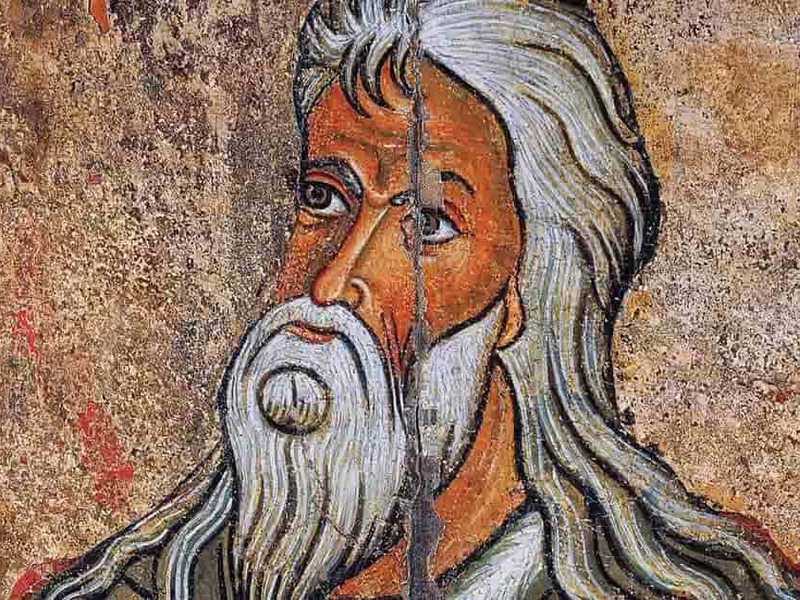
elijah-1200x630-min
Biblical Horizons

Elijah’s Exodus

1 Kings 17, which abruptly introduces Elijah into the history of the northern kingdom, is a carefully constructed literary unit. In its basic structure, it follows a clear exodus-return pattern. Like Jacob and his sons, Elijah was driven out of the land by a famine (vv. 1-4). In exile, Elijah…

by Peter LeithartJune 17, 1992

ales-krivec-4mibe6zg5r0-unsplash
Biblical Studies

All Things New

Now the Pharisees, who were lovers of money, were listening to all these things and they were scoffing at Him. And He said to them, "You are those who justify yourselves in the sight of men, but God knows your hearts; for that which is highly esteemed among men is…

by Mark HorneJune 6, 1992
aaron-burden-h8s0pf2rcqs-unsplash
Biblical Chronology

Chronologies and Kings, Part 11: The Knots of 2 Kings 11-14

In the year 3119, Ahaziah of Judah and Jehoram of Israel were both slain by Jehu as he carried out his God-appointed task of eliminating the seed and house of Ahab (2 Kings 9:13-33). Since the kings of Israel are usually counted as beginning their reign in the same year…

by James B. JordanMay 24, 1992
trnava-university-beeyeib-am8-unsplash
Biblical Studies

Gleanings from Robert Alter’s "Art of Biblical Narrative"

One of the most important developments in Biblical studies in recent years has been a movement of scholars devoted to studying the literary techniques of the Biblical writers. Tremper Longman, III of Westminster Theological Seminary has treated this movement from a Reformed perspective in his Literary Approaches to Biblical Interpretation…

by Peter LeithartMay 17, 1992
ian-schneider-iqbc4vu4ypq-unsplash
Biblical Horizons

Tentmaking

And because [Paul] was of the same trade, he stayed with [Aquila and Priscilla] and they were working; for by trade they were tentmakers (Acts 18:3). The fact that Paul was by trade a tentmaker has usually been taken as the springboard for a discussion of whether pastors should have…

by James B. JordanApril 24, 1992
screen-shot-2022-05-12-at-12-07-23-pm
Biblical Studies

Chronologies and Kings, Part 10: Jehoram of Judah

I pointed out in Chronologies and Kings Part 9 that the years of Judah’s kings are given in chronological fashion. "When we read of a Judahite king’s reign as lasting 4 years, it means that 4 years of the chronology have been given to him, and there is no chronological…

by James B. JordanApril 24, 1992

Showing page 290 of 309

See all

Showing page 21 of 43

See all

Jesus the Carpenter

W hen Jesus begins the Sermon on the Mount, He is sitting on a mountain teaching about the law. He is a new Moses; He is Yahweh. To get the full force of the analogy, we should recalled that God reveals more on Sinai than the Ten Word or moral…

January 6, 2015

Salt of the Earth

Mark Kulansky observes in his Salt: A World History that “Almost no place on earth is without salt. But this was not clear until revealed by modern geology, and so for all of history until the twentieth century, salt was desperately searched for, traded for, and fought over.” Salt’s importance…

January 6, 2015

Who Are The Disciples?

When we read of Jesus’ “disciples,” we naturally think of the Twelve. But that’s not nearly as clear as we try to make it. Many Bibles include the heading “the first disciples” for the episode in Matthew 4:18-22, but the text never uses the word. Peter, Andrew, James, and John…

January 5, 2015

Salty

In a classic essay on the “Symbolic Significance of Salt,” Ernst Jones neatly summarizes how the natural properties of salt lend themselves to social and religious uses: “Salt is a pure, white, immaculate and incorruptible substance, apparently irreducible into any further constituent elements, and indispensable to living beings. It has…

January 5, 2015
Atonement

Social Atonement

H ow, Walter Rauschenbush asked in his Theology for a Social Gospel , does Jesus bear our sins? Unsatisfied with “imputation” as an explanation, he turned to a “social” explanation. Jesus was in solidarity with humanity, and human history is a history of sin. Humanity is bound in a enslaving…

January 5, 2015

Joy of Justification

In her contribution to J ustification in a Post-Christian Society (52), Christine Helmer summarizes the work of Birgit Stolt, who has examined Luther’s vocabulary of justification: “Through careful linguistic analysis, Stolt shows Luther’s doctrine of justification is not couched in the sterile dogmatic vocabulary of a cognitive appreciation for the…

January 2, 2015

Showing page 480 of 2212

Browse by Category

In Medias Res

Your weekly digest for all things Theopolis.

Donate

Theopolis is nearly 100% donor-supported. Consider joining us on our mission.