Theopolis Logo

Writing

Explore our collection of theological essays, biblical studies, and reflections on faith and culture.

See all
woman-bw
Grace

Never Be Dismayed

I'm afraid of messing up. Not just of messing up in general, but of messing this up—the big This that is the story that is my life, the story that God is attempting to tell with me as His material. The question casts its shadow over all my decisions. Can…

by Leta SundetOctober 6, 2015
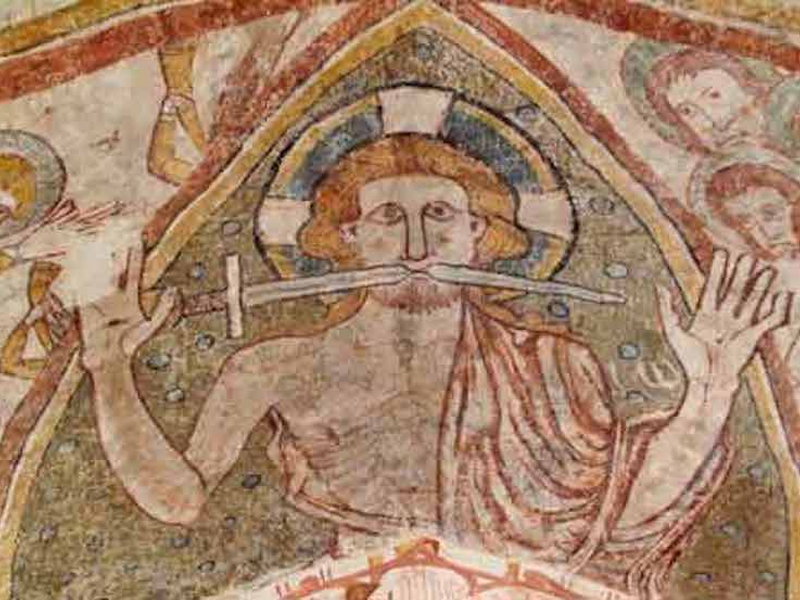
jesus-with-sword
Revelation

Greater Phinehas

Jesus’ letter to Pergamum mentions Balaam and Balak (Revelation 2:14), and that is a signal that the whole message is running along the lines of Numbers 22-25. The death of the high priest is a sacrificial moment in the life of Israel. According to the rules of the cities of…

by Peter LeithartOctober 1, 2015
marriage
Marriage

The Glory of Self-Giving: A Wedding Homily

As you come to be joined in marriage today, I want to take a moment to focus on one important dimension of what it means to be married as Christians: that is as those who know Jesus and are being made into His likeness. This is a glorious day, full…

by Joshua AppelSeptember 29, 2015
jesus-centurion
Authority

Authority and Faith

When Jesus was entered into Capernaum, there came unto him a centurion, beseeching him, saying, “Lord, my servant lieth at home sick of the palsy, grievously tormented.” Jesus saith unto him, “I will come and heal him.” The centurion answered and said, “Lord, I am not worthy that thou shouldest…

by Lindsey TollefsonSeptember 24, 2015
creation-eve-2
Genesis

The Two Shall Become One Flesh: A Wedding Homily

Philosophers have measured mountains, Fathom'd the depths of seas, of states, and kings, Walk'd with a staff to heaven, and traced fountains But there are two vast, spacious things, The which to measure it doth more behove: Yet few there are that sound them; Sin and Love. The Agonie –…

by Joshua AppelSeptember 22, 2015
john-baptist-pointing
Luke

Of Sandals and Heroes

The third chapter of Luke famously opens with a list of mighty men, seven mighty men, potential heroes of the Mediterranean world. Beginning with Tiberius Caesar and Pontius Pilate, passing on to Herod the Tetrarch and his brothers, and ending with two High Priests, Luke says that the word of…

by Toby SumpterSeptember 17, 2015

Showing page 143 of 309

See all

Showing page 21 of 43

See all

The Body Assumed

The Servant comes, and the arm of the Lord is revealed (Isaiah 53:1). The Servant’s face and form are marred, stricken, pierced, crushed, chastened, scourged. It looks like the body that’s already there, the body of Israel: “Where will you be stricken again, as you continue in rebellion? The whole…

March 21, 2013

No form, no face

According to the NASB, Isaiah 53 says that the Servant has “no stately form ( to’ad ) or majesty ( hadar ) that we should look upon Him, nor appearance ( mar’eh ) that we should desire ( chamad ) Him” (v. 2). Two of those three terms appeared at…

March 21, 2013

Desolated

Yahweh’s Servant prospers (or “deals prudently”), and so is raised, lifted, exalted greatly (Isaiah 52:13). But that exaltation is paradoxical, surprising, since the Servant that is lifted up is mangled and marred more than any of the sons of Adam (v. 14). The word translated as “astonished” ( shamem )…

March 21, 2013
Biblical Studies

Judgment according to works

The New Testament says several times that there is a day of accounting coming when all will be judged according to their deeds (Matthew 16:27; Romans 2:6; 2 Corinthians 5:10). In Romans 2 especially, this is an individual accounting: God “will render to every man according to his deeds” (Paul…

March 21, 2013

Egoism and evil

Self-obsessed egoism is not, Zizek argues ( Violence: Six Sideways Reflections ), the essence of evil, and the “true opposite of egotist self-love is not altruism, a concern for the common good, but envy, ressentiment , which makes me act against my own interest.” The true evil is (citing Freud)…

March 20, 2013
Politics

No Higher Cause

We are often told that we live in a “post-political” era or an era of “bio-politics.” Slavoj Zizek ( Violence: Six Sideways Reflections , 40-2) defines the post-political as “a politics which claims to leave behind old ideological struggles and instead focus on expert management and administration” and “bio-politics” as…

March 20, 2013

Showing page 770 of 2212

Browse by Category

In Medias Res

Your weekly digest for all things Theopolis.

Donate

Theopolis is nearly 100% donor-supported. Consider joining us on our mission.