Theopolis Logo

Writing

Explore our collection of theological essays, biblical studies, and reflections on faith and culture.

See all
aaron-burden-qjdzyt_k8xg-unsplash
Biblical Horizons

Twelve Fundamental Avenues of Revelation, Part 2

Theophanic revelation is historically progressive, or eschatological, in character. First of all, in Genesis 1:2, the Spirit appeared inside the creation, sent by the Father. After the creation of man, the Spirit worked and works with humanity to bring us to maturity, from Daughter to Bride to fruitful Mother. He…

by James B. JordanFebruary 28, 1997

gang-coo-nt7tyrsofwk-unsplash
Biblical Studies

The Calf of the Purification Offering

On the eighth day of the rite of "filling the hand," Aaron began his service at the altar. His first offering was a "calf" (Heb. `egel ), which served as a purification offering for himself and (apparently) his household (Leviticus 9:2, 8). This is striking for a couple of reasons.…

by Peter LeithartFebruary 27, 1997
sergey-shmidt-koy6flccy5s-unsplash
Exodus

A Blossom of Yahweh’s Garden

One of the distinctive items of the high priest’s clothing was the "golden plate" inscribed with the words "Holy to Yahweh" (Exodus 28:36-38). The word translated as "plate" is tsits , which literally means "flower." The verbal and noun forms are both used in Numbers 17:8, which describes Aaron’s rod…

by Peter LeithartFebruary 27, 1997
davide-ragusa-slgtmf8ejye-unsplash
Biblical Horizons

Squaring Off and Crossing Up

The square, rectangle, and cross shapes appear all over the sanctuaries God reveals in the Bible: Tabernacle, Solomon’s Temple, Ezekiel’s Temple, New Jerusalem. One thing that can be said right away about these designs, and the occasional perfect circle (the lavers), is that they do not occur in nature. They…

by James B. JordanJanuary 28, 1997
schlanger_jonah_prison_090913_620px
Biblical Studies

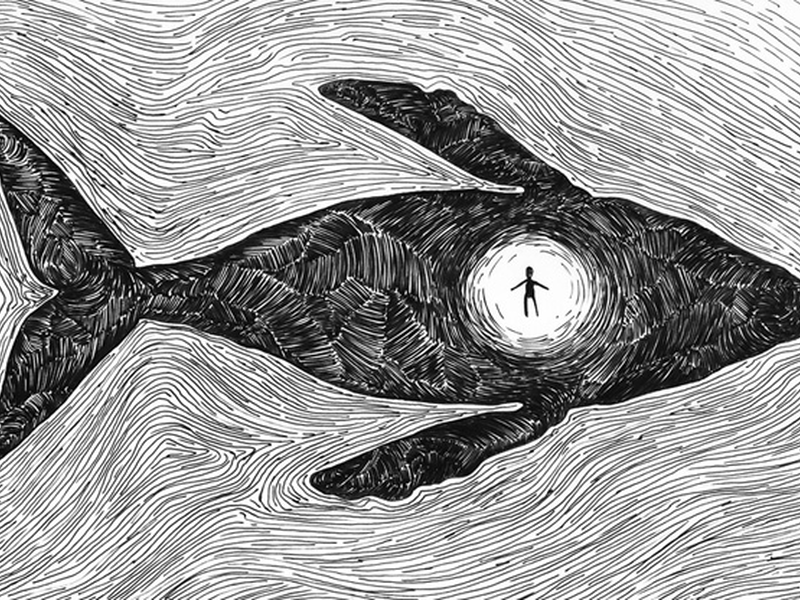
In the Fish: The Church as Tomb

"For just as Jonah was three days and three nights in the belly of the sea-monster, so will the Son of Man be three days and three nights in the heart of the earth" (Matthew 12:40). Some reflections on Jonah’s Big Fish have led to the following essay. Let me…

by James B. JordanJanuary 28, 1997
Hermeneutics

God Most High

Citing Melchizedek in Genesis 14:18-20, James Jordan has written that "the name of God in use among the nations was God Most High’" (Hebrew, `el `elyon ; in Through New Eyes , p. 176). In addition to Melchizedek, one could cite the example of Balaam, who invokes the Lord both…

by Peter LeithartJanuary 27, 1997

Showing page 260 of 309

See all

Showing page 22 of 43

See all
Philosophy

Continental v. analytic

Continuing through Simon Critchley’s book on Continental philosophy, the following analogy seems to capture some aspects of the contrast of Continental and analytic: Continental is Catholic: conscious of tradition, respectful of saints, aware of historical contextualization. Philosophy is the history of philosophy. Analytic is Protestant: deals with de-contextualized philosophical problems,…

September 14, 2006
History

Modernist postmoderns

Postmodern critics of modernity sometimes treat the latter not only as the pursuit and ambition for totality; they treat it as a totality, as an undifferentiated whole. But if postmoderns are right, even modernity was fragmented and frayed at the edges, and the appearance of totality is a modernist ruse.…

September 13, 2006
History

Modernity and dirt

A subsidiary thesis: Modernity is motivated by a desire for purity, by dirt-avoidance - dirt being, as Mary Douglas says, “matter out of place.” Counter-modernity is dirt’s revenge, celebration of dirt.

September 13, 2006
History

Modernity as court culture

Featherstone once again. He points out that sometime in the 18th century, upper class culture divided from lower class culture: “in 1500 the educated strata despised the common people although they shared their culture. Yet by 1800 their descendants had ceased to join spontaneously in popular culture and were rediscovering…

September 13, 2006
History

Romantic ethic and Consumption

In his 1987 book, The Romantic Ethic and the Spirit of Modern Consumerism , C. Campbell attempts to explain the origins of contemporary obsession with novelty, pleasure in the new, self-expression through consumption of goods. He traces it to romanticism’s focus on “imagination, fantasy, mysticism, creativity and emotional exploration” (Featherstone’s…

September 13, 2006
History

Consumption, Body, and the Sacred

A couple of further notes from Featherstone’s very stimulating book. First, citing Pierre Bourdieu, he notes the limits of seeing consumption as an isolated marker of status. The signs “that betray a person’s origins and trajectory through life are manifest in body shape, size, weight, stance, walk, demeanour, tone of…

September 13, 2006

Showing page 1794 of 2212

Browse by Category

In Medias Res

Your weekly digest for all things Theopolis.

Donate

Theopolis is nearly 100% donor-supported. Consider joining us on our mission.