Theopolis Logo

Writing

Explore our collection of theological essays, biblical studies, and reflections on faith and culture.

See all
kristina-flour-bcjdbykwquw-unsplash
Culture

On Foul Language

The Stranger: Do you have to use so many cuss words? The Dude: What the f*ck you talking about? - The Big Lebowski There was a man I knew, an elder at his church, who, whenever he was called upon to announce a pregnancy, preferred the euphemism “with child” because…

by Remy WilkinsJanuary 12, 2016

organ-pipes
How to Worship

Pipes Worth Playing

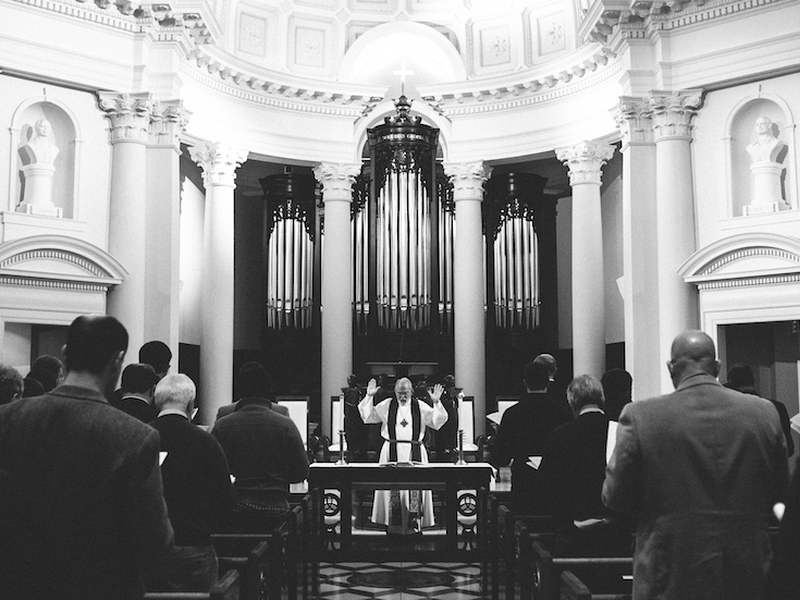
I know what you’re thinking. Organ: funeral, ball game, grand dusty cathedral. Why should modern Christians of such a technological age revisit a thousand year-old instrument? Don’t worry, I will not be trying to punch another hole in my Weird Music Preferences and Opinions card here. The truth is, our…

by Jarrod RicheyJanuary 7, 2016
tree-2
James

Do Things Have Natures?

Do things have natures? As I am posing the question, it is not simply a question of whether there are particular kinds of things in the world that have characteristic features, patterns of behavior, trajectories of growth and development. If that is what the word means, then the answer is…

by Peter LeithartJanuary 5, 2016
jim-leading-worship
Theopolis News

2016 Nevin Lectures with Father John Behr

We are excited to announce our 2016 Nevin Lectures featuring Father John Behr. Fr. John is the Dean of St. Vladimir's Seminary and Professor of Patristics, as well as the author of multiple works. He will be delivering three lectures over the course of two days dealing with "What Protestants…

by Brian MoatsJanuary 4, 2016
times-square
Creation

Time, Curse or Gift?

New Year's Day makes one reflective, at least about the past year, perhaps about life, perhaps, more broadly, about time itself. Many view time as a curse. Some see it as a curse because of missed chances. As one day or year moves on to the next, all we can…

by Peter LeithartDecember 31, 2015
nativity-2
Advent

The Manger

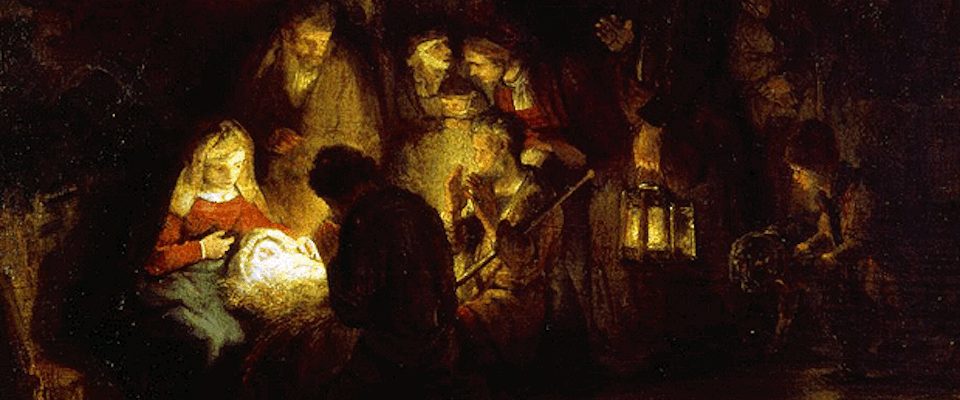
It seems a truism to say that we live in the world: that the world is outside of us. In reality the world is very much inside of us too. In fact the world passes through us as much as we pass through it. We breathe in its air, using…

by Arthur KayDecember 29, 2015

Showing page 138 of 309

See all

Showing page 22 of 43

See all
History

Witch Craze

Jeffrey Burton Russell, who identifies himself as a “lapsed atheist,” has spent most of his career writing about Satan and hell. His most recent book is a history of the modern “mislaying” of heaven. Early in the book, he points out that “The ‘decline of heaven’ was linked to the…

August 18, 2006

Plato’s forms

In his “Hortatory Address,” Justin claims that Plato’s theory of forms came from a misreading of the tabernacle texts of Exodus: “And Plato, too, when he says that form is the third original principle next to God and matter, has manifestly received this suggestion from no other source than from…

August 16, 2006

Plato’s forms

In his “Hortatory Address,” Justin claims that Plato’s theory of forms came from a misreading of the tabernacle texts of Exodus: “And Plato, too, when he says that form is the third original principle next to God and matter, has manifestly received this suggestion from no other source than from…

August 16, 2006

Types and Shadows

As Hugo Rahner made clear in his classic study of the patristic uses of Greek myth, the church fathers saw Christ anticipated not only in the OT but in ancient literature and philosophy generally. Some examples: In Plato’s Republic (2, 361d-e), Glaucon describes the perfectly just man as one who…

August 16, 2006

Ouch!

In his “Hortatory Address to the Greeks,” Justin Martyr argued that the disagreements among Greek philosophers undermined their reliability, while the unity of the apostolic witness, and the witness of their successors, was evidence that Christianity came from God. “Since therefore it is impossible to learn anything true concerning religion…

August 16, 2006
History

Hegel and Hermes again

In the aforementioned book, Magee enumerates the following parallels between Hegel and Hermeticism: 1. Hegel holds that God’s being involves “creation,” the subject matter of his Philosophy of Nature. Nature is a moment of God’s being. 2. Hegel holds that God is in some sense “completed” or actualized through the…

August 16, 2006

Showing page 1808 of 2212

Browse by Category

In Medias Res

Your weekly digest for all things Theopolis.

Donate

Theopolis is nearly 100% donor-supported. Consider joining us on our mission.