Theopolis Logo

Writing

Explore our collection of theological essays, biblical studies, and reflections on faith and culture.

See all
tanner-mardis-xuxghzhibn4-unsplash-1-2
Biblical Studies

Tweets-turned-Notes on the Bible’s Chronology

Summary In what follows, I will consider the “year-stamps” employed in Scripture, i.e., statements of the form, “Such-and-such an event took place in the Xth year of Y.” In the process, I will suggest some ways in which the Biblical narrative might relate to events in the extra-Biblical world, though…

by James BejonJuly 16, 2019
durer-prodigal-son-2
Luke

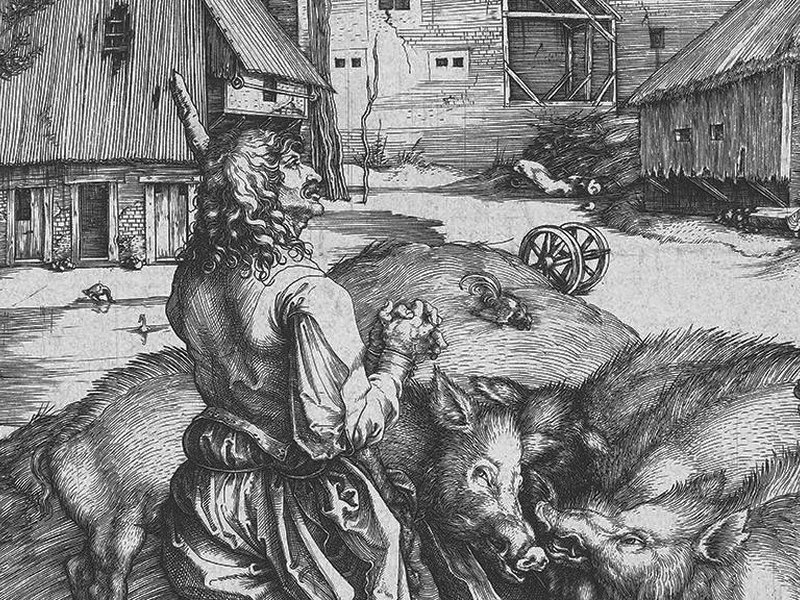
Perspectives on the Prodigal, (Part 2)

In the first essay on the parable of the Prodigal Son, I suggested that the problems commentators and others encounter in interpreting Jesus three-part parable are not accidental. These are not just problems in our ignorance of cultural background. They are intentional features of the stories —stories designed to poke…

by Ralph Allan SmithJuly 11, 2019
durer-prodigal-son-2
Luke

Perspectives on the Prodigal, (Part 1)

The story of the Prodigal Son is perhaps the most well-known story in the Bible. As others have observed, it may also be one of the most misunderstood. In two short essays, I will point out features of this story that are commonly neglected, aspects of Jesus’ parable that might…

by Ralph Allan SmithJuly 9, 2019
de-rijke-man-en-de-arme-lazarus-by-jacopo-da-ponte-16th-century
Luke

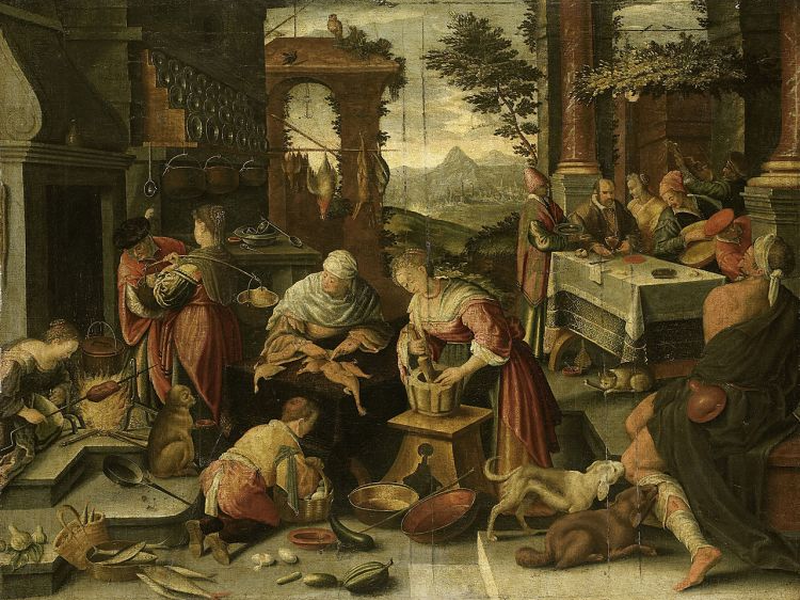
Lazarus and the Rich Man

The parable of Lazarus and the nameless rich man is not an independent story. It is part of a long context that begins in Luke 15:1, where Jesus is eating with tax collectors and sinners and the scribes and Pharisees grumble. In response to their hardheartedness, Jesus tells a three-part…

by Ralph Allan SmithJuly 4, 2019
aaron-burden-uynrnfdkjwg-unsplash
Luke

Everybody has Dropsy - Luke 14:1-24

The Bible is written so that even when a reader cannot pick up on what might be deeper or more detailed aspects of a text, there is virtually always a message to be heard. In the ancient world, where the “reader” of Scripture would likely be a church official facing…

by Ralph Allan SmithJuly 2, 2019
communion
Biblical Theology

Fruit Trees and Grain Plants

The distinction between garden (or vineyard) and field begins in Genesis 2. This relates to the ordering of the formless world. Plants of the field are contrasted with the garden planted by God in Genesis 2:5&8. Later on, under the Old Covenant the Israelites will be required to keep their…

by James B. JordanJune 27, 2019

Showing page 77 of 309

See all

Showing page 22 of 43

See all
Theology

PPT

A group called “Presbyterians and Presbyterians Together” has formulated a public call to Presbyterian and Reformed pastors and theologians to engage in theological debate with charity, patience, and fairness. For those interested in reading the statement, or signing it, check out http://presbyterianstogether.org.

May 11, 2006
History

Reformation and System-building

In discussing the Reformation, Oberman contrasts the via antiqua with the via moderna . Both believed in universals, preconceived ideas that enable humans to “select, interpret, and order the chaotic messages transmitted by the senses.” They differed on the origin and nature of those universals: For the moderns, “these universals…

May 11, 2006

David and Jonathan

Commentators in recent years have often opted for a homoerotic interpretation of David’s relation with Jonathan. Yaron Peleg of George Washington University has another explanation: Jonathan was a “woman” (JSOT 30.2). Oh, so now we know! Goofy as it may sound, Peleg’s article is not so easily dismissed. He points…

May 10, 2006
Philosophy

Descartes, Soul and Body

Some highlights from a recent TLS article on Descartes by Desmond Clarke: 1) Personally, Descartes was a mess. An exile from France for most of his life, he never held any paid position except for a brief stint in the military. He was unmarried, nearly friendless, depressive. Irascible and hyper-sensitive,…

May 10, 2006
Theology

Voluntarism, Intellectualism, Creation

The voluntarist/intellectualist debate has always seemed sterile, but it’s worth asking why it was so important for the medievals. Where’d it come from? It appears to me to come from a faulty understanding of creation, in which creation/nature has a semi-independent status. Consider: There is an object: How does God…

May 10, 2006
Theology

Comic Sabbath

Keeping the Lord’s Day is the sign that we already enjoy by anticipation the final, eschatological rest. It is a confession of faith in cosmic comedy, the confidence that in the end all will be well, and all manner of thing will be well.

May 9, 2006

Showing page 1843 of 2212

Browse by Category

In Medias Res

Your weekly digest for all things Theopolis.

Donate

Theopolis is nearly 100% donor-supported. Consider joining us on our mission.