Theopolis Logo

Writing

Explore our collection of theological essays, biblical studies, and reflections on faith and culture.

See all
sixteen-miles-out-al48tflf4e8-unsplash
Food

Gluttony In The Bible (As Opposed To Gluttony In The American Church)

In the Bible, fatness is such a blessing, that it is especially hard to understand why wicked men are permitted to enjoy such a state. It requires a theodicy and faith in God. Thus: “For they have no pangs until death; their bodies are fat and sleek . They are…

by Mark HorneAugust 12, 2013

jeremy-yap-j39x2xx_8cq-unsplash
How to Worship

Biblical Worship (Video with James B. Jordan)

[fve]http://vimeo.com/71901553[/fve]

by Peter LeithartAugust 8, 2013
chris-bair-ndczc5739ck-unsplash
Deuteronomy

Holy Things for Holy People

The allusion to the Exodus story is contained in the first words of Deuteronomy 14:1 — “ye are the sons of Yahweh your God” — as well as in 14:2 in the use of the technical term translated “treasured possession,” “His own possession,” “peculiar people,” “precious people,” and so forth.…

by Ralph Allan SmithAugust 5, 2013
adam-and-eve-in-the-garden-of-eden-wenzel-peter
Deuteronomy

Forbidden Foods

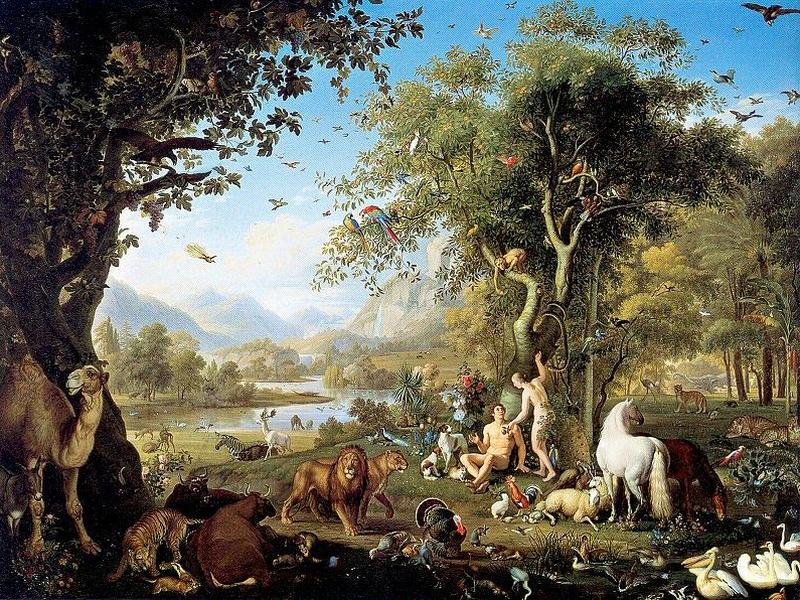
I have argued that Deuteronomy 14:1-21 is an independent literary unit that applies the Third Word to the lives of Israelites from the time of Moses and Joshua. In this short pericope, Moses suggests broad and deep meaning by means of literary allusion to the stories of the creation and…

by Ralph Allan SmithJuly 31, 2013
david-weber-fwuo_zluhnw-unsplash
How to Worship

Pro-Sacramental Reformation

In his recently republished The New Creation , the late, delightful Herbert McCabe defends the priesthood of the plebs as roundly as anyone could want. Citing Hebrews, he claims that "there is an essential difference between the Christian community and the community of the Old Law, or any other religious…

by Peter LeithartJuly 29, 2013
eric-ward-7kqe_8meex8-unsplash
Augustine

Sexual Idolatry

Augustine famously prayed, “Our hearts our restless until they rest in You.” True indeed. Being creatures, we inherently sense our ontological poverty—our innate condition of dependence—and are compelled to find a sense of security. And it is also true—as Augustine’s own narrative painfully illustrates—that one of the things we most…

by Gerald HiestandJuly 24, 2013

Showing page 190 of 309

See all

Showing page 22 of 43

See all
History

Money, Magic, and Signs

David Hawkes reviews a book on Literature and Economics in the Age of Milton in the April 2 TLS , and has this to say about the early modern suspicion of attempting to “do things with words”: “The influx into Renaissance Europe of precious metals from America, and the consequent…

April 19, 2004
History

On Books

David McKitterick ‘s Print, Manuscript and the Search for Order, 1450-1830 describes the move from manuscript to book as a gradual process rather than a sudden revolution. According to the reviewer in the TLS , McKitterick points out that books and manuscripts were not separated in library catalogues or apparently…

April 19, 2004
History

Goddesses in the Middle Ages

Robert Lerner reviews Barbara Newman ‘s God and the Goddesses: Vision, Poetry, and Belief in the Middle Ages in the March 19 issue if the TLS . Newman’s book analyzes the female deities and allegorical figures of medieval literature and belief, including Nature, Lady Love, Holy Wisdom, and Mary. As…

April 19, 2004

Luther on Justification

Robert Jenson has a brief but very challenging comment on Luther’s views on justification in the Fall 2003 issue of the Westminster Theological Journal (which, incidentally, under the editorship of Peter Enns is promising to be a lively forum of debate). Responding to Carl Trueman ‘s critique of the new…

April 19, 2004
Economics

Hayek

Francis Fukuyama reviews Bruce Caldwell ‘s new biography of Hayek in the Spring 2004 issue of The Wilson Quarterly . According to Caldwell, Hayek’s argument against a managed economy was basically an epistemological one: “There are limits to rationality, and what any individual knows tends to be local in nature.…

April 19, 2004
Media

McLuhan and Teilhard

Tom Wolfe has a fascinating sketch of the life and work of Marshall McLuhan in the Spring 2004 issue of The Wilson Quarterly . McLuhan converted to Catholicism during his studies, and Wolfe suggests that McLuhan’s greatest inspiration was a hidden one, Teilhard de Chardin . Wolfe writes, “Regardless of…

April 19, 2004

Showing page 2098 of 2212

Browse by Category

In Medias Res

Your weekly digest for all things Theopolis.

Donate

Theopolis is nearly 100% donor-supported. Consider joining us on our mission.