Theopolis Logo

Writing

Explore our collection of theological essays, biblical studies, and reflections on faith and culture.

See all
tanner-mardis-xuxghzhibn4-unsplash-1-2
Biblical Studies

Tweets-turned-Notes on the Bible’s Chronology

Summary In what follows, I will consider the “year-stamps” employed in Scripture, i.e., statements of the form, “Such-and-such an event took place in the Xth year of Y.” In the process, I will suggest some ways in which the Biblical narrative might relate to events in the extra-Biblical world, though…

by James BejonJuly 16, 2019
durer-prodigal-son-2
Luke

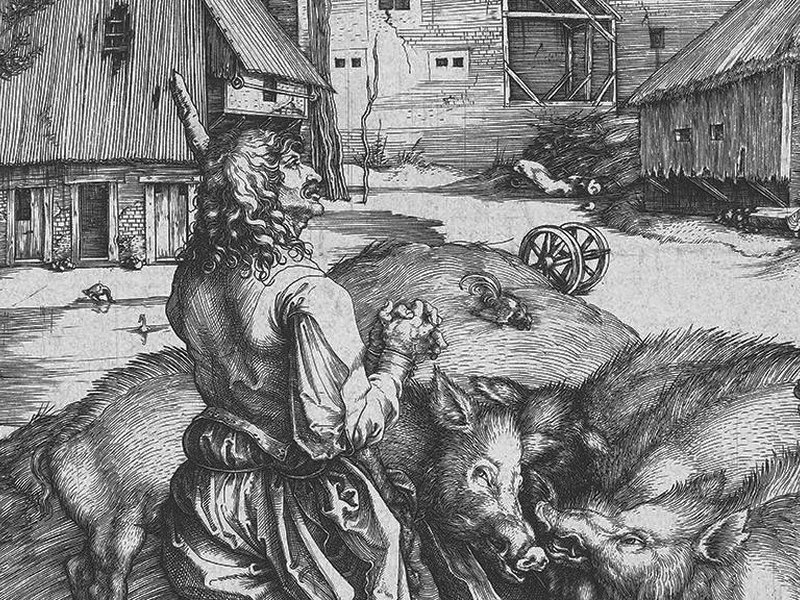
Perspectives on the Prodigal, (Part 2)

In the first essay on the parable of the Prodigal Son, I suggested that the problems commentators and others encounter in interpreting Jesus three-part parable are not accidental. These are not just problems in our ignorance of cultural background. They are intentional features of the stories —stories designed to poke…

by Ralph Allan SmithJuly 11, 2019
durer-prodigal-son-2
Luke

Perspectives on the Prodigal, (Part 1)

The story of the Prodigal Son is perhaps the most well-known story in the Bible. As others have observed, it may also be one of the most misunderstood. In two short essays, I will point out features of this story that are commonly neglected, aspects of Jesus’ parable that might…

by Ralph Allan SmithJuly 9, 2019
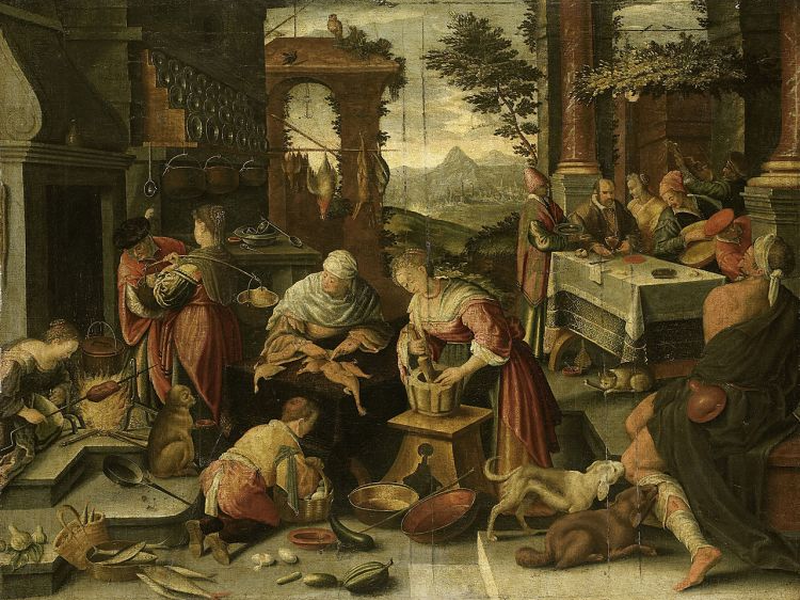
de-rijke-man-en-de-arme-lazarus-by-jacopo-da-ponte-16th-century
Luke

Lazarus and the Rich Man

The parable of Lazarus and the nameless rich man is not an independent story. It is part of a long context that begins in Luke 15:1, where Jesus is eating with tax collectors and sinners and the scribes and Pharisees grumble. In response to their hardheartedness, Jesus tells a three-part…

by Ralph Allan SmithJuly 4, 2019
aaron-burden-uynrnfdkjwg-unsplash
Luke

Everybody has Dropsy - Luke 14:1-24

The Bible is written so that even when a reader cannot pick up on what might be deeper or more detailed aspects of a text, there is virtually always a message to be heard. In the ancient world, where the “reader” of Scripture would likely be a church official facing…

by Ralph Allan SmithJuly 2, 2019
communion
Biblical Theology

Fruit Trees and Grain Plants

The distinction between garden (or vineyard) and field begins in Genesis 2. This relates to the ordering of the formless world. Plants of the field are contrasted with the garden planted by God in Genesis 2:5&8. Later on, under the Old Covenant the Israelites will be required to keep their…

by James B. JordanJune 27, 2019

Showing page 77 of 309

See all

Showing page 23 of 43

See all
Christendom

For and Against Christendom

Someone asked me recently about my views on church and state. I replied that I advocate a "Christendom model" of church-state relations. Then I proceeded to qualify. When I was done qualifying, I suddenly wondered whether what I call "Christendom" corresponds to what other people understand by the word. It…

January 30, 2018

Nation of Kings

Ezra begins where 2 Chronicles ends, with the decree of Cyrus. Some scholars have argued that the repetition indicates that the books were once united. It's said that the doubling is an ancient literary device to knot together two sections of a text. Whether that is the case or not,…

January 29, 2018

Simplifying Space?

James Simpson briefly reviews the career of the 17th-century iconoclast William Dowsing in his history of iconoclasm, Under the Hammer . What motivated Dowsing, he argues, wasn't an effort to prioritize the word over the image, but a quest for "jurisdictional clarity." With the triumph of Parliament, the complex jurisdictional…

January 26, 2018

Freudianism Without Freud

The key question regarding Freud, says Rosenstock-Huessy ( In the Cross of Reality , 266), is "Whom did Freud obey when he began to develop his theory?" The question arises because "in Freud's relational system there is no place for Sigmund Freud's own experience." He shares this distinction of an…

January 26, 2018

Improving to Death

Alexandra Schwartz's New Yorker essay on self-improvement movements ( "Improving Ourselves to Death" ) starts out breezily enough, but it turns grim pretty fast. The "death" in her title isn't metaphorical. She summarizes the experiment of Carl Cederström and André Spicer, who tried to improve one area of their lives…

January 26, 2018

Dostoevsky's Doodles

In a TLS review of Kontantin Barsht's Drawings and Calligraphy of Fyodor Dostoevsky , Robert Bird reminds us that Dostoevsky was a "trained draughtsman" who "thought in images no less than in words: "He wrote frequently about painting, and many of his key terms suggest visual, rather than verbal communication,…

January 26, 2018

Showing page 100 of 2212

Browse by Category

In Medias Res

Your weekly digest for all things Theopolis.

Donate

Theopolis is nearly 100% donor-supported. Consider joining us on our mission.