Theopolis Logo

Writing

Explore our collection of theological essays, biblical studies, and reflections on faith and culture.

See all
tanner-mardis-xuxghzhibn4-unsplash-1-2
Biblical Studies

Tweets-turned-Notes on the Bible’s Chronology

Summary In what follows, I will consider the “year-stamps” employed in Scripture, i.e., statements of the form, “Such-and-such an event took place in the Xth year of Y.” In the process, I will suggest some ways in which the Biblical narrative might relate to events in the extra-Biblical world, though…

by James BejonJuly 16, 2019
durer-prodigal-son-2
Luke

Perspectives on the Prodigal, (Part 2)

In the first essay on the parable of the Prodigal Son, I suggested that the problems commentators and others encounter in interpreting Jesus three-part parable are not accidental. These are not just problems in our ignorance of cultural background. They are intentional features of the stories —stories designed to poke…

by Ralph Allan SmithJuly 11, 2019
durer-prodigal-son-2
Luke

Perspectives on the Prodigal, (Part 1)

The story of the Prodigal Son is perhaps the most well-known story in the Bible. As others have observed, it may also be one of the most misunderstood. In two short essays, I will point out features of this story that are commonly neglected, aspects of Jesus’ parable that might…

by Ralph Allan SmithJuly 9, 2019
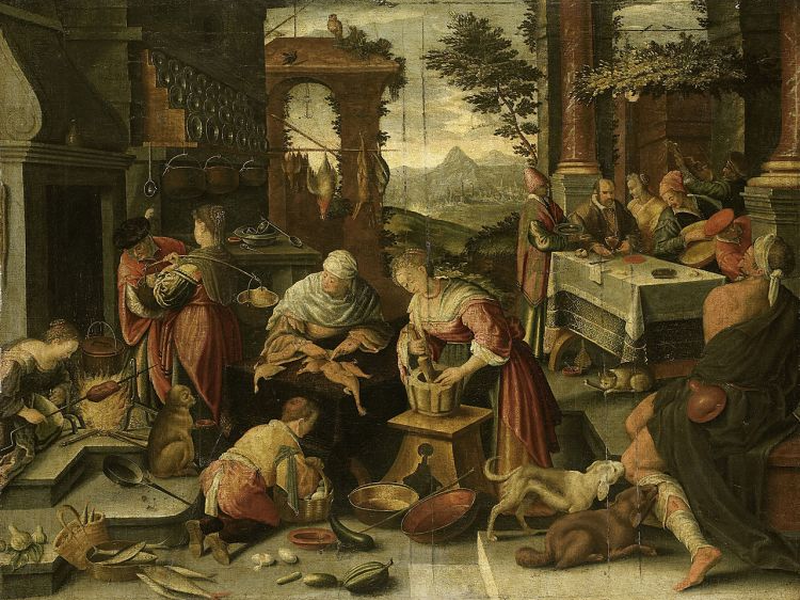
de-rijke-man-en-de-arme-lazarus-by-jacopo-da-ponte-16th-century
Luke

Lazarus and the Rich Man

The parable of Lazarus and the nameless rich man is not an independent story. It is part of a long context that begins in Luke 15:1, where Jesus is eating with tax collectors and sinners and the scribes and Pharisees grumble. In response to their hardheartedness, Jesus tells a three-part…

by Ralph Allan SmithJuly 4, 2019
aaron-burden-uynrnfdkjwg-unsplash
Luke

Everybody has Dropsy - Luke 14:1-24

The Bible is written so that even when a reader cannot pick up on what might be deeper or more detailed aspects of a text, there is virtually always a message to be heard. In the ancient world, where the “reader” of Scripture would likely be a church official facing…

by Ralph Allan SmithJuly 2, 2019
communion
Biblical Theology

Fruit Trees and Grain Plants

The distinction between garden (or vineyard) and field begins in Genesis 2. This relates to the ordering of the formless world. Plants of the field are contrasted with the garden planted by God in Genesis 2:5&8. Later on, under the Old Covenant the Israelites will be required to keep their…

by James B. JordanJune 27, 2019

Showing page 77 of 309

See all

Showing page 23 of 43

See all

Ordination exhortation

1 Timothy 4:13: Do not neglect the spiritual gift within you, which was bestowed upon you through prophetic utterance with the laying on of hands by the presbytery. Prior to the Reformation, the Western church treated ordination as a sacrament. Protestants have never done that. For the seven sacraments of…

January 28, 2007

Exhortation, Fourth Sunday After Epiphany

Many of you received an email this week encouraging you to be at church on time and rebuking those who are habitually tardy. Some got the impression that the elders don’t want you to show up at all if you’re running late. That’s not the point. If you’re unavoidably tardy…

January 28, 2007

Spouse and Kingdom, revisited

In response to my earlier post on “Spouse and Kingdom,” Ken Myers of Mars Hill Audio writes, “it strikes me that the WCF’s dualism in describing the Church reflects the typical Western dualism that was congealing during the 17th century. Invisible and spiritual matters can be described in poetic, imaginative,…

January 26, 2007
Philosophy

Typology and postmodernism

Zizioulas locates the central difference between patristic and postmodern views of “otherness” in the way each conceives the relation of old and new. For postmodernism, “alterity involves negation, rupture, ‘leaving behind’, for patristic thought the ‘new’ relates to the ‘old’ in a positive way.” He demonstrates this by appealing to…

January 26, 2007
Philosophy

Fallen Philosophy

In his 2006 volume, Communion and Otherness , John Zizioulas pretty directly connects Western philosophy with the fall of Adam. Adam claimed to be God and thus “rejected the Other as constitutive of his being.” As a result, Self took “ontological priority over the Other,” with the result that “otherness…

January 26, 2007
Theology

Jews and Gentiles

The extension of rights to the Jews was one of the great achievements of the French Revolution, and Rosenstock-Huessy moves from a discussion of the resulting Jewish enthusiasm for liberalism to a digression dealing with the relation of Jews and Gentiles in history. It is titled “Alpha and Omega,” and…

January 25, 2007

Showing page 1728 of 2212

Browse by Category

In Medias Res

Your weekly digest for all things Theopolis.

Donate

Theopolis is nearly 100% donor-supported. Consider joining us on our mission.