Theopolis Logo

Writing

Explore our collection of theological essays, biblical studies, and reflections on faith and culture.

See all
abortion
Abortion

Letters on Abortion, (Part 1)

What is below is fairly self-explanatory. This is an exchange I had with a local liberal clergyman on the subject of abortion. The circumstances of the debate are included in the text itself. I initially e-mailed this out to a list of clergy in our city after a local (and…

by Richard BledsoeNovember 17, 2015
wall-2
Ezra

The Perfumed Butler and the Wisdom of Civil Obedience

The seemingly humdrum parts of the Bible often hide overlooked wisdom. Take, for example, the books of Ezra and Nehemiah. Their stories aren't exactly the most gripping or memorable. They are far less concrete than, say, the story of the Exodus. No one in Ezra is stricken blind or devoured…

by Christian LeithartNovember 10, 2015
sparkler
Happiness

"Happy! Happy! Happy!" Authentic Happiness and Its Knock-Offs

For most of the past century, philosophical perspectives on life in the western world have been overtly grim and pessimistic. The optimism of the Enlightenment, generated by confidence in the scientific method and the potential of an increasingly civilized humanity to redress the evils of the world, was shattered by…

by Bill DeJongNovember 5, 2015
aaron-burden-1ebsmyrau-s-unsplash
Hermeneutics

How Does a Chiasm Mean?

Chiastic structures are found all over the Bible, and in recent decades commentators have become more adept at spotting them. But identifying these literary structures is only part of the challenge. There remains the challenge of understanding what they mean. Part of the answer is found in the recognition that…

by Steve JefferyNovember 3, 2015
last-supper
Eucharist

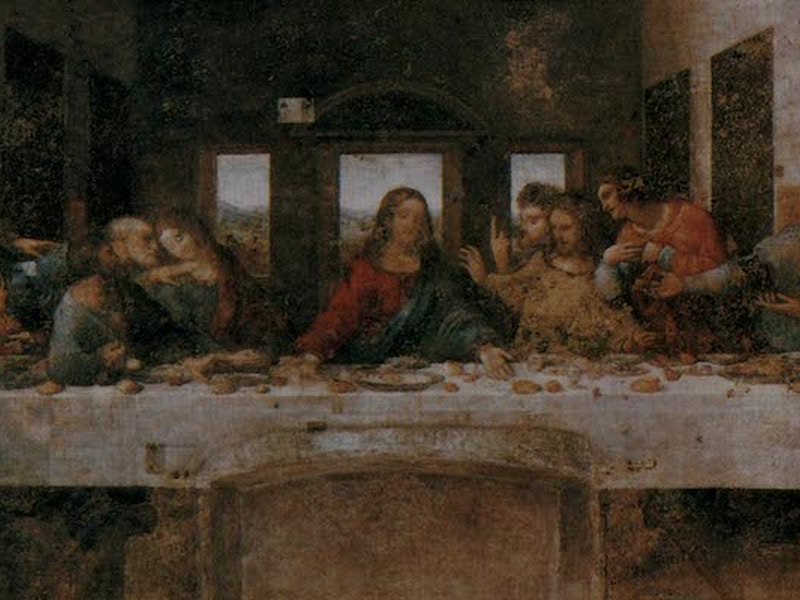
How To Change the World, (Part 2)

Part 1 can be found HERE . Clearly, more than just getting worship right is important in changing the world, but since worship is the central act of God’s people, performed on the first day of the week at the center of the world before the very face of God,…

by James B. JordanOctober 29, 2015
solomonsidolatry
Biblical Theology

Big Love: A History of Stolen Fruit

“Blessed is the womb that bore you, and the breasts at which you nursed.” ( Luke 11:27 ) Arguing for Christian morality in a secular society is difficult. A culture which accepts evolutionary dogma has no intellectual place — or inherent desire — for absolute morality, since it believes morality…

by Mike BullOctober 27, 2015

Showing page 141 of 309

See all

Showing page 23 of 43

See all

Age of Silver

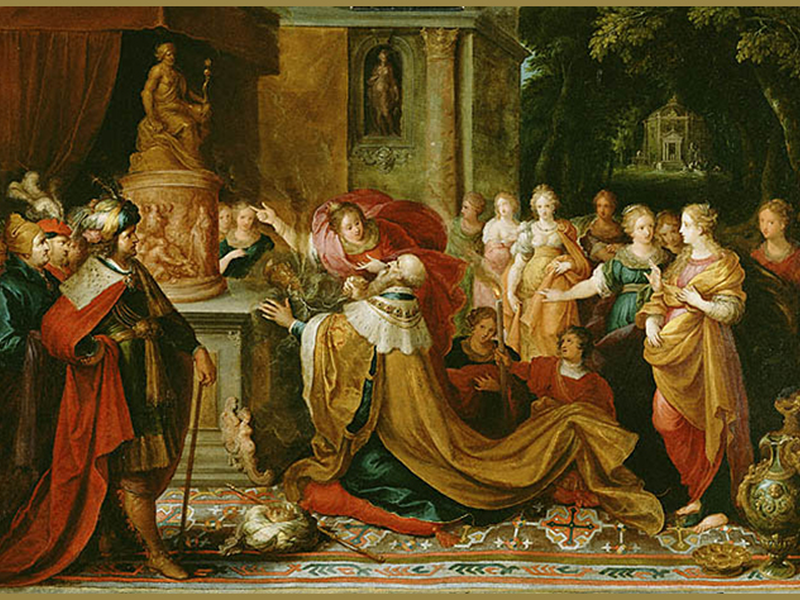
D avid's plan for the temple is partly a floor plan. He gives Solomon the pattern for the “porch” and its associated buildings, treasuries, rooms, courts (1 Chronicles 28:11-12). The plan also includes instructions for organizing the priests and Levites (28:13a) and for the utensils of service for the temple…

March 14, 2017

Sources of Inequality

I n his recently-published The Great Leveller , Walter Scheidel summarizes evidence from archeology and anthropological studies to answer the question, Has inequality always been with us? The answer is: Sort of yes. Inequality is a constant in societies that farm and herd. But farming and land ownership weren't the…

March 14, 2017

Classicists and Romantics

D avid gives Solomon the “plan” (Heb. tabnit ) for the temple. Unlike Moses, David doesn't have to climb a mountain to get it (cf. Exodus 25:9, 40). It comes from “the spirit ( ruach ) with him” (1 Chronicles 28:12), and from a “writing” from the Lord that comes…

March 13, 2017

Nietzsche, Destroyer of Idols

I n an essay in the journal European Legacy , Norman Fiering summarizes the thought of Eugen Rosenstock-Huessy on biography. Fiering asks whether there are recurring patterns in the lives of significant individuals, and, relying on Rosenstock-Huessy, calls attention to moments of “conversion” (not necessarily religious) and “grace” (unexpected encounters…

March 10, 2017

Modernist Puritanism

I n his 1971 study of Modernist architecture, The Golden City , Henry Hope Reed observed that Modernists transferred moral categories to architecture. Buildings could be “honest” (if they revealed their structure on the surface) or “false” (if they hid structure under ornamentation). Purity was invoked regularly as a positive…

March 10, 2017

Happy Gothic

W hat is “the Gothic”? Answers vary, and that is, Catherine Spooner argues (in Post-Millennial Gothic ), because Gothic bears “multivalent meanings” and “has adapted and changed with the times” (9–10). This isn't a recent development: “After Gothic's initial phase of popularity fizzled out around 1820, it quickly renewed itself…

March 10, 2017

Showing page 197 of 2212

Browse by Category

In Medias Res

Your weekly digest for all things Theopolis.

Donate

Theopolis is nearly 100% donor-supported. Consider joining us on our mission.