Theopolis Logo

Writing

Explore our collection of theological essays, biblical studies, and reflections on faith and culture.

See all
31-03-0213
Hermeneutics

Apocalyptic Eyes

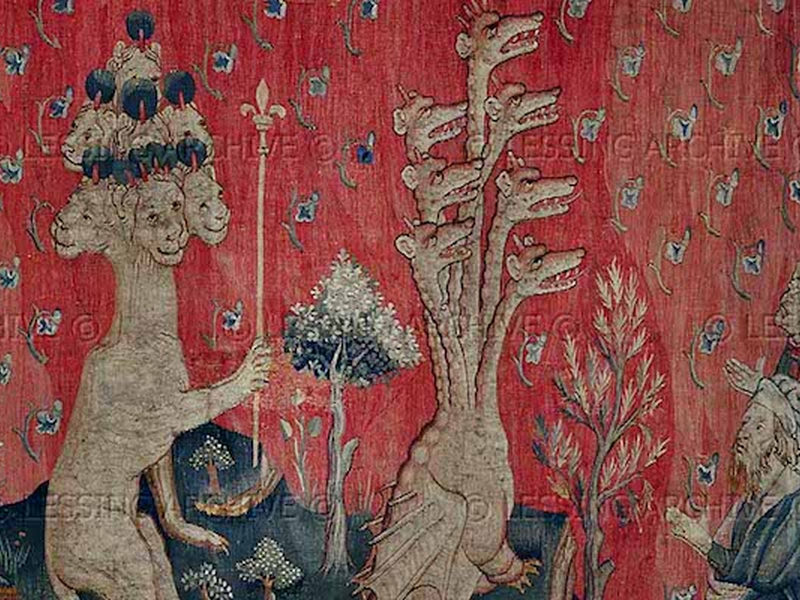
Flying scrolls. Red horses. Beasts coming out of the sea. Winged women. The list goes on. Apocalyptic literature in the Bible is like a cross between science fiction and Marvel comics. And the Bible has a fair bit of this sort of thing. Daniel sees visions in Babylon, Zechariah sees…

by Toby SumpterNovember 4, 2014

bhm-skyline-2
Theopolis News

New Name, New Look

Trinity House Institute has taken a new name, the Theopolis Institute. This striking new name expresses our unique vision and mission and captures the unified purpose behind all our specific programs and activities. We still have Bible, liturgy, and culture in our tagline. We still offer the same courses on…

by TheopolisNovember 4, 2014
istock_000012860926small
Atonement

Not Fearing the Devil

Adam Kotsko offers a socio-political variation on the Christus Victor atonement theory in his 2010 study, The Politics of Redemption: The Social Logic of Salvation . He does this by explaining "the devil" in terms of the Hegelian concept of "objective spirit," Geist . As Kotsko puts it, Geist "refers…

by Peter LeithartOctober 13, 2014
jez-timms-8muutamcwu4-unsplash
Leviticus

The Meaning of Sacrifice

Two factors keep Nahtali Meshel from discussing the meaning of sacrifice until late in his The "Grammar" of Sacrifice . The first has to do with the texts he draws from: "P says little about the meaning of its rituals" (174). The other has to do with the grammatical theory…

by Peter LeithartOctober 8, 2014
jez-timms-8muutamcwu4-unsplash
Leviticus

Praxemics

Chapter 5 of Naphtali Meshel's The "Grammar" of Sacrifice focuses on "praxemics," the physical actions of sacrificial ritual. Praxemes are constituted by six elements: an "atomact," an elementary physical act or gesture; an actor; an object that is acted up; a target for the action and often for the object…

by Peter LeithartOctober 6, 2014
markus-winkler-aid-xyrtlec-unsplash
Leviticus

Jugation and Hierarchy

Two chapters of Naphtali Meshel’s The “Grammar” of Sacrifice cover what he calls “jugation” and “hierarchies.” The first involves the addition of other materials to an animal offering. Jugates include wine, cereal, and oil that are added to the animals (zoemes) that are offered in sacrifice. Some jugates are coordinated…

by Peter LeithartOctober 1, 2014

Showing page 167 of 309

See all

Showing page 23 of 43

See all

Easy Sainthood

Rowan Williams concludes a brief summary of the patristic debates about the double/single will of Jesus by saying “we are encouraged to see Jesus as fully aware of the general possibilities of human nature, including the possibilities of betrayal, cowardice, and self-gratification, aware of those as part of his composition…

May 17, 2016

Ministering Sacraments by Faith

For many Christians, sacraments are locked in a winner-take-all battle with faith. Are we reconciled to God by faith or by baptism? Do we feed on Christ by believing or by eating bread and drinking wine? When we place too much emphasis on sacraments, many believe, we run the risk…

May 17, 2016

Why Do We Want Houses?

Peter King begins his Private Dwelling by posing what he describes as simple, silly, obvious questions about housing: What is its use? Who needs it? What is housing for? Early on, he points to the “iconography” implied by our language about housing: “There is an iconography attached to housing that…

May 16, 2016

Sensitivity to Intrinsic Rightness

Charles Taylor's The Language Animal is a defense of HHH against HLC. That is, he thinks the linguistic perspective developed by Hamann, Herder, and Humboldt is superior to the rationalist and empiricist tradition of Hobbes, Locke, and Condillac. HLC “tried to understand language within the confines of the modern representational…

May 16, 2016

A Community of the Fearless

Monks fled. They did not flee from community or contact with others. They fled in order to become more deeply engaged with others in a more radical form of community. Rowan Williams writes ( Silence and Honey Cakes ), “What is learned in the desert is clearly not some individual…

May 16, 2016

Benjamin and Art's Disenchantment

Walter Benjamin had no totalizing philosophical system. He was an essayist, admits Ranier Rochlitz ( The Disenchantment of Art ). Rochlitz doesn't use the term to demean, however. Benjamin “is not an essayist in the manner of Montaigne; the scientific imperative is not lacking in his essays. He conducts concrete…

May 13, 2016

Showing page 289 of 2212

Browse by Category

In Medias Res

Your weekly digest for all things Theopolis.

Donate

Theopolis is nearly 100% donor-supported. Consider joining us on our mission.