Theopolis Logo

Writing

Explore our collection of theological essays, biblical studies, and reflections on faith and culture.

See all
31-03-0213
Hermeneutics

Apocalyptic Eyes

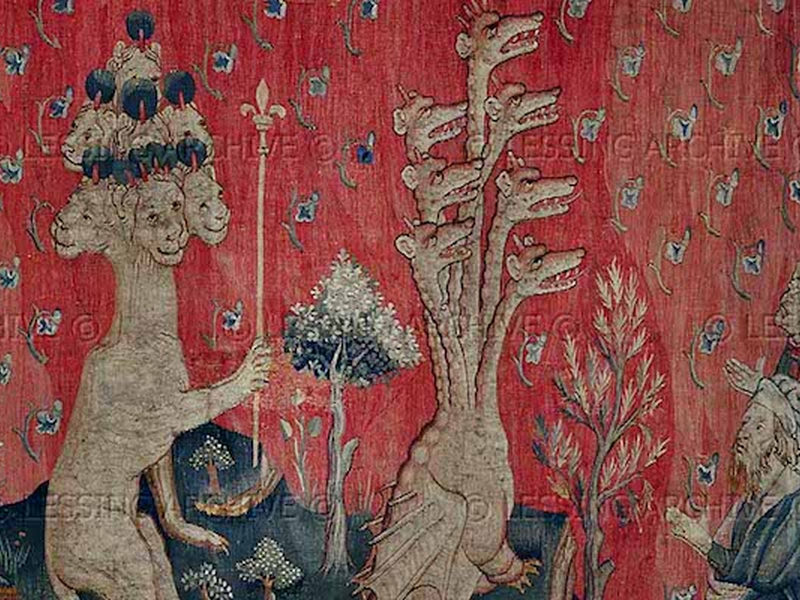
Flying scrolls. Red horses. Beasts coming out of the sea. Winged women. The list goes on. Apocalyptic literature in the Bible is like a cross between science fiction and Marvel comics. And the Bible has a fair bit of this sort of thing. Daniel sees visions in Babylon, Zechariah sees…

by Toby SumpterNovember 4, 2014

bhm-skyline-2
Theopolis News

New Name, New Look

Trinity House Institute has taken a new name, the Theopolis Institute. This striking new name expresses our unique vision and mission and captures the unified purpose behind all our specific programs and activities. We still have Bible, liturgy, and culture in our tagline. We still offer the same courses on…

by TheopolisNovember 4, 2014
istock_000012860926small
Atonement

Not Fearing the Devil

Adam Kotsko offers a socio-political variation on the Christus Victor atonement theory in his 2010 study, The Politics of Redemption: The Social Logic of Salvation . He does this by explaining "the devil" in terms of the Hegelian concept of "objective spirit," Geist . As Kotsko puts it, Geist "refers…

by Peter LeithartOctober 13, 2014
jez-timms-8muutamcwu4-unsplash
Leviticus

The Meaning of Sacrifice

Two factors keep Nahtali Meshel from discussing the meaning of sacrifice until late in his The "Grammar" of Sacrifice . The first has to do with the texts he draws from: "P says little about the meaning of its rituals" (174). The other has to do with the grammatical theory…

by Peter LeithartOctober 8, 2014
jez-timms-8muutamcwu4-unsplash
Leviticus

Praxemics

Chapter 5 of Naphtali Meshel's The "Grammar" of Sacrifice focuses on "praxemics," the physical actions of sacrificial ritual. Praxemes are constituted by six elements: an "atomact," an elementary physical act or gesture; an actor; an object that is acted up; a target for the action and often for the object…

by Peter LeithartOctober 6, 2014
markus-winkler-aid-xyrtlec-unsplash
Leviticus

Jugation and Hierarchy

Two chapters of Naphtali Meshel’s The “Grammar” of Sacrifice cover what he calls “jugation” and “hierarchies.” The first involves the addition of other materials to an animal offering. Jugates include wine, cereal, and oil that are added to the animals (zoemes) that are offered in sacrifice. Some jugates are coordinated…

by Peter LeithartOctober 1, 2014

Showing page 167 of 309

See all

Showing page 23 of 43

See all

Sacraments and the Secular Age

Charles Taylor's account of our Secular Age has many virtues. (The following relies on Jamie Smith's summary of Taylor in How (Not) To Be Secular ; page numbers are from Taylor.) Taylor rejects “subtraction” theories of secularization, the notion that secular life was lurking beneath the sacred surface of ritual,…

May 11, 2016

Science, Disenchantment, Meaning

Max Weber begins his lecture on “Science as a Vocation” by noting the “meaningless” of science, a product of the notion of scientific progress that guides scientific pursuits in the modern world. “E ach of us knows,” Weber writes, “that what he has accomplished will be antiquated in ten, twenty,…

May 11, 2016

Youth Ministry in a Secular Age

James KA Smith's You Are What You Love is an accessible, penetrating treatment of the liturgical understanding of human existence, of discipleship, and culture that Smith has been developing in a number of his recent books. In this book, he focuses on the specifics of Christian liturgy as a “technology…

May 10, 2016

Urban Art

Revelation 21-22 gives a vision of an adorned city. Kings bring treasures into the city, but the city isn't just a container for art objects. The city is an art object. The entire civic order is an artistic creation. If the city is an art object, then all of the…

May 10, 2016

Apologetics in a Secular Age

In his summary of Charles Taylor's A Secular Age , James KA Smith observes how apologetics accommodates to the social imaginary of the secular age. Apologetic responses to secularism have too often “conceded the game; that is, the responses to this diminishment of transcendence already accede to it in important…

May 9, 2016

Future First

The vision of the heavenly city at the end of Revelation contains a major oddity: The city descends twice . There are structural reasons for this. The first vision concludes one sequence in Revelation, and the second introduces a final vision. It is the same city, but the vision gives…

May 9, 2016

Showing page 291 of 2212

Browse by Category

In Medias Res

Your weekly digest for all things Theopolis.

Donate

Theopolis is nearly 100% donor-supported. Consider joining us on our mission.